Resource
Mamluk Sultanate Timeline (1250–1517): Founding, Rulers and Cairo
A source-critical Mamluk timeline explaining the 1250 transfer from Ayyubid rule, Shajar al-Durr and Aybak, Ain Jalut, Baybars, Cairo, Bahri and Burji periods, plague and the Ottoman conquest.
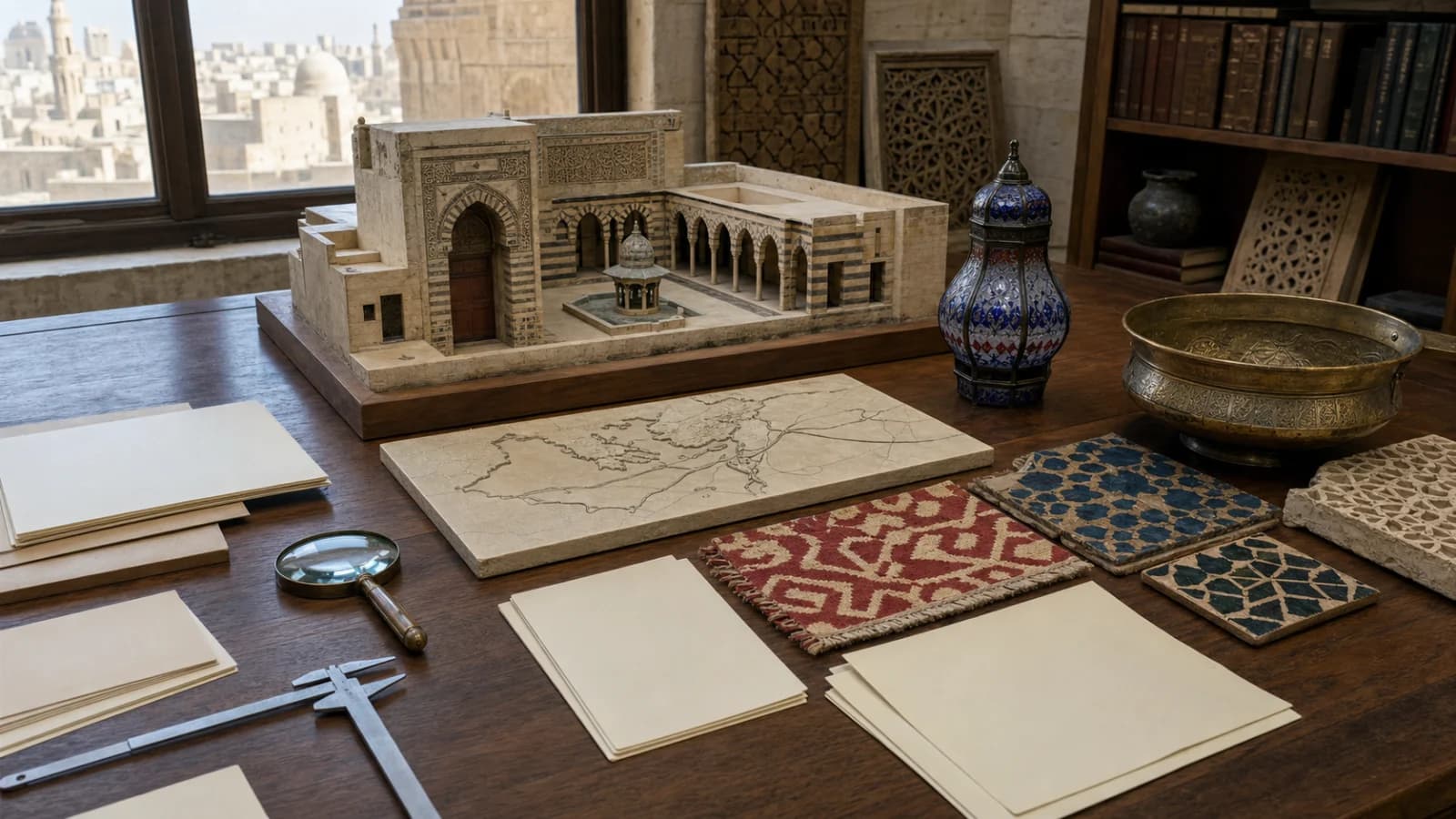
The Mamluk Sultanate emerged in Egypt during the crisis of 1249–1250, when military households created under the Ayyubid ruler al-Salih Ayyub defeated the Seventh Crusade, killed his heir Turanshah and transferred power through the short reign of Shajar al-Durr and the rule of Aybak. Ain Jalut in 1260 and Baybars’s later government consolidated a state that survived until the Ottoman conquest of 1516–1517.
What was a mamluk?
The Arabic word mamluk means an owned person. Medieval rulers purchased enslaved boys and young men, displaced them from their societies, converted and trained them, and usually manumitted them before mature military service. Some entered powerful households and later became commanders or sultans. Their advancement did not erase the violence of capture, sale and coerced movement. Nor was every soldier in Egypt a mamluk. The institution belonged to mixed armies and courts long before 1250; the sultanate emerged when particular households accumulated enough military, fiscal and political power to rule in their own name.
Why did power change hands in 1250?
Al-Salih Ayyub had expanded an elite Bahriyya corps and relied on its personal loyalty. When he died in November 1249, a French crusading army led by Louis IX was already in Egypt. Shajar al-Durr and officials concealed the death long enough to maintain command and summon his son Turanshah. Mamluk officers helped defeat the crusade, then killed Turanshah after his relationship with them collapsed. The transition joined an external war, a succession vacuum, military household power and contested legitimacy. No single cause explains it.
Was Shajar al-Durr the founder?
Shajar al-Durr ruled Egypt briefly in the summer of 1250, and coins, titulature and the Friday sermon support her claim to sovereignty. She had already played a central administrative role during the crusade. Opposition from Syrian Ayyubids and the Abbasid caliph, along with the gendered limits of recognition, narrowed her options. She married Aybak and ceded the formal title, but continued to influence power until their conflict ended in both deaths in 1257. Calling either person the sole founder hides the coalition, rivalry and institutional inheritance behind the new state.
Aybak, factional conflict and the unfinished state
Aybak had to manage Bahri officers, Ayyubid challengers, the caliph’s claims and his own military household. In 1254 he killed the influential commander Aqtay, driving Baybars and other Bahri leaders into Syrian exile. A child, al-Mansur Ali, later occupied the throne while senior officers competed. These events show why ‘Bahri dynasty’ can mislead: officers linked by training and patronage did not act as one stable family. When Mongol armies moved into Syria, Qutuz removed the child sultan in 1259 and presented experienced command as an emergency necessity.
What happened at Ain Jalut in 1260?
On 3 September 1260 the Mamluk army under Qutuz, with Baybars in a leading role, defeated a Mongol field force commanded by Kitbuqa at Ain Jalut in Palestine. The victory prevented an immediate Mongol advance into Egypt and enabled Mamluk control of Syria. It was strategically decisive but should not be called the first defeat of any Mongol army, nor did it end Mamluk-Ilkhanid warfare. Large campaigns continued, including an Ilkhanid victory near Homs in 1299 and a Mamluk victory at Shaqhab in 1303.
How did Baybars consolidate the sultanate?
Qutuz was killed during the return to Egypt, and Baybars became sultan. His reign strengthened military and provincial command, roads, postal communications, fortifications and diplomatic networks. In 1261 he installed an Abbasid survivor as caliph in Cairo, creating ceremonial legitimacy while political authority remained with the sultan and emirs. Campaigns reduced Frankish strongholds, but consolidation was also administrative and economic. Baybars did not found the state alone; he transformed a volatile military regime into a more durable regional power.
Why Cairo became the center of the sultanate
Cairo connected government, scholarship, craft production, pilgrimage and commerce. Endowed mosques, madrasas, hospitals, tombs, markets and waterworks reshaped the city and preserved the names of patrons. Damascus remained a vital provincial and scholarly center, while control of the Hijaz linked the sultans to Mecca and Medina. Red Sea, Indian Ocean and Mediterranean trade moved spices, textiles, metalwork and people. Urban monuments demonstrate resources and political messages, but they do not prove that rural producers or poorer city residents shared equally in prosperity.
Bahri and Burji are periods, not simple dynasties
Historians conventionally call 1250–1382 the Bahri or Turkic period and 1382–1517 the Burji or Circassian period. The names point to recruitment patterns and barracks associated with the Nile and the Cairo Citadel. They are useful for navigation, yet succession was rarely a clean father-to-son line and political coalitions mixed origins and households. Barquq’s accession in 1382 is a conventional dividing point, not the instant replacement of every official or institution. A ruler table must therefore track reigns without pretending these periods were modern ethnic nation-states.
Trade, taxation and the costs of rule
Agricultural revenue underpinned the state, military households and endowments. Land assignments granted claims on taxes, while officials, merchants, artisans, peasants and transport workers operated across very different positions of power. Cairo profited from transit commerce, textiles and luxury production, and pilgrimage routes generated demand. Rulers also imposed monopolies and emergency levies. By the late fifteenth century Portuguese expansion altered parts of the Indian Ocean trade, but the economic history was not a single route that suddenly closed. Fiscal strain interacted with succession, war, plague and changing regional competition.
How plague changed Mamluk society
The Black Death reached Egypt and Syria in 1347–1349 and recurred repeatedly. Chroniclers describe severe mortality, but exact totals cannot be reconstructed from vivid statements alone. Population loss affected cultivation, wages, taxation, military recruitment, property transmission and charitable institutions. Elites sometimes responded by intensifying claims on scarce labor or revenue. Plague did not by itself end the sultanate, which continued for more than a century and a half, but recurrent epidemics changed its demographic and fiscal base. A timeline should show plague as a long process rather than one isolated event.
Why the Ottoman conquest succeeded in 1516–1517
Ottoman forces defeated the Mamluks at Marj Dabiq in 1516 and al-Ridaniya in 1517, taking Syria and Egypt. Firearms and battlefield organization mattered, but a one-weapon explanation is too simple. Dynastic and household rivalries, fiscal pressure, diplomatic failures, trade competition and Ottoman strategic capacity shaped the outcome. The execution of the last sultan, Tuman Bay II, marked the end of sovereign Mamluk rule. Mamluk households, property networks, officials and artistic forms nevertheless continued under Ottoman government, so 1517 was a state transition rather than the disappearance of a social category.
How to evaluate a claim about Mamluk history
First identify whether the evidence is a chronicle, biography, coin, inscription, waqf deed, building, object or later synthesis. Narrative sources disagree about responsibility for killings and battles; official inscriptions advertise patronage; legal documents reveal intended arrangements rather than every lived outcome. Keep enslavement separate from later manumission and rank. Attribute troop numbers and casualty claims. Use Bahri and Burji as working categories, qualify the meaning of Ain Jalut, and distinguish the 1517 end of sovereignty from institutional continuities in Ottoman Egypt.
How the Mamluk Sultanate was established, 1249–1261
The founding was a sequence of wartime decisions, killings, short reigns and legitimacy claims rather than one uncontested handover.
| Date | Event | What it established | Evidence caution |
|---|---|---|---|
| November 1249 | Al-Salih Ayyub died during the Seventh Crusade. | Shajar al-Durr and senior officials managed the emergency. | Chronicles differ in emphasis but agree on her central role. |
| February 1250 | Ayyubid-Mamluk forces fought at al-Mansura. | Military households gained prestige during the French invasion. | Command roles should be attributed source by source. |
| April 1250 | Louis IX’s army was defeated and the king captured. | The external crisis ended with a negotiated ransom. | Crusade narratives come from Arabic and Latin perspectives. |
| 2 May 1250 | Turanshah was killed by leading mamluk officers. | The immediate Ayyubid succession in Egypt broke down. | Accounts differ over individual responsibility. |
| May–July 1250 | Shajar al-Durr ruled as sultan. | Coinage, titulature and the sermon supported a short sovereign claim. | Regional and caliphal opposition constrained recognition. |
| 1250 | Aybak became sultan and married Shajar al-Durr. | A new arrangement joined military power to claims of continuity. | It was not yet a stable dynasty. |
| 1254 | Aybak killed Aqtay and dispersed Bahri rivals. | Factional struggle reshaped the officer corps. | The label Bahri does not mean a united founding party. |
| 1257 | Aybak and then Shajar al-Durr were killed. | The regime passed through another violent succession. | Later narratives moralize their conflict. |
| 1259 | Qutuz displaced the young al-Mansur Ali. | Adult military leadership was justified by the Mongol emergency. | The throne remained elective and coercive. |
| 1260–1261 | Ain Jalut, Baybars’s accession and a Cairo Abbasid caliph. | Military victory, Syrian control and ceremonial legitimacy consolidated the sultanate. | Consolidation came a decade after the initial transfer. |
Four working periods of Mamluk history
Period labels help navigation but should not be mistaken for clean hereditary dynasties or fixed ethnic blocs.
| Period | Core developments | What not to assume |
|---|---|---|
| 1249–1260: transition | Seventh Crusade, Shajar al-Durr, Aybak, factional conflict and Qutuz. | There was no single uncontested founder. |
| 1260–1291: consolidation | Ain Jalut, Baybars, Qalawun, communications, Syria and the fall of Acre. | Mongol warfare did not end in 1260. |
| 1291–1382: later Bahri period | Al-Nasir Muhammad, trade, institutions, Mongol campaigns and plague. | Prosperity did not reach every household evenly. |
| 1382–1517: Burji period | Circassian military households, Timur, Qaitbay, trade pressure and Ottoman conquest. | A period label is not a simple blood dynasty. |
FAQ
Who established the Mamluk Sultanate?
No single person established it alone. Shajar al-Durr managed the 1249–1250 crisis and briefly ruled; Aybak became sultan; military households fought over power; Qutuz and Baybars consolidated the regime during and after the Mongol crisis.
What does mamluk mean?
It means an owned person. In this context, mamluks were enslaved military recruits who were trained and usually freed before mature service. Later power did not cancel the coercion through which the system recruited them.
Why was the Battle of Ain Jalut important?
The Mamluk victory on 3 September 1260 prevented an immediate Mongol advance into Egypt and enabled consolidation in Syria. It did not end every later war with the Ilkhanate.
What is the difference between Bahri and Burji Mamluks?
Bahri usually describes the 1250–1382 period associated especially with Turkic recruits and Nile barracks; Burji describes the 1382–1517 period associated especially with Circassian recruits and Citadel barracks. The categories were more mixed than simple ethnic dynasties.
When did the Mamluk Sultanate end?
The Ottomans conquered Syria in 1516 and Egypt in 1517, ending the sovereign sultanate. Mamluk households and influence continued within Ottoman Egypt.
Related reading
- Fall of Baghdad in 1258
Connect Hülegü’s conquest to the later Mongol campaign in Syria.
- Islamic history timeline
Place the sultanate within a wider multi-regional chronology.
- Ottoman Empire timeline
Follow the 1516–1517 conquest and the later imperial setting.
- Mughal Empire timeline
Compare military households and succession without merging unrelated political systems.
- Islamic education institutions timeline
Trace Mamluk madrasas, waqfs and scholarly institutions.
- Muslim travelers and geographers timeline
Connect Cairo, Damascus, the Hijaz and Red Sea routes through travel evidence.
- Battle of Ain Jalut 1260: Qutuz, Baybars, Kitbuqa, Tactics and Myths
A detailed, source-critical guide to Ain Jalut on 3 September 1260: the road from Baghdad, Hülegü’s withdrawal, Qutuz and Baybars, Kitbuqa’s force, uncertain numbers, battlefield accounts, Mamluk rule in Syria and myths about Mongol defeat and gunpowder.
Connected by Ain Jalut and Baybars.
Sources
- Cambridge Core: The Mamluk Sultanate - A History
Used for the 1250-1517 frame and an integrated history of statecraft, economy, rural life, women, minorities, Sufis, intellectual life and cultural legacy.
- New Cambridge History of Islam: The Mamluks in Egypt and Syria
Used for the meaning of mamluk, al-Salih Ayyub's Bahriyya, Shajar al-Durr and the political transition from Ayyubid to Mamluk rule.
- Cambridge Core: Mamluk Political Economy
Used for agriculture, taxation, land assignments, workshops, spice and textile trade, monopolies, waqf and regional economic variation.
- Cambridge Core: Plagues, Wages and Economic Change
Used for the scale and recurring economic effects of plague in fourteenth- and fifteenth-century Egypt and the limits of precise demographic estimates.
- Cambridge University Press: The Mamluks in Egyptian Politics and Society
Used for military-slavery institutions, social continuities and the 1516-1517 Ottoman destruction of the sovereign Mamluk kingdom.
- Cambridge Core: The Kipchak Connection and Ayn Jalut
Used for Qutuz, Kitbuqa, the Ilkhanid field army, the battle's regional significance and the longer Mamluk-Ilkhanid conflict.
- Metropolitan Museum of Art: The Art of the Mamluk Period
Used for Bahri and Burji periodization, military training and manumission, patronage, trade, famine, plague, Timur and post-1517 visual continuities.
- Metropolitan Museum of Art: Egypt, 1400-1600 Chronology
Used for late Mamluk trade pressure, continued artistic production and the 1517 Ottoman transition.
- Metropolitan Museum of Art: Mamluk Trade and Artistic Exchange
Used for the Egypt-Syria sultanate, international trade, object movement and the economic setting of Mamluk material culture.
- UNESCO World Heritage Centre: Historic Cairo
Used for Cairo's Mamluk urban expansion, markets, madrasas, endowed complexes and its role as a political, commercial and scholarly capital.
- Egypt Ministry of Tourism and Antiquities: Bahri Mamelukes
Used for al-Salih Ayyub, the Rawda barracks, Baybars and the official Egyptian monument chronology.
- British Museum: Mamluk Dynasty
Used for the 1250-1517 chronology, Bahri and Burji labels, charitable institutions, prosperity and material evidence from Egypt and Syria.
- Library of Congress: Mamluk-Era Quranic Manuscript Leaves
Used as dated material evidence for fourteenth- and fifteenth-century Cairo calligraphy and manuscript production, not as proof of political chronology.
- Cambridge Core: The Age of the Mamluks, 1250-1516
Used for the transition from Ayyubid rule, Ain Jalut, Baybars, Mamluk military politics and the Ottoman conquest setting.
- Oxford Academic: Tree of Pearls — Shajar al-Durr
Used for Shajar al-Durr’s brief sovereignty in 1250 and the political and architectural importance of her patronage.
Languages
- سلطنة المماليك (1250–1517): خط زمني والسلاطين وتاريخ القاهرة
- মামলুক সালতানাত ১২৫০–১৫১৭: সময়রেখা, সুলতান ও আইন জালুত
- Sultanat mameluc (1250–1517): cronologia, sultans i el Caire
- Mamlúcký sultanát (1250–1517): časová osa, sultáni a Káhira
- Mamluksultanatet (1250–1517): Tidslinje, sultaner og Kairo
- Mamlukensultanat (1250–1517): Zeittafel, Sultane und Kairo
- Σουλτανάτο των Μαμελούκων 1250–1517: χρονολόγιο και Αΐν Τζαλούτ
- Mamluk Sultanate Timeline (1250–1517): Founding, Rulers and Cairo
- Cronología del Sultanato mameluco (1250–1517): origen y gobernantes
- Mamlukkisulttaanikunta 1250–1517: aikajana, sulttaanit ja Ain Jalut
- Chronologie du Sultanat mamelouk (1250–1517) : origine et souverains
- Kesultanan Mamluk (1250–1517): Linimasa, Sultan, dan Kairo
- Sultanato mamelucco (1250–1517): cronologia, sultani e Cairo
- マムルーク朝(1250–1517年):年表、スルタン、カイロの歴史
- 맘루크 술탄국(1250–1517): 연대표, 술탄, 카이로의 역사
- Kesultanan Mamluk (1250–1517): Garis Masa, Sultan dan Kaherah
- Mamlukkensultanaat (1250–1517): tijdlijn, sultans en Caïro
- Mamluksultanatet (1250–1517): Tidslinje, sultaner og Kairo
- Sułtanat Mameluków (1250–1517): chronologia, sułtani i Kair
- Cronologia do Sultanato Mameluco (1250–1517): origem e governantes
- Мамлюкский султанат (1250–1517): хронология, султаны и Каир
- Mamlúcky sultanát (1250–1517): časová os, sultáni a Káhira
- Mamluksultanatet (1250–1517): Tidslinje, sultaner och Kairo
- รัฐสุลต่านมัมลุก ค.ศ. 1250–1517: ลำดับเวลาและอัยน์ญาลูต
- Memlük Sultanlığı (1250–1517): Kronoloji, Sultanlar ve Kahire
- مەملۇك سۇلتانلىقى 1250–1517: ۋاقىت جەدۋىلى ۋە ئەين جالۇت
- Vương quốc Mamluk (1250–1517): dòng thời gian, sultan và Ain Jalut
- 马穆鲁克苏丹国时间线(1250—1517):建立、统治者与开罗
- 馬穆魯克蘇丹國時間線(1250—1517):建立、統治者與開羅
- 馬穆魯克蘇丹國時間線(1250—1517):建立、統治者與開羅