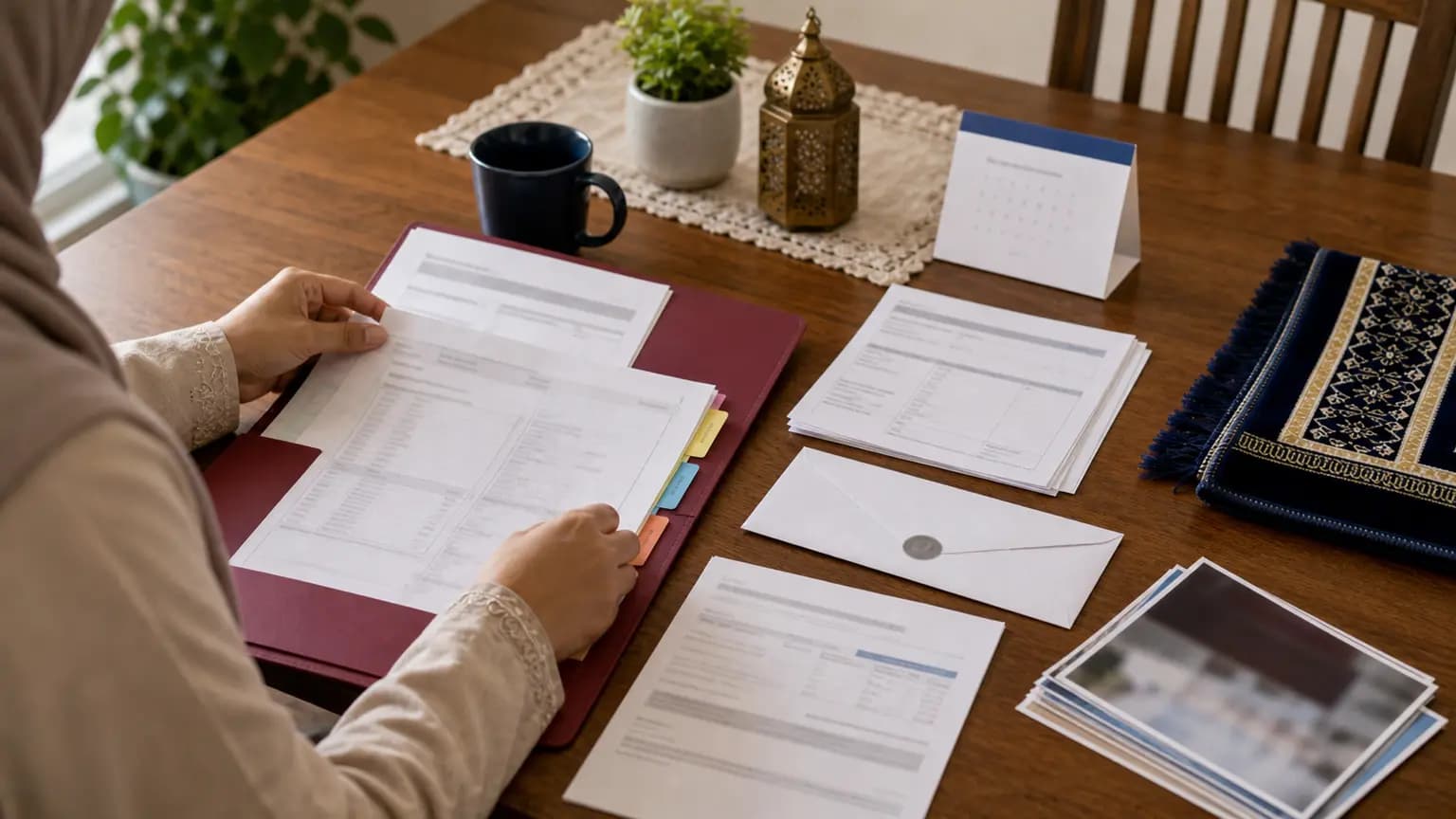
Muslim I-751 Remove Conditions Checklist for Marriage Evidence Biometrics and Prayer
A practical Muslim I-751 removal of conditions checklist covering filing window, marriage evidence, joint records, tax transcripts, affidavits, biometrics, mailing proof, privacy and prayer timing.
A Muslim I-751 remove conditions checklist should help a conditional resident and spouse organize marriage evidence without turning private family life into an open folder. The file may include the conditional green card, filing window, Form I-751 packet, joint lease, utility bills, bank or insurance records, tax transcripts, children records, travel records, photos, affidavits, biometrics notice, mailing proof, prayer timing and privacy boundaries. The goal is not to judge a marriage. The goal is to keep the evidence packet clear, respectful and traceable.
Use this with the Muslim marriage certificate copy checklist if civil or nikah records need sorting, with the Muslim IRS tax transcript checklist if joint tax records are needed, and with the Muslim immigration appointment checklist if biometrics or an interview appears. This guide is not legal, immigration, marital, tax, financial, privacy or religious advice. It is a document organizer for Form I-751 preparation.
The sources set the I-751 map. USCIS Form I-751, filing-window and marriage-based removal pages keep the official petition lane visible. USCIS policy material keeps rule context separate from community anecdotes. IRS transcript material keeps tax evidence in a reliable lane. USA.gov vital-record material helps when marriage or civil documents need replacement. USPS mailing material keeps submission proof visible. The Muslim layer adds amanah, modesty, privacy around marital conflict, prayer scheduling, halal finances and care with family photo or affidavit sharing.
Build the evidence packet without exposing everything
The cover sheet should list the conditional resident name, spouse name, card expiration date, filing window, current address, receipt number once available, joint evidence categories, missing records, mailing method, biometrics question and who may help. Then divide the folder into identity, filing window, marriage records, joint residence, joint finances, family and travel, affidavits, translations, mailing proof, notices and follow-up. If the marriage has separation, abuse, divorce, death or other difficult facts, put questions for a qualified immigration professional on a separate page instead of letting relatives debate the case.
- Filing file: Form I-751 path, card expiration, filing window, fee question, signature plan, packet copy and mailing proof.
- Marriage file: civil certificate, nikah record if used for family context, name-change records, translations and vital-record replacement notes.
- Joint-life file: lease, mortgage, utilities, bank, insurance, tax transcript, children records, travel and photos selected with privacy in mind.
- Notice file: receipt, extension notice if any, biometrics notice, request for evidence, interview notice and case update screenshots.
- Muslim care notes: prayer around appointments, modesty, family privacy, who may write affidavits and what private marital details should stay protected.
Evidence should be strong without becoming invasive. A lease, utility account, tax transcript, insurance document, school record or travel record can show shared life more cleanly than a stack of private messages. Photos can help, but choose them carefully: no unnecessary faces of children, no private bedroom scenes, no mosque or family event images shared without thought. Affidavits should describe facts the writer actually knows, not community praise copied from another family. Amanah here means truthful organization, not oversharing.
Keep timing, mailing and biometrics visible
The filing window belongs on the front page and on the calendar. Save the date calculation, packet mailed date, delivery proof, receipt notice and any extension or biometrics notice in one tab. If using certified mail, tracking or extra services, keep the receipt and delivery screenshot with the packet copy. If the household moves, connect the file to the AR-11 checklist immediately. A missed notice can create a larger problem than a missing utility bill.
Biometrics or interview preparation should stay practical. Put the notice, IDs, parking or transit plan, childcare, prayer time, modest clothing, interpreter question and original-document list in an appointment sleeve. If a spouse, imam, relative or friend is helping, define the role: drive, translate, provide affidavit, locate tax records or watch children. That role does not automatically include access to every marital difficulty, financial account or immigration history. A useful Muslim I-751 checklist leaves the couple with evidence organized, privacy respected, deadlines visible and the next USCIS step calm enough to follow.
Sources
- USCIS: Petition to Remove Conditions on Residence (Form I-751).
- USCIS: When to File Your Petition to Remove Conditions.
- USCIS: Removing Conditions on Permanent Residence Based on Marriage.
- USCIS Policy Manual: Petition to Remove Conditions on Residence.
- IRS: Get Transcript.
- USA.gov: Replace Vital Records.
- USPS: Insurance and Extra Services.


