Islamic Dinar and Dirham Reform: When Coins Became Text
How Abd al-Malik’s late seventh-century reform replaced imperial portraits with Arabic inscriptions and created recognizable gold dinars and silver dirhams.
Early Islamic rulers inherited Byzantine and Sasanian monetary systems. Coins initially retained familiar emperors, fire altars and other designs while adding Arabic words or changing details. Under the Umayyad caliph Abd al-Malik, a major reform in the 690s produced gold and silver coinages dominated by Arabic inscriptions.
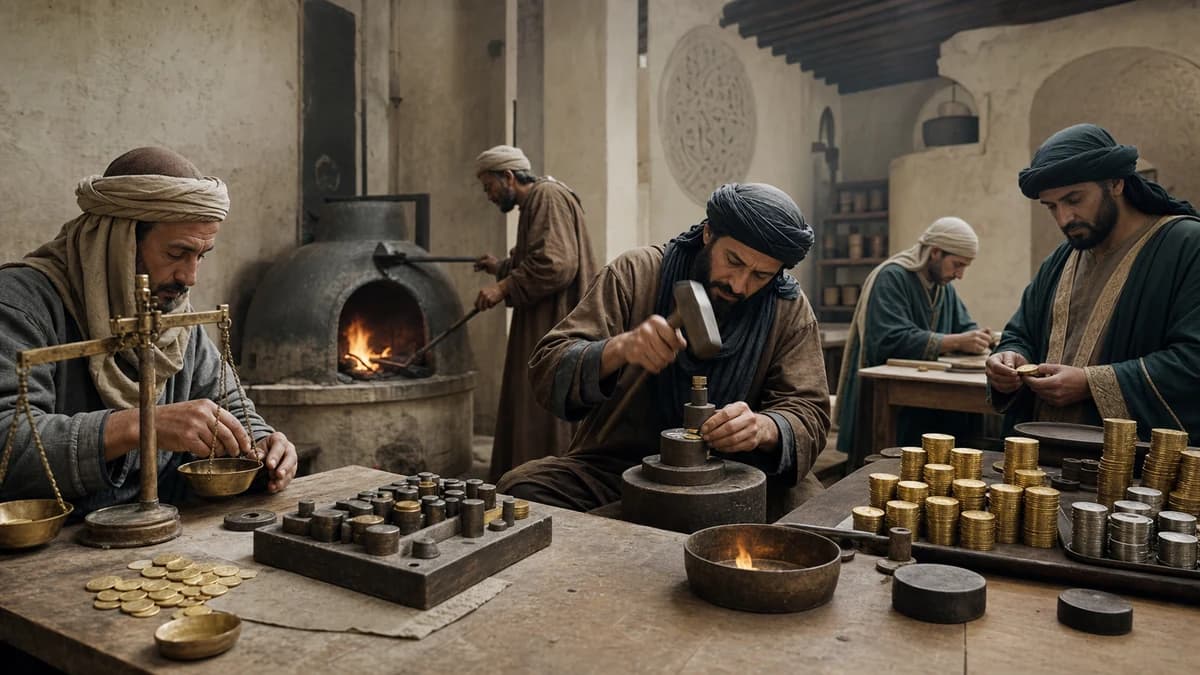
The cover image is an original AI-assisted mint reconstruction, not a photograph of a particular dinar or dirham.
Reform was a process, not an overnight switch
Experimental issues include coins with modified Byzantine imagery and a standing caliph. The mature reformed gold dinar, conventionally dated from 77 AH, removed the human figure and arranged religious statements around a central field. Silver dirhams developed related inscriptional designs while retaining regional mint and date information.
Transitional coins matter because they show administrators testing legibility, weight and authority. A clean before-and-after story hides years of adaptation.
Text carried theology and government
Inscriptions proclaim the oneness of God, identify Muhammad as God’s messenger and quote or adapt Quranic language. They also state when and sometimes where the coin was struck. Every exchange could circulate a standardized public message across a wide territory.
The absence of a ruler’s portrait should not be reduced to a claim that all Islamic art prohibited figures. Figural images continued in palaces, manuscripts and objects. The reform was a specific monetary and political choice.
Metal, weight and trust remained essential
A coin’s authority depended on more than design. Gold or silver fineness, weight standard, mint control and acceptance in tax and trade gave it value. Clipping, imitations and local circulation complicate the neat boundaries suggested by dynastic labels.
Museum records often give weight to hundredths of a gram. Wear and corrosion mean the present weight is not always the original mint target. Hoards and excavated contexts reveal circulation more reliably than one isolated specimen.
How to read an early Islamic coin
- Identify metal, weight, diameter and minting technique.
- Read the center and margin separately on both faces.
- Convert the Hijri date cautiously rather than forcing one exact CE day.
- Compare the coin with transitional issues and contemporary Byzantine or Sasanian types.
Abd al-Malik’s reform made coinage visually distinctive without abandoning the older systems on which minting depended. The result was portable text backed by calibrated metal and state authority.
Sources
- The Met: Gold Dinar of Abd al-Malik — object data, inscriptional type and date.
- The Met: Rare Coins from Nishapur — archaeological context and circulation.
- British Museum: Umayyad Silver Dirham — documented silver coin and mint information.


