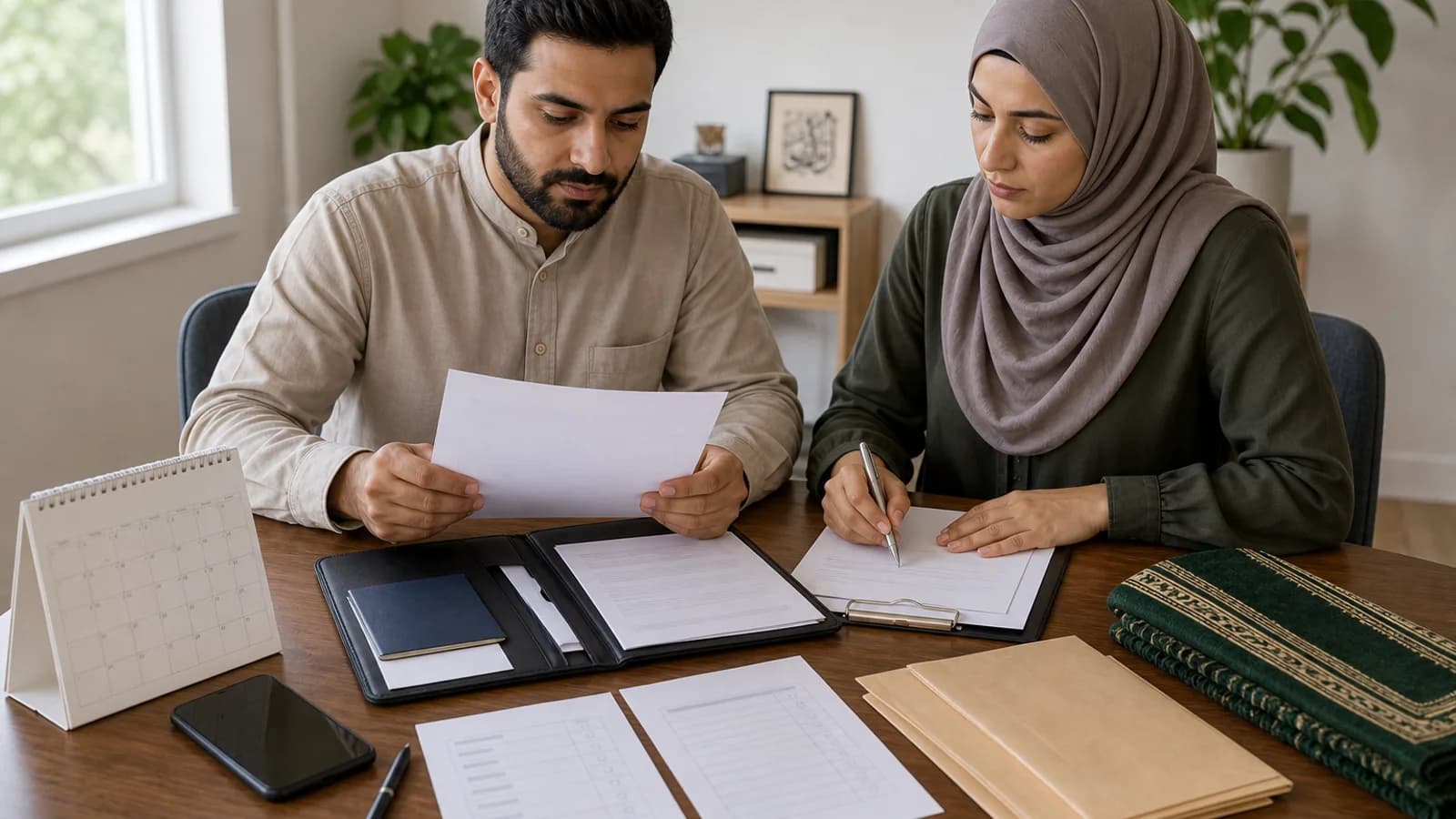
Muslim Immigration Appointment Checklist for USCIS Documents and Prayer
A practical Muslim immigration appointment checklist covering USCIS interview documents, naturalization test preparation, accommodations, legal help, immigration scams, prayer schedule, family communication and document storage.
A Muslim immigration appointment checklist should reduce panic before a high-stakes interview, biometrics visit, naturalization step or document review. Immigration paperwork can affect work, travel, school, family unity, housing, benefits and emotional safety. The household may also be carrying language barriers, trauma, disability needs or fear of making one wrong move. A clear folder turns the appointment from a cloud of anxiety into a list of documents, times, people and questions.
Use this with the Muslim international travel documents checklist if travel papers are involved, and with prayer times when planning the appointment day. This guide is not legal, immigration, tax, benefits, translation or religious advice. It is a document organizer for Muslim applicants and families who need to prepare carefully and avoid unsafe shortcuts.
The sources set the structure. USCIS naturalization interview material keeps appointment and test preparation visible. USCIS exceptions and accommodation pages keep disability and access needs in the folder. USAGov helps families navigate official immigration and citizenship information. FTC immigration-scam guidance protects applicants from fake promises and pressure payments. DOJ EOIR legal representation material helps families separate recognized help from family rumors or unqualified advice. The Muslim layer adds prayer timing, modest clothing, interpreter planning, family communication and careful document sharing.
Build the appointment folder before the week of the visit
The folder should include the appointment notice, government photo identification, current immigration documents, copies of submitted forms, receipt numbers, address history, travel history, employment and school records if relevant, marriage or birth records if relevant, tax or selective service questions if relevant, interpreter notes, accommodation confirmations and a list of questions for qualified help. Keep originals and copies separate so the family is not sorting documents in a parking lot.
- Identity: appointment notice, photo ID, immigration documents, receipt numbers and copies of submitted forms.
- Timeline: appointment time, travel route, security rules, childcare plan, prayer times and backup contact.
- Support: interpreter question, disability accommodation, elder help, transportation, legal representative or accredited help.
- Risk control: immigration scams, fake forms, payment promises, unqualified advice and document-sharing boundaries.
- Muslim routine: salah plan, modest clothing, halal food for long waits, family dua and calm communication.
The appointment day should be planned like travel, not like a quick errand. Check the route, parking or transit, security rules, weather, phone battery, food, medication, prayer timing and who is allowed to enter. If the applicant is fasting, pregnant, elderly, disabled or caring for children, write the practical plan. A family can trust Allah and still charge the phone, pack snacks and leave early.
Prepare for questions without memorizing a fake story
Interview preparation should focus on truth, consistency and documents. Review the application copy, dates, addresses, travel, employment, school, family changes and any corrections that need to be explained. If the person is preparing for a naturalization test, make the study plan visible and realistic. Do not invent answers to sound impressive. A Muslim applicant should not be coached into dishonesty by fear, relatives or paid helpers.
Accommodation questions should be raised early. Disability, language, age, medical or access needs should be written with the appointment notice and support plan. If an accommodation was requested, save the request, confirmation and contact information. If a family member is helping, write what they can help with and what information remains private. Respectful preparation includes protecting the applicant from being spoken over by louder relatives.
Scam prevention belongs in the same folder. Be careful with people who guarantee approval, ask for cash-only payments, use fake government titles, promise secret shortcuts, charge for forms that should be checked through official channels, or tell applicants not to keep copies. Immigration pressure can make families vulnerable. The safer habit is simple: official source, written receipt, qualified help and no rushed promises.
Prayer can help shape the appointment day. Identify when Fajr, Dhuhr or Asr may fall around travel and waiting. Pack a small clean cloth if appropriate, know qibla direction roughly, and decide how the family will stay calm during long waits. The prayer plan should be quiet and practical, not a reason to miss the appointment or argue with staff.
Close the appointment with a record
After the appointment, write what happened before details fade: who attended, what documents were taken or returned, what questions were asked, what notice was given, what deadline is next and what follow-up is needed. Save scans or photos of new notices. If the family needs legal help, use recognized or accredited channels instead of letting the loudest WhatsApp message decide the next step.
A useful Muslim immigration appointment checklist keeps fear from driving the day: documents gathered, route planned, prayer respected, accommodations considered, scams avoided and next steps recorded. The outcome may still be uncertain, but the family is no longer preparing from scattered memory.


