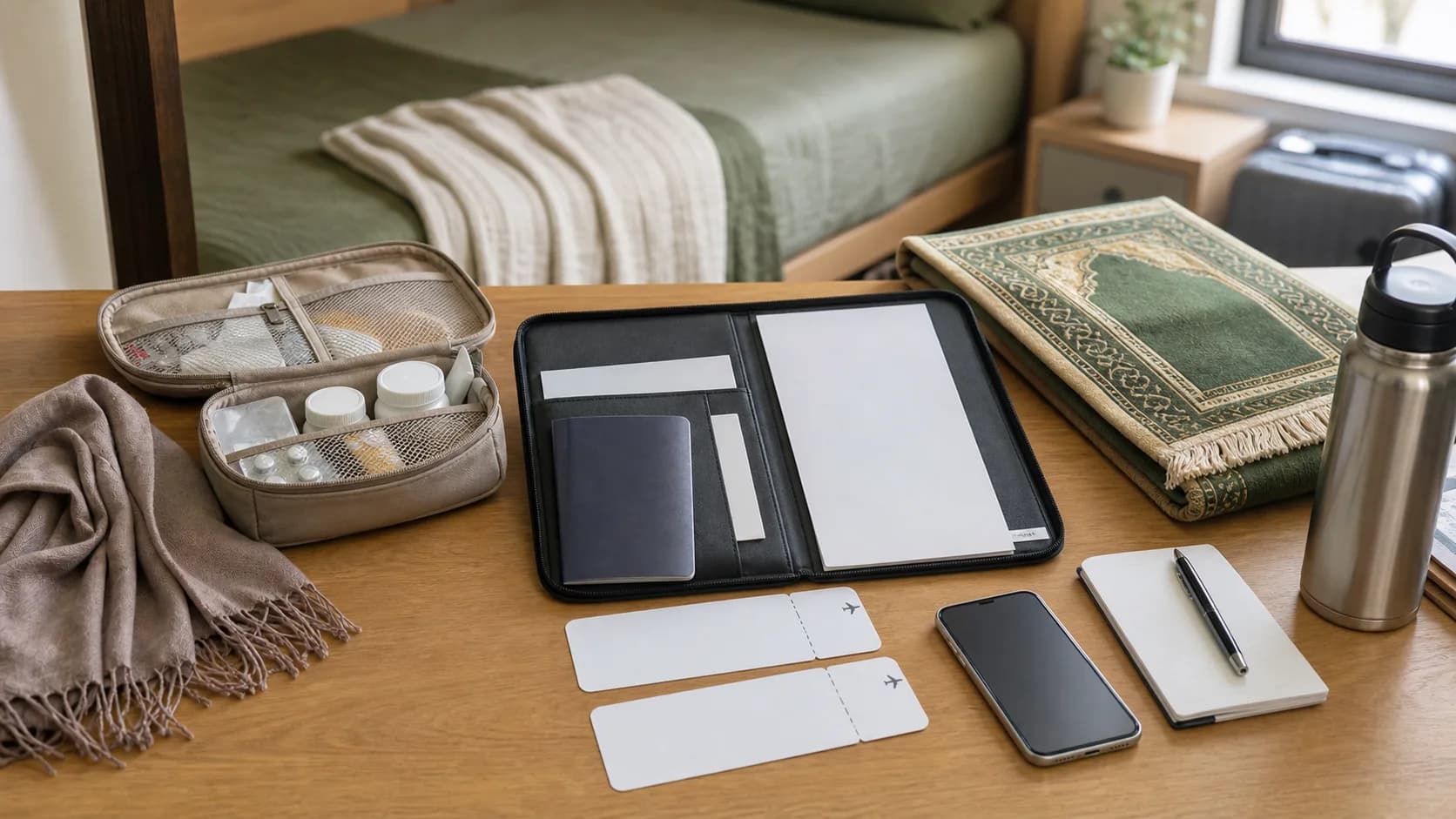
Muslim International Travel Documents Checklist for Passport Visa and Prayer
A practical Muslim international travel documents checklist covering passport and visa checks, advisories, emergency contacts, medicines, prayer planning, halal food, identification and reentry records.
A Muslim international travel documents checklist should start with the documents that can stop the trip: passport, visa, entry rules, transit rules, travel advisories, medicine records, insurance, emergency contacts and identification. Prayer mats, halal snacks and mosque addresses matter, but they cannot repair an expired passport or a missing consent letter. The strongest plan puts official requirements first, then builds the Muslim travel routine around them.
Use prayer times for the departure city and destination, the qibla finder for hotels and airports, and the airline halal meal request guide when the flight is long enough for meal service. This guide is not legal, immigration, medical or security advice. It is a document organizer for Muslim travelers who want fewer surprises before an international trip.
The sources set the order. The State Department traveler checklist, STEP and travel advisories cover passport, destination and emergency planning. USAGov keeps travel-abroad government services visible. CDC Travelers Health adds destination health preparation. TSA identification and CBP reentry guidance keep airport and return-home documents from being forgotten. The Muslim layer adds prayer timing, halal food, modest clothing, family communication and Ramadan or Eid timing.
Make the official document packet first
Before packing clothes, create the document packet. It should include passport copies, visa or entry authorization, itinerary, hotel address, emergency contacts, travel insurance, medicine list, prescriptions if needed, vaccine or health documents if relevant, school or work letters, consent documents for children where needed, and the address of the nearest embassy or consulate. Save a digital copy and keep a paper copy separate from the passport. Do not put every copy in the same bag.
- Passport and visa: expiration date, blank pages, transit rules, child documents and entry authorization.
- Emergency: STEP or embassy contact, family contact plan, insurance, local emergency numbers and hotel address.
- Health: destination health notes, medicines, prescriptions, allergy list and travel clinic questions.
- Airport: ID, boarding documents, security rules, luggage limits and reentry or customs reminders.
- Muslim routine: prayer times, qibla, halal meals, mosque addresses, modest clothing and Ramadan plan.
Travel advisories should be checked more than once. Check when planning, before payment if the destination is uncertain, and again close to departure. A family travelling for Umrah, Eid, a wedding, a funeral, study abroad or a business trip may already feel emotionally committed, but advisories and health guidance are not decorations. They can change what insurance is sensible, whether travel should continue, how family should stay in contact and what documents need to be carried.
Prepare prayer and food without weakening the document plan
The Muslim travel layer works best when it is attached to the itinerary. Mark prayer windows around flights, layovers, driving segments and hotel check-in. Save qibla tools for offline use if possible. Pack a compact prayer mat, socks, water bottle, modest layer and simple halal snacks in carry-on. If the trip crosses time zones, decide how the traveler will check local prayer times instead of guessing from the departure city. If fasting, ask medical and travel questions early rather than improvising at the airport.
Medicine records deserve careful attention. Carry medicines in a sensible way, keep names and doses written down, know what must stay in carry-on, and check destination health guidance. If a medicine raises halal ingredient concerns, ask the prescriber or pharmacist before travel, not at the gate. If the traveler has allergies, diabetes, pregnancy, chronic illness or mobility needs, the health section of the packet should be as visible as the passport section.
For families, document copies should be assigned to people. Who has the passports? Who has the child consent document? Who has medicine records? Who can access digital copies if a phone dies? Who outside the trip knows the itinerary? The STEP source and travel-advisory pages are useful because emergencies abroad require contact clarity. A group chat is helpful, but it is not a document plan.
Airport and reentry checks belong in the same folder. TSA identification guidance helps prevent problems at departure, and CBP reentry reminders help travelers think about what they bring back. A Muslim traveler may be carrying dates, gifts, books, prayer items, Zamzam or religious materials. Customs and airline rules should be checked calmly before travel day so ordinary religious items do not get mixed with prohibited or undeclared goods.
Do a final 72-hour document check
Seventy-two hours before departure, review passport, visa, itinerary, advisory, health notes, insurance, emergency contacts, airport ID, medicine list, prayer plan, halal meal request and family contact plan. For pilgrimage or religious travel, pair this with the Umrah packing checklist. For regular family trips, pair it with the Muslim family travel checklist.
A good Muslim international travel document checklist does not make travel heavy. It makes travel lighter because the essentials are already decided. The passport is valid, the visa is checked, the health questions are written, the prayer plan is realistic, the halal food plan is not wishful thinking and family knows how to reach the traveler. That is the calm version of preparation: documents first, worship protected, journey less fragile.


