How to Verify Sources in AI-Assisted Islamic Study and Halal Research
Use AI to plan Islamic study and halal research, then verify a food certificate, Qur’an verse, hadith reference or manuscript in the original source.
Use AI to turn a question into a list of things to verify. For a packaged food, record the exact product and market, then check the label and the relevant halal certificate. For a Qur’an verse, hadith or historical claim, open the source and save the identifier that lets someone else find the same passage or object. A fluent answer with a plausible link can still point to the wrong product, wording or manuscript.
Give the assistant one question and keep a source log
Start with a narrow question and the evidence you already have. “What does this US ingredient label disclose about the gelatin?” has a bounded answer. “Is this brand halal?” can refer to several recipes, factories and markets. For a text, specify the verse number, hadith collection or manuscript shelfmark before asking the assistant to explain it. If the task is for a class, check what the instructor permits and how the course wants AI assistance disclosed.
Paste public excerpts or your own notes. Crop a photo to the part of the package you want to read and leave receipts, faces and order details out. Use a prompt such as “Make a table of claims, supporting text and missing evidence. Mark any line you cannot verify from the material I supplied. Keep quoted text separate from your explanation.” Ask for questions you can answer from a source. A tool can suggest a search term or quiz you on a passage you have checked without needing access to your purchase history, private notes or a full account screenshot.
Keep a short record that captures the question, the exact item or passage, the source and locator, the date you checked it, and the conclusion the evidence supports. Add a line for what remains open. NIST calls confidently generated false content confabulation. UNESCO’s education and research guidance also emphasizes human oversight and privacy. A source log makes both principles practical because it lets you show where a claim came from and remove a generated detail you cannot trace.
Read the ingredient list before checking halal certification
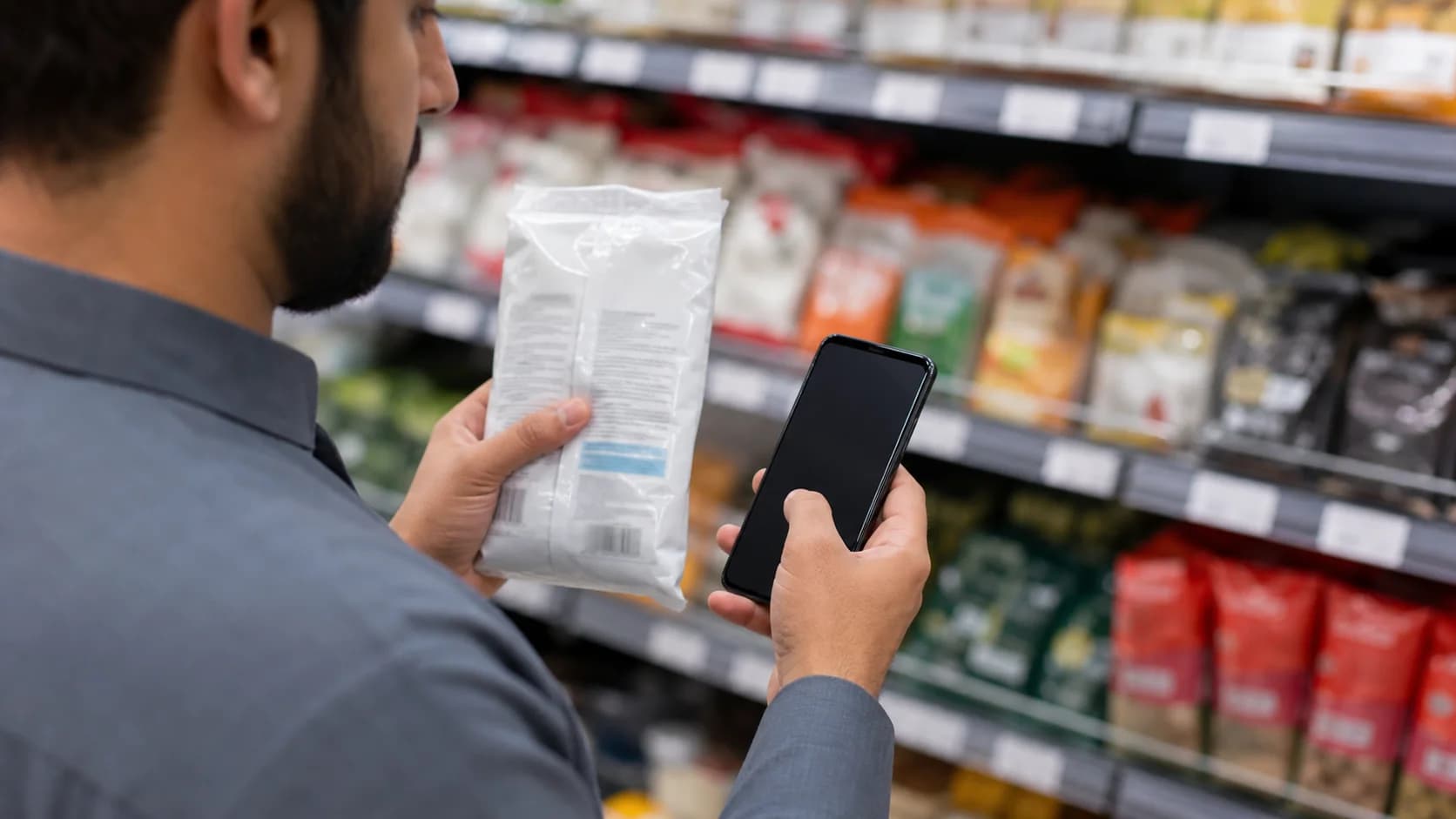
Suppose you have a hypothetical bag of berry gummies sold in the United States. Its ingredient panel lists gelatin and natural flavor. Copy the wording and note the product name, flavor, package size, manufacturer or distributor, and country of sale. If the package carries a certification mark, record its issuer and any printed certificate or product identifier. A barcode or lot code can help the manufacturer identify the exact package.
The word gelatin in this example gives you an ingredient name. It leaves the animal source and production details open. The FDA’s consumer guide also explains that certain flavor ingredients can be declared together under broad terms. The label therefore gives you questions to ask about the declared ingredients. For the factory or formulation covered by halal certification, look for a certificate or confirmation from the issuer. A manufacturer’s answer about ingredient origin and a certifier’s answer about coverage address separate questions.
For a product marketed in Malaysia, JAKIM’s halal status page points to the Malaysian Halal Directory. The directory includes products, food premises and services, as well as information about foreign halal certification. For imported food in Singapore, the Islamic Religious Council of Singapore (MUIS) explains how it recognizes foreign halal certification bodies. In that case, check the issuer’s recognition for the market and seek a product-specific certificate or confirmation from the issuer. Compare the exact variant, manufacturer or production site, validity date and product list wherever those details are available.
Imagine that your search returns a certificate for the same company’s strawberry gummies at a different site. Your result is “I found a certificate for another product or site. Coverage for this bag is unverified.” If a listing is missing, record where and when you looked. You can ask the manufacturer, “Can you identify the gelatin source and provide a current halal certificate covering this flavor, package and production site?” The guides to halal food rules and certification and checking a specific KFC outlet’s certificate explain how this distinction carries over to other food and restaurant questions.
Build a short Qur’anic Arabic lesson from a checked verse
Use one verse and pick a skill you can demonstrate without the assistant. For Qur’an 1:5, open the Quranic Arabic Corpus and compare the tokens iyyāka, naʿbudu, wa-iyyāka and nastaʿīnu. The corpus identifies the repeated iyyāka as a second-person singular pronoun and the two verbs as first-person plural imperfect forms. The third token adds the conjunction wa. The corpus gives you the exact places to look if a generated explanation assigns a verb or a pronoun to the wrong person.
Give the assistant your four checked entries and ask it to build a five-minute retrieval exercise. First cover the annotations and find the repeated pronoun. Next identify the two verb forms from memory. Finally, open the corpus and mark which answer needs correction. Save that correction as a card with the verse number so you can repeat the exercise tomorrow. If pronunciation is part of your goal, listen to a trusted recitation and seek feedback from a teacher. A grammar tag describes a form and a syntactic role. An interpretation of the verse or a judgment about recitation calls for different evidence.
If your source is a page image, identify the verse and record the edition or manuscript separately. Page numbers move between editions and formats. The explanation of what a mushaf is and how physical copies are described can help you keep the text locator and the object locator straight.
Compare hadith entries using the collection and numbering system
Start with the collection name, a few distinctive words and the language of the quotation. Open the entry and verify the narrator, book or chapter, numbering scheme and wording in the version you are reading. Save the reference before asking for a comparison. An answer that gives only “hadith 1” leaves out the collection, and a quotation that reads smoothly may be a paraphrase or a translation from a different edition.
For a worked example, find the report about intentions in Sunnah.com’s entry for Sahih al-Bukhari 1. The entry identifies ʿUmar ibn al-Khaṭṭāb as the narrator and gives a collection reference, an in-book reference and an older USC-MSA reference. Write down Sahih al-Bukhari 1, Revelation, Book 1, Hadith 1, and preserve the label of the older numbering if a citation you inherited uses it. The same number happens to recur in the displayed schemes for this entry. In another entry, keep the scheme’s label even when a number looks familiar.
For two passages, put each reference and narrator in its own row, preserve quotations exactly from the source you cite, and mark your summary as a paraphrase. Ask the assistant to list only the differences visible in those two passages. A textual comparison can identify differences you can point to on the page. Questions about chains of transmission, authenticity or application deserve an appropriate specialist source and a clear attribution to it.
Separate the historical event from the document that records it
A catalogue date can describe the surviving copy, the date proposed for its production or the span assigned by a curator. In the University of Edinburgh’s collections, Or Ms 20 identifies a surviving manuscript of Rashīd al-Dīn’s Jāmiʿ al-tawārīkh. Its catalogue dates that object to 714 AH (1314 CE). The shelfmark and the date describe the item held there. Dates for the events recounted in its pages and attributions for individual images or lines require their own evidence. When an assistant combines these facts into a single sentence, split them and find a source for each.
Try a source card headed “Edinburgh, Or Ms 20.” Record the catalogue title, attribution and manuscript date. If your claim concerns a particular image, add the folio reference from the catalogue or digital viewer and describe what you can see. Keep a modern historian’s interpretation in a separate field with its own citation. Our account of how the Jāmiʿ al-tawārīkh became a world history follows the work across surviving manuscripts and explains why the choice of copy matters.
Use the same evidence check across all four tasks
The table summarizes what to retain after each exercise. It also shows the claim you can make from the evidence in hand and what would require another check.
| Task | Record to keep | Conclusion supported |
|---|---|---|
| Packaged food | Variant, market, label and matching certificate details | What the label discloses and whether the exact product’s coverage is verified |
| Qur’anic Arabic | Verse, token and checked corpus annotation | How the reference analyses the word or form |
| Hadith comparison | Collection, book, numbering scheme, narrator and wording | Which version you read and the wording differences you observed |
| Manuscript research | Institution, shelfmark, date, folio and separately cited interpretation | What the catalogue records and what the image or text shows |
Finish by testing a sentence that someone might repeat. If the sentence says “this product is certified,” can that person find the current record for the same product? If it says “the source gives this wording,” can they open the same entry or folio? If they cannot, narrow the statement and name the missing record. A useful session ends with a traceable answer, a good question for a manufacturer or teacher, or a precise reason why the evidence is still incomplete.
The AI-generated cover is a study illustration.
Sources
- NIST, Generative Artificial Intelligence Profile — Defines confabulation and explains how plausible false statements can occur.
- UNESCO, Guidance for Generative AI in Education and Research — Addresses human oversight, educational use and data privacy.
- US FDA, Types of Food Ingredients — Explains ingredient terminology and when broad flavor terms can appear on US labels.
- JAKIM, Halal Status Check — Explains the scope of the Malaysian Halal Directory and links to it.
- MUIS, Foreign Halal Certification Bodies — Describes Singapore’s recognition scheme for overseas certifiers.
- Quranic Arabic Corpus, Qur’an 1:5 — Shows four annotated tokens, their grammatical forms and the syntax graph.
- Sunnah.com, Sahih al-Bukhari 1 — Displays the intentions report, its narrator and three reference formats.
- University of Edinburgh, Or Ms 20 catalogue record — Identifies the surviving manuscript and records its catalogue date.