Resource
Muslim Library Quiet Study Adab Guide
A practical guide for studying in libraries, reading rooms and shared quiet spaces with low voice, respect and focus.
Use case
Libraries, reading rooms, study halls, quiet floors, shared tables and community learning spaces
Adab focus
Lower voice, phone restraint, respectful study groups, tidy materials and patient sharing
Best time
Before entering, before speaking, before taking a call and before leaving the table
Boundary
Does not replace library policy, accessibility needs, school rules or local safety instructions
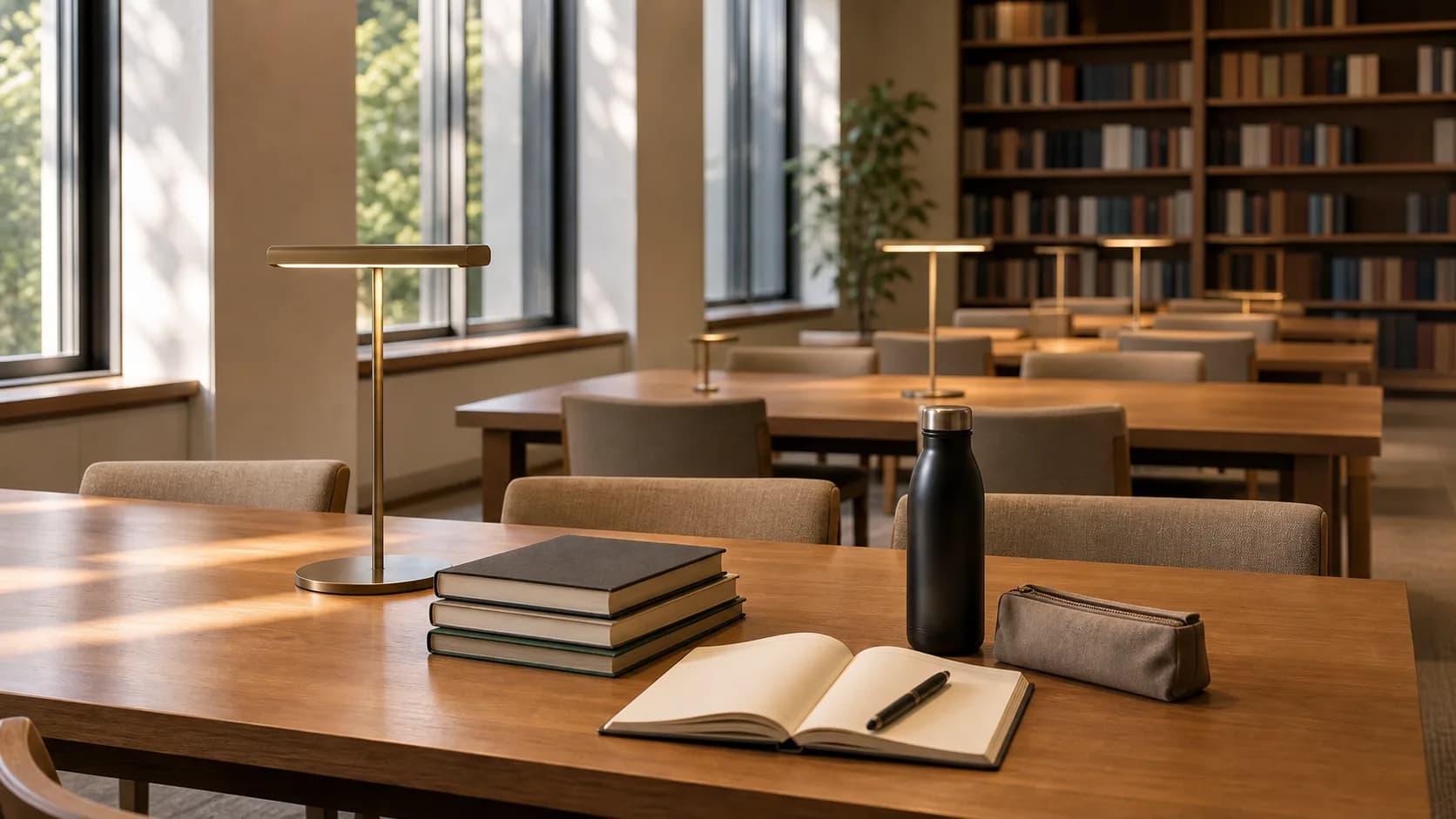
A library is built around a shared promise: everyone gets a little protected silence so reading, research and reflection can happen. Muslim adab treats that quiet as a trust, not as an empty rule posted on a wall.
The Qur'an teaches restraint in voice, dignity in speech, cooperation in good and care before speaking without knowledge. In a study room this becomes simple behavior: keep calls outside, lower group discussion, avoid mocking another learner and leave the table ready for the next person.
Use this checklist when entering a library, joining a study table, taking a call or leaving materials behind. It helps a Muslim protect their own learning while preserving the calm that other people came there to find.
Library Quiet Study Adab Checklist
| Moment | Adab question | Practical action |
|---|---|---|
| Entering | Am I carrying noise into a quiet trust? | Silence alerts, finish calls outside and choose a seat without disturbing others. |
| Group study | Can we learn without taking over the room? | Use a low voice, keep discussion short and move to a group room if the topic grows. |
| Shared table | Am I using only the space I need? | Keep bags close, stack books neatly and leave outlets and chairs available when possible. |
| Leaving | Did I return calm and order? | Throw away trash, reset the chair and take personal notes or papers with you. |
FAQ
Can I take a phone call inside a library?
If it is not urgent, step outside or use a designated call area. A quiet room is a shared trust.
What if my study group needs to talk?
Keep voices low, choose a permitted discussion area and stop if the conversation disturbs nearby readers.
Is cleaning my study table really part of adab?
Yes. Leaving a calm, clean place for the next person is part of respecting shared property and other people's time.
Related reading
- Muslim Mosque Quiet Voice Adab Guide
Use when the quiet-space issue happens in a prayer hall or mosque setting.
- Muslim Learning Implementation and Reflection Guide
Use when the focus is turning study time into action and review.
- Muslim N-336 Naturalization Hearing Checklist for Denial Notice Evidence and Prayer
A practical Muslim N-336 naturalization hearing checklist covering denial notice, evidence, civics study, interpreter question, copies, privacy and prayer timing.
Connected by study.
- How Baghdad Fell to the Mongols in 1258
A source-aware history of the 1258 siege of Baghdad, its dates, Mongol campaign, Abbasid collapse, disputed death tolls, library stories and political aftermath.
Connected by library.
- Muslim Student Prayer Guide for School Schedules Rooms and Jumuah
A practical Muslim student prayer guide covering school schedules, quiet rooms, parent emails, Jumuah planning, religious clubs and respectful communication with teachers.
Connected by quiet.
- How to Build a Quranic Arabic Study Plan With AI
A source-backed explainer on how to build a quranic arabic study plan with ai, with evidence boundaries, source context and practical questions for Muslim readers.
Connected by study.
- Timbuktu Manuscripts and Sankore: History, Contents, Rescue and Preservation
A detailed guide to Timbuktu's manuscripts and Sankore: the city's history, mosque-based learning, real manuscript contents, the 2012 rescue, digitization and preservation.
Connected by learning.
- Dar al-Ilm: Books and Learning in Fatimid Cairo
What sources say about al-Hakim's Dar al-Ilm, its library and teaching, and why it should not be flattened into a modern university or public library.
Connected by library and learning.