Quba Mosque in Medina and the Hadith About Praying Two Rak’ahs
Learn when Quba Mosque was founded, what three hadiths say about visiting and praying there, and why the reward compared to Umrah is distinct from the pilgrimage rites.
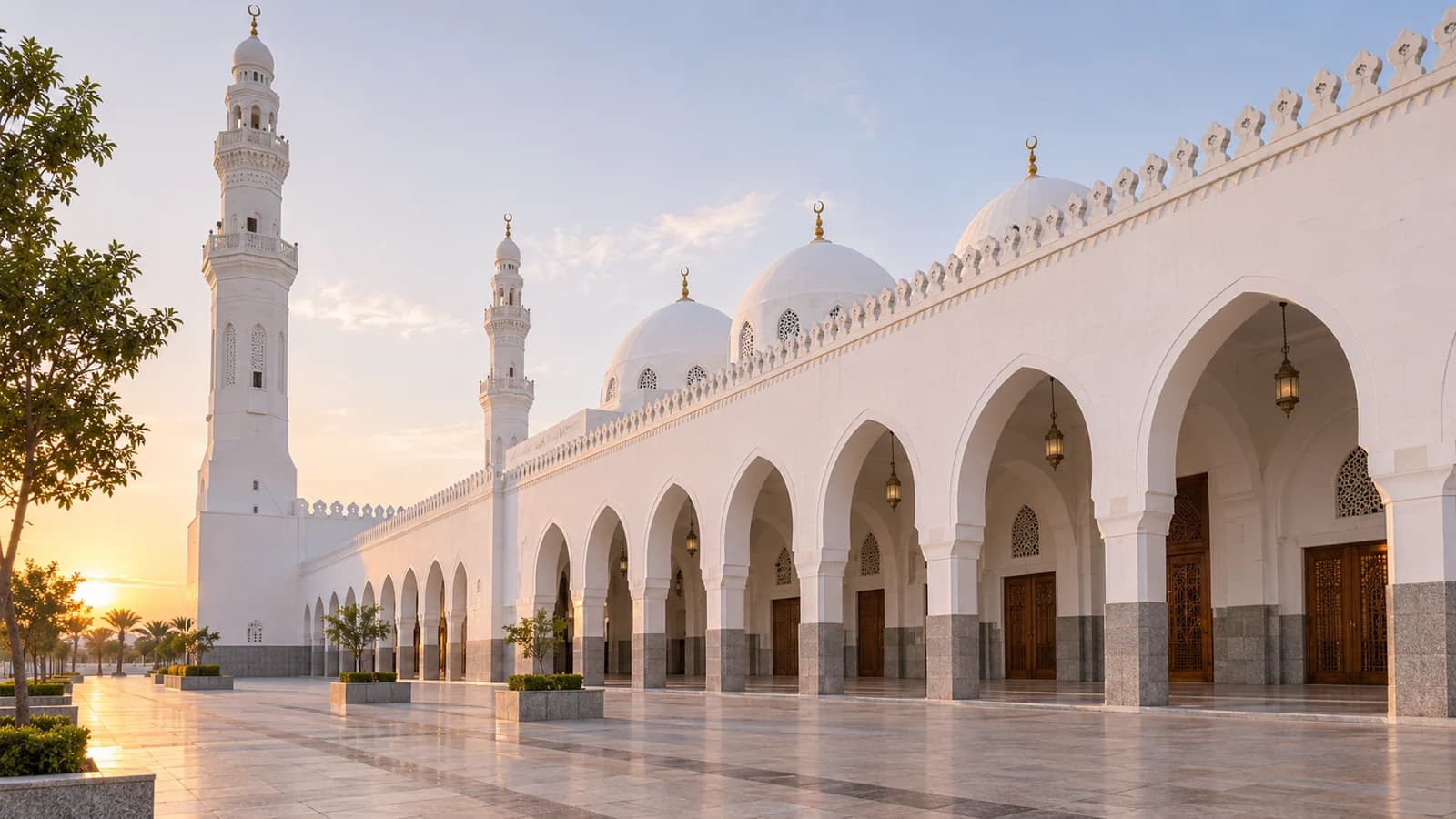
Quba Mosque lies south of the Prophet’s Mosque in Medina. It was founded when the Prophet Muhammad arrived in the Medina area during the Hijra in 622 CE, the first year of the Hijri era. A hadith in Sahih Muslim describes him praying two rak’ahs at Quba. A separate report in Sunan Ibn Majah compares the reward of a prayer there, after purification at home, to that of Umrah. These reports describe different details of the visit. Travelers can read both, learn which part each supports and distinguish the devotional visit from the pilgrimage rites performed in Mecca.
When Quba Mosque was founded and where it is
Saudipedia’s Quba Mosque entry dates the foundation to 622 and describes the location in relation to the Hijra route. The Saudi Press Agency’s history of the mosque notes the Prophet’s participation in laying its foundations and the companions’ work in completing construction. When describing Quba as the first mosque, keep that account tied to the arrival in Medina after the migration from Mecca. The phrase identifies its role at a particular point in the Prophet’s biography. It does not require a claim about all earlier places of worship.
Quba and Al-Masjid an-Nabawi, the Prophet’s Mosque, are distinct destinations within Medina. A timeline of the Hijra from Mecca to Medina in 622 explains how the stop at Quba fits between the journey and arrival in what became the city centre. The historical sequence is useful even if a visitor begins modern sightseeing at the Prophet’s Mosque. Place the two sites separately on a map so that “Medina” does not stand for a single building in quotations or directions.
The date of foundation describes the institution and its location. It does not date every wall, dome or minaret that a visitor sees today. The site has gone through rebuilding, new services and expansions. Use the entry from Saudipedia to connect the earliest account with later work, and treat recent construction reports as records of their own dates. The date of a photograph is important when comparing entrances, the shape of the courtyard or the space used by worshippers.
Three reports about the visit and prayer
| Report | What it describes | Detail to keep with it |
|---|---|---|
| Sahih al-Bukhari 1193 | The Prophet went to Quba on Saturdays, walking or riding. | The report describes his recurring practice. |
| Sahih Muslim 1399b | He came on foot or riding and prayed two rak’ahs in the mosque. | This is the explicit two-unit report. |
| Sunan Ibn Majah 1412 | A person purifies themselves at home, goes to Quba and prays there. | It compares the reward to that of Umrah. |
In Sahih al-Bukhari 1193, Ibn Umar reports that the Prophet regularly visited on Saturdays by either means, and Ibn Umar followed that practice. It is a report about a day he used to choose, without an instruction in that wording limiting visitors to Saturday. The next report, al-Bukhari 1194, also tells of the visit on foot and by riding. Neither account makes the mode of travel the only point of going.
Sahih Muslim 1399b includes the two rak’ahs, or prayer units. An English heading for the chapter may refer to the merit of visiting and praying there. The number itself appears in the report. Link the reference to the detail when making a note. If you remember the Saturday practice but cannot remember which report states two units, the table helps you open the appropriate passage.
Sunan Ibn Majah 1412, transmitted from Sahl ibn Hunaif and labelled hasan in the linked edition, sets out purification at one’s residence, going to Quba, and performing a prayer there. It compares the reward to that of Umrah. That wording speaks of a prayer, while the number two is explicit in Muslim’s report. When describing the practice from both accounts, give each reference its own role.
What the comparison to Umrah means for a visitor
The expression in Ibn Majah is a description of reward. Visiting Quba involves going to a mosque in Medina and praying there. Umrah has a sequence in and around Mecca that includes entering the state of ihram, circumambulating the Kaaba, going between Safa and Marwa and cutting or shortening the hair. A visitor who wants to complete those rites should consult the step-by-step guide to Umrah. Saying “like the reward of Umrah” retains the scope of the comparison in the hadith.
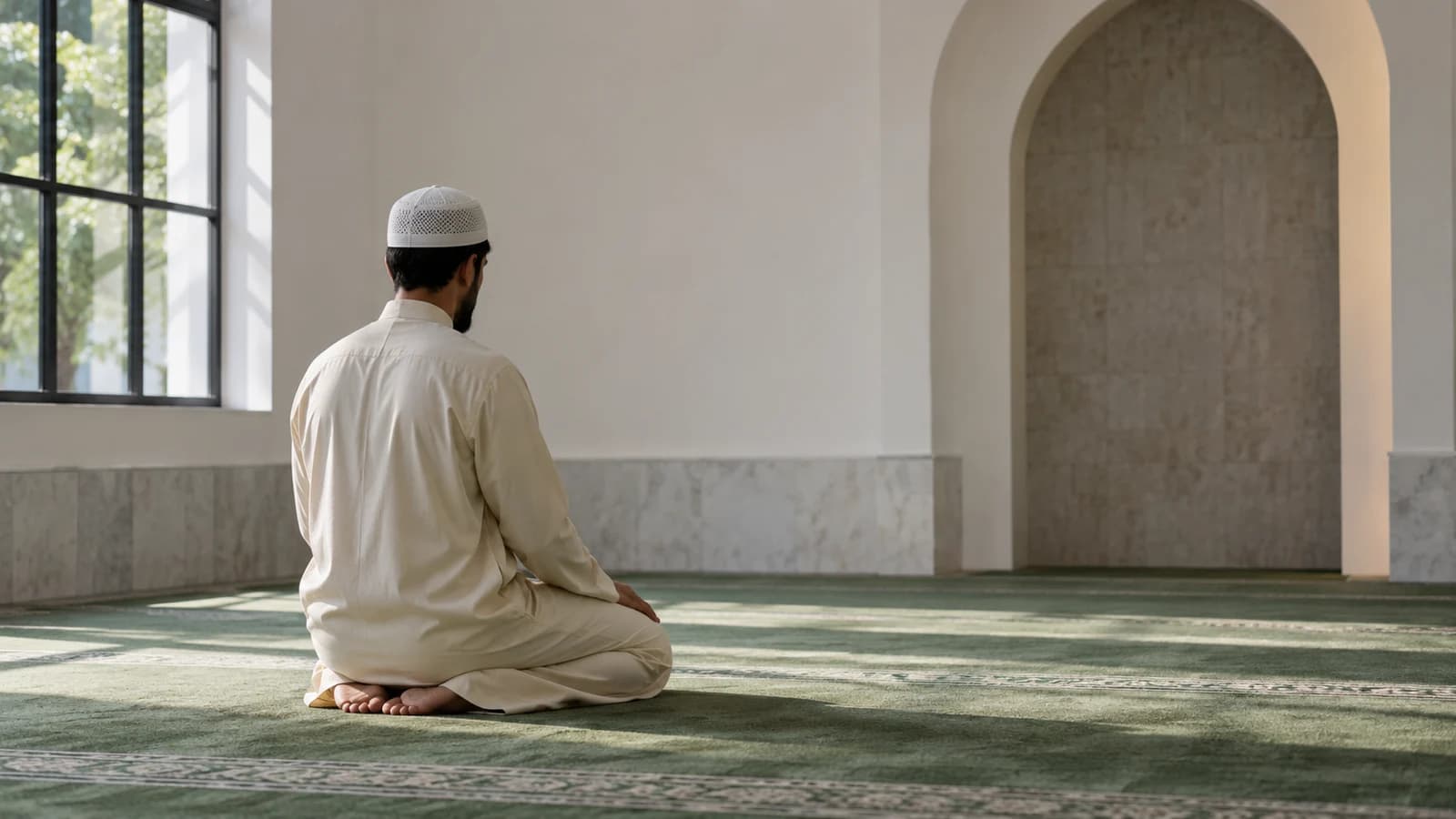
For a simple account of the visit, distinguish preparation, travel and prayer. The report on purification describes where preparation happens. The reports on walking and riding describe how the Prophet reached Quba on different occasions. The report on the two rak’ahs describes what he did inside. Travelers may choose a route appropriate to their circumstances. A teacher familiar with the visitor’s tradition can answer questions about changes in preparation, joining a congregation or when a voluntary prayer can be performed.
The sequence of the seven legs between Safa and Marwa illustrates the difference particularly clearly. That rite is tied to specific places and a prescribed sequence during Hajj or Umrah. The Quba report instead locates a prayer at a mosque in Medina and describes its merit. Travelers who are arranging both cities can put the Medina visit and the Mecca rites on separate parts of their itinerary. This keeps the language of reward from being misread as a change to the requirements of pilgrimage.
How to read the references to a mosque founded on piety
Quran 9:108 refers to a mosque founded on taqwa, or piety, from the first day. The verse’s Arabic does not contain the place name Quba. Ibn Kathir’s commentary on the verse discusses Quba in the context of its explanation. When careful wording matters, name the verse and say which commentary connects it to the site. This makes it possible to find both the text and its explanation separately.
Sahih Muslim 1398a separately preserves a response identifying the Prophet’s Mosque as a mosque founded on piety. Ibn Kathir treats the pious foundation of Quba and the description applied to the Prophet’s Mosque as compatible. The two places remain distinct, and an explanation of one should not silently take the place of a quotation about the other. Readers often meet an English rendering of the verse without its commentary or the report from Muslim. Checking all three explains why more than one mosque appears in discussion.
Read expansion figures with their dates and scope
The Saudi Press Agency’s 2024 account describes an earlier rebuilding during King Fahd’s reign. It gives 5,035 square metres for the prayer hall at that stage and 13,500 square metres for the mosque together with service facilities. Those figures refer to different parts of that development. The Saudipedia expansion timeline describes the later King Salman project, with a target of 50,000 square metres and accommodation for up to 66,000 worshippers. Those are project figures. When comparing them with other sources, look for the same unit and identify whether the entry describes the prayer hall alone or the wider development. They do not establish how much area is open during a particular visit.
A June 2025 Saudi Press Agency report described partial completion and further work. If you see older and newer capacity figures side by side, check whether they refer to an earlier hall, the entire site, or the end state of a project. A historic foundation date and contemporary construction can coexist at the same site. A visitor’s near-term questions concern the entrances and areas in use today, rather than the largest number appearing in a project announcement.
One way to compare the figures is to write two columns headed “reported built area” and “announced target.” Place the date and the type of space in each entry. An area for a prayer hall cannot be directly compared with a site figure that includes courtyards and services. Likewise, a stated future capacity is not a count of people who can enter on a given day. This is useful when an article or social post reproduces a number without its original description.
Sources and practical details for a visit to Quba
The Saudi Press Agency’s account of the Quba walking trail identifies a pedestrian connection between Quba and the Prophet’s Mosque. Estimates of distance can use different starting points, so check your actual entrance and route. Account for weather and mobility when choosing between walking and a ride. Check current notices if an entrance or courtyard is being worked on. If you are unfamiliar with mosque etiquette, the first-visit guide explains shoes, modest clothing and when to ask before taking photographs.
You can use the three hadith references as a compact way to prepare for the visit. Put the habitual visit under al-Bukhari 1193, the two units under Muslim 1399b and the purification and reward comparison under Ibn Majah 1412. Use the Saudi sources for Medina’s geography and the history of construction. These references answer distinct questions that come up when a person reads about the site, sets out for it or tries to remember the source of a particular practice.