What Is Shellac (E904) in Food? Glaze, Labels and Halal Certification
Shellac, or E904, gives some sweets and produce a gloss. Learn its source, the names on food labels and how to check a product’s halal certification.
Shellac, identified as E904 on some food labels, is a purified resin made from the material that lac insects secrete on host plants. Food makers use it as a surface coating on some sweets and other foods. In English, confectioner’s glaze is one name associated with shellac. The shorter term glaze describes what a coating does and can refer to several ingredients. For a halal decision, identify the coating first, then check which authority’s guidance applies and whether a current certificate covers the exact finished product. Food Standards Australia New Zealand explains glazing agents.
What shellac is and why manufacturers use it
Lac insects feed on living host plants and deposit resin on their stems and branches. Producers collect the material and refine it so it can be used in a thin coating. The European Food Safety Authority’s 2024 assessment identifies the source insect and describes several forms and processing routes. For a food shopper, the relevant connection is from the insect’s secretion, through purification, to the finished ingredient used for glazing. EFSA’s scientific opinion on shellac.
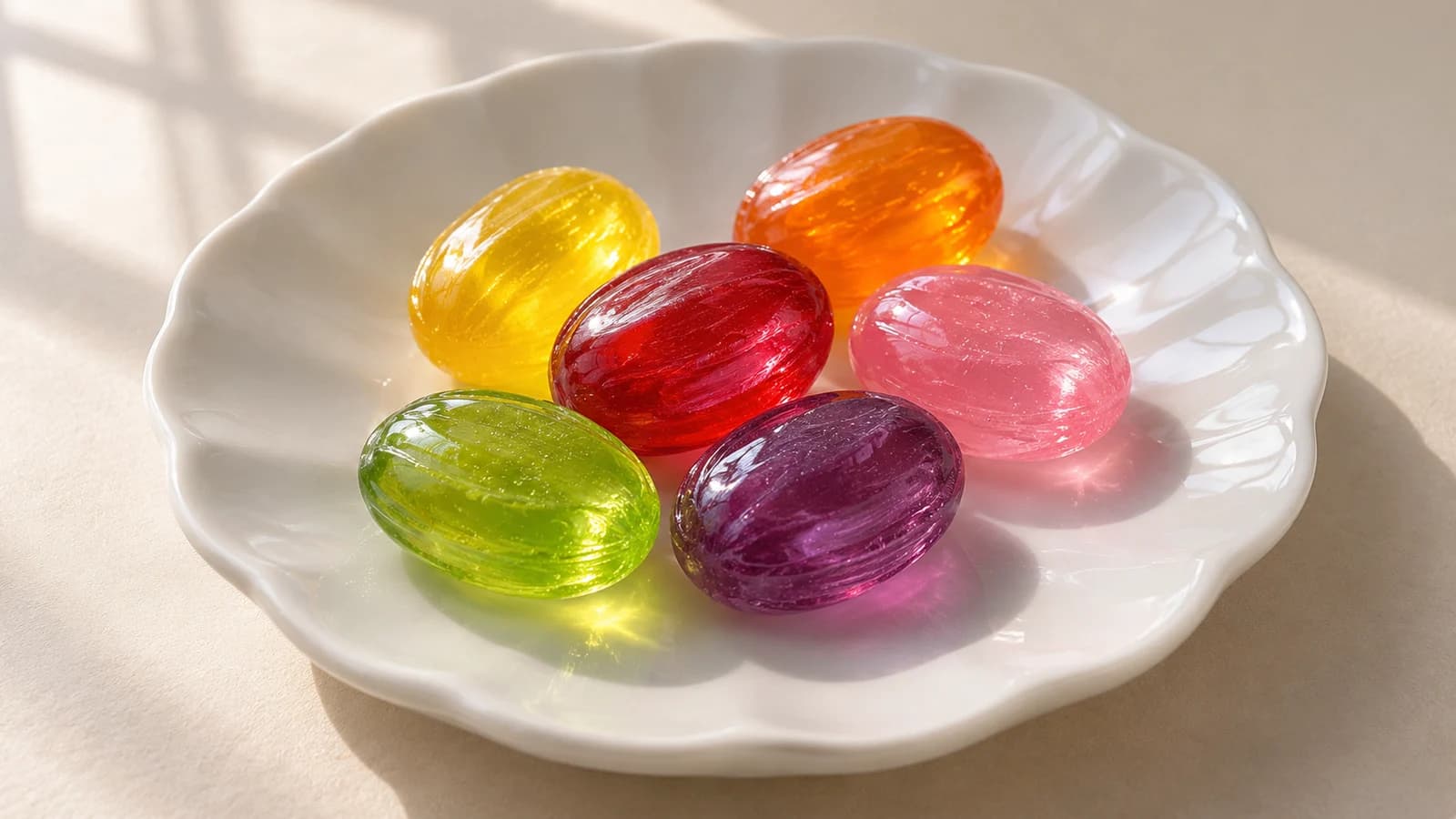
A glaze can give a coated piece of confectionery a glossy, polished surface. Surface coatings on some kinds of fruit can help protect the outside and slow moisture loss. The ingredients underneath matter independently. A shellac coating on a sweet says nothing about which flavours or other ingredients went into the centre, for example. A coating’s appearance is also weak evidence about its source because different glazing agents can give a similar finish.
Shellac is also a word used in non-food markets. If you read a product description for a finish intended for wood or crafts, treat that product as belonging to its stated use. A food specification describes a material prepared for a defined food application. Within food production, distinguish the purified resin from the supplier’s prepared glazing mixture, which can include other ingredients. These details can matter if the halal authority you follow asks how the supplier prepared the coating. Read what halal means for food and certification.
Names to look for on ingredient lists
Start with the ingredient panel for the package sold in your market. Shellac names the ingredient. E904 is its European additive designation, and Australian and New Zealand labels can use the number 904. The U.S. Food and Drug Administration’s food contact substances inventory lists confectioner’s glaze, candy glaze and lac resin among names for purified shellac. A manufacturer can clarify an ambiguous name or the contents of a prepared glaze. FDA inventory entry for purified shellac.
| What the label says | What you can establish | What to check next |
|---|---|---|
| Shellac, E904, or glazing agent (904) | The declared glazing ingredient is shellac. | Check the exact product certificate if your buying standard requires one. |
| Confectioner’s glaze or candy glaze | These names are associated with purified shellac. | Ask what the named glaze contains if the supplier’s description is incomplete. |
| Glaze, glazed, or polished | The wording describes a finish or function. | Find a specific ingredient name or additive number on the package. |
| Carnauba wax (903 or E903) | This identifies a separate glazing agent. | Read the full ingredient panel and verify the product separately if needed. |
Compare the whole code. The difference between 903 and 904 is easy to overlook if a shop prints the ingredients in small type. A listing online can also omit the function or name that appears on the package. Where the two descriptions differ, record the exact wording on the item and ask the manufacturer which ingredient list applies to that market and version. For a related example where one label word can leave the actual source unclear, see how to read rennet on a cheese label.
How the food rules differ by market
In the European Union, many additives in an ingredient list must be declared by their functional category followed by a specific name or E number. Depending on how the ingredient is listed, a reader may see a local-language equivalent of glazing agent followed by shellac or E904. The separate EU additives regulation gives the permitted food categories and conditions. Its listed applications include restricted surface treatments for specified fruits, such as apples and citrus fruit, and use as a glaze on nuts. Read the entry for the food category in question. EU food information rule, Annex VII, Part C. EU food additive conditions by category.
Commission Regulation (EU) 2026/189 updated the E904 specification to remove the specification for wax-containing shellac. It also defined a narrowly scoped additional use for certain foods for special medical purposes in tablet or coated tablet form. This change illustrates the importance of the material specification and the designated food category when reading an additive rule. The science assessment by EFSA and the EU legal amendment serve separate purposes. EU Regulation 2026/189 on the shellac specification and use.
Australia and New Zealand use a name or number after the additive’s function, as illustrated by their food standards agency. The U.S. FDA entry cited here is an inventory of substances listed for food contact and helps identify names used in English. For an intended U.S. food use, consult the rule that governs that use. The governing food rules establish how the ingredient may be sold or used in a particular market. A halal certificate answers a separate question and may involve further documentation. Australia and New Zealand Schedule 8, food additive names and code numbers.
Is E904 halal? What the authorities say
The South African National Halaal Authority (SANHA) lists E904 as Halaal in its additive database and identifies the source as lac insect resin. The Indonesian Ulema Council (MUI), in Fatwa No. 27 of 2013, regards the defined shellac material as ritually pure. It permits its use as an additive or processing aid in food, medicines and cosmetics where it is beneficial and causes no harm. These positions are positive about the ingredient under their stated scope. A certificate for a specific sweet requires separate evidence. SANHA’s additive list, including E904. Indonesian Ulema Council Fatwa No. 27 of 2013.
Production details can require further attention. In its explanation of shellac processing, the Indonesian halal inspection body LPPOM notes that a dissolution method can use ethanol as a processing aid. Its guidance looks to ethanol derived from a non-khamr industry and considers whether its use is harmful. That point describes the process reviewed under the cited guidance. An additive number alone cannot reveal how the resin was prepared, where such an aid came from, or which processing aids an authority evaluated. LPPOM’s explanation of shellac processing and ethanol sourcing.
A shopper may follow a recommendation from a local scholar, require certification accepted in a particular market, or use a certifier’s published ingredient guide. Follow the appropriate source through to the question it actually answers. An additive entry addresses an identified substance. A fatwa may identify conditions for that substance’s use. A product certificate covers the specified product under its issuer’s program. For another food in which the authority and its scope matter, see the different Islamic legal approaches to shellfish.
How to check the finished product’s halal certificate
Write down the product name and exact flavour, and photograph the ingredients, logo and manufacturer or importer details. For imported sweets, the label supplied for your market can be useful along with the original packaging. A certificate that clearly identifies the relevant product and manufacturer, is current, and comes from a body you recognize provides a stronger basis for a buying decision than a logo on a reseller’s image.
Use the issuer’s public directory where available. Malaysia’s Department of Islamic Development (JAKIM) directs shoppers to the Malaysian Halal Directory for certification information about products, premises and services, and for information on foreign halal certification. Start with the issuer named on your particular package, then match the product and company. If the directory shows a company or facility but the flavour or product line remains unclear, check the scope with the issuer or manufacturer. JAKIM’s official halal status check.
Certifiers may consider ingredients, production and facility documentation in the review for a particular product. The Islamic Food and Nutrition Council of America, for instance, describes reviewing documentation and auditing a facility as steps in its own program. The word shellac identifies one material within that bigger review. When an issuer’s online listing is incomplete, record the certificate number and ask whether the certificate covers your item and which period it covers. IFANCA’s product certification process. Step-by-step guide to verifying a halal certification logo.
Three practical checks for sweets and other glazed food
An imported sweet lists glazing agent (E904). You know the glazing ingredient is shellac. If you specifically require a product certificate, search for the exact flavour and producer. Look for distinguishing names where the packet offers different coatings or fillings in the same range. If the evidence you have is a certifier’s ingredient entry, you can use it for the shellac question and still check the remaining parts of the product under your buying standard.
A packet only says confectioner’s glaze and has no certificate details. Ask the manufacturer two separate questions. Does this exact sweet use shellac in the glaze? Can you share the current product’s halal certificate or details of the formulation and processing required by the authority I follow? Include the flavour and market in your message. A reply that confirms shellac answers the first question. The certificate reference, if supplied, is what you can verify with the issuer.
A glossy fruit or sweet has a different code or a generic description. If the panel names carnauba wax or 903, it has identified that glazing agent. Continue through the list for all declared ingredients. If a loose fruit or a sweet sold by weight only has a general sign saying glazed, ask the seller or packer which coating was used. When you need certainty and the shop cannot identify the coating or provide a certificate, you can choose a product that supplies the information you need.
Remember the sequence at the shelf. Read the full ingredient name or number, establish which halal authority and standard you rely on, then match any certificate to the item you will take home. That sequence lets one small entry on a label answer the question it is suited to answer and gives you a clear next step when details are missing.