Is Shellfish Halal? Shrimp, Crab and Oysters in Islamic Law
Compare documented rulings on shrimp, crab, lobster and oysters, and learn what ingredients and a halal certificate can tell you about a seafood dish.
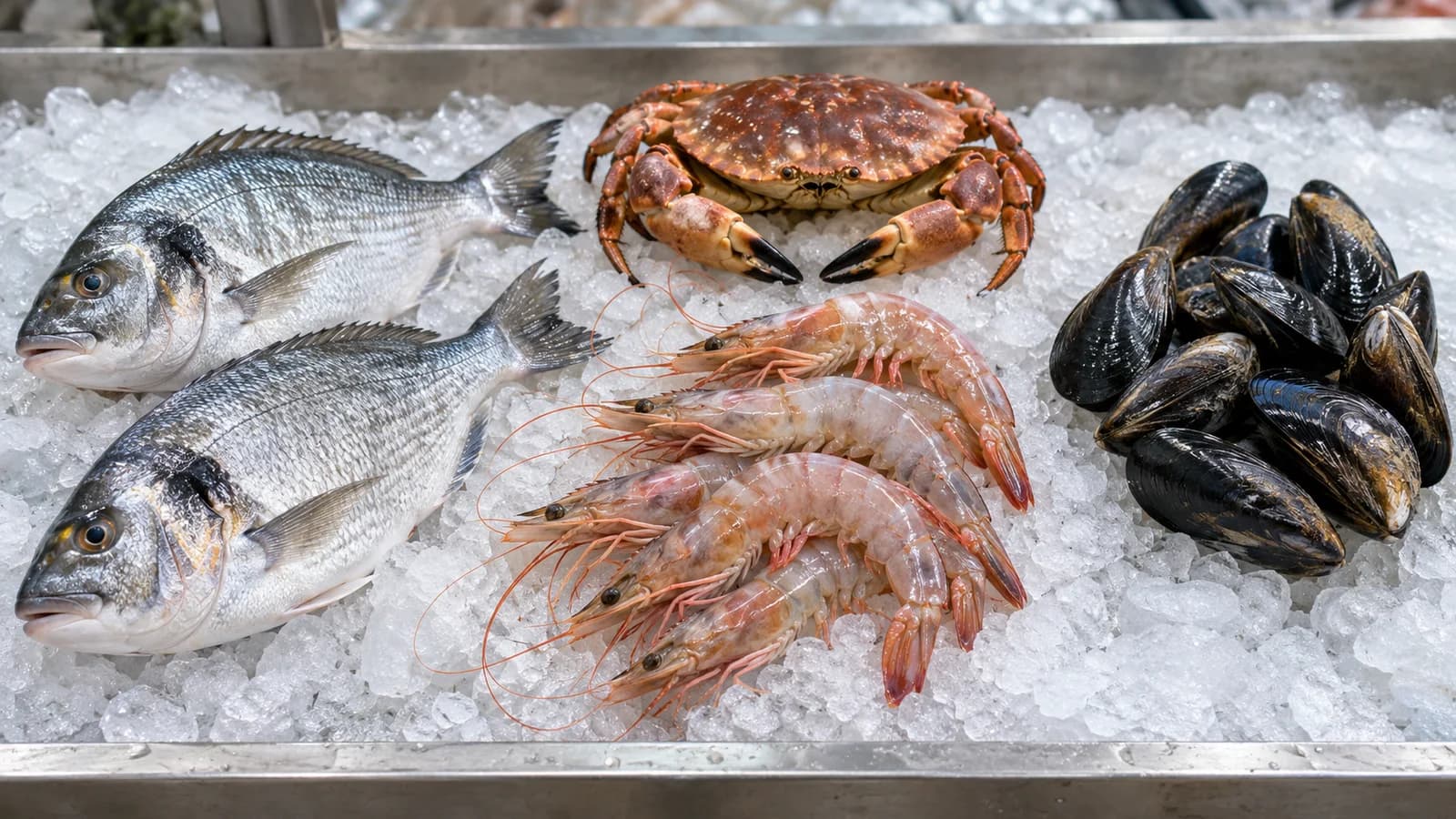
Start with the seafood’s actual name. Shrimp, lobster and crab are crustaceans. Oysters, clams, mussels and scallops are mollusks. A dish can bring together more than one of those groups in its broth or sauce. Knowing what is in the dish gives you something definite to compare with the ruling you use.
What the Quran and the seawater hadith say
Quran 5:96 permits game from the sea and its food, and distinguishes land game while a person is in the consecrated state of pilgrimage. In Sunan Abi Dawud 83, Abu Hurayrah reports a question about whether travelers with limited fresh water could perform ablution with seawater. The answer also addresses the permissibility of what dies in the sea.
Those are the two texts readers will often encounter in this discussion. Singapore’s Islamic Religious Council, known as MUIS, cites the seawater report when explaining the broad permission it attributes to the Shafi‘i, Maliki and Hanbali schools. The same answer records the more restrictive approach of some Hanafi scholars. The practical difference is which animals are covered when a jurist applies a general expression about food from water. An ordinary menu can bring that difference into view by listing a fish fillet, a shrimp dish and a plate of oysters together.
Halal means permitted. The guide to the meaning of halal explains how the word is used for food, ingredients and certification. Here the first question is narrower: does the named sea animal fall within the category accepted by a particular authority?
Is shrimp halal if you follow the Hanafi school?
There are documented Hanafi answers on both sides. The shared question is whether shrimp or prawns fall within samak, the category of fish used in the ruling. Darul Ifta Birmingham reports the permissive view of Mufti Taqi Usmani, citing his discussion of older Arabic usage. Under that approach, shrimp is included for the purpose of the ruling. The Birmingham answer explicitly distinguishes that use of the term from biological classification.
Darul Iftaa Chicago’s answer on shrimp considers the linguistic argument and takes a different position. It treats shrimp as outside the category of fish and considers it impermissible. The answer acknowledges other jurists’ views. Its separate ruling on non-fish seafood sets out the institution’s fish-only approach in response to a question about shrimp, crab and lobster.
Modern seafood terminology identifies shrimp as a crustacean. The difference between the two Hanafi answers turns on which meaning of fish governs the religious classification. It explains how two people who follow the Hanafi school can order differently from the same menu. It also explains why a ruling allowing shrimp does not automatically extend to lobster or crab. An answer about prawns is a source for prawns, even if the restaurant serves all three under a heading called shellfish.
Crab, lobster and oysters bring up different questions
Egypt’s Dar al-Ifta answer on eating crab applies a broad permission to seafood subject to its stated exceptions, citing the same seawater report. In a Shafi‘i discussion, Malaysia’s Federal Territories Mufti Office treats some crabs that live only in water differently from crabs it describes as living on land as well as in water. It discusses how a common name such as rock crab can refer to different animals.
That distinction matters when a source discusses one crab and the menu names another. If the fishmonger gives a commercial name, ask which animal it identifies when the ruling you follow depends on species or habitat. A place name such as Atlantic, a cooking description such as soft-shell or a label such as seafood special can be useful context. It may leave the species unresolved.
Lobster is another crustacean. Oysters, clams, mussels and scallops belong to the mollusk group. The US Food and Drug Administration’s January 2025 guidance, section B.9, uses these same examples to distinguish crustacean shellfish from molluscan shellfish in US food labeling. Its vocabulary helps identify the animal. The religious answer comes from the authority applying its food rules to that animal. For example, Chicago’s fish-only ruling covers non-fish seafood generally, while the broad view described by MUIS starts from a different approach to aquatic animals.
What does Ali al-Sistani say about shrimp and fish?
The Office of Ali al-Sistani’s answers on fish give a specific Twelver Shi‘i example. The office treats shrimp as permissible, includes qualifying fish with scales and expressly excludes lobster. Its food rules in A Code of Practice for Muslims in the West also explain conditions relating to the catch. The guidance on fish considers whether it was taken alive from water or died after being caught in a fishing net, as described there. It separately specifies that shrimp must be brought out of the water alive.
In this approach, shrimp’s permission is specific. It does not extend to every crustacean. A shrimp skewer and a lobster skewer therefore get different answers under the guidance, even before you ask what is on the skewers. The English answer comes from al-Sistani’s office. Readers following another jurist can compare their own authority’s published rulings, especially if the question concerns a prepared product or the way the fish was caught.
Read the ingredients of a packaged seafood product
A bag labeled frozen shrimp identifies the main ingredient. A package labeled seafood dumplings may contain shrimp, fish paste or another filling. A seafood stock can add an ingredient that is hard to recognize once the dish is served. Read the ingredients for the exact product and variety, including the filling, batter and sauce where relevant. Names such as seafood flavor and imitation crab describe a product broadly. The full ingredient list or a manufacturer’s answer can identify what was used.
An allergen statement can point to some ingredients. In the United States, FDA’s guidance distinguishes crustaceans from mollusks for the category of major allergens. For packaged products it regulates, the specific type of crustacean, such as shrimp or crab, is named under the applicable allergen rules. Oysters, mussels, clams and scallops are outside that federal major-allergen category. A separate allergen box cannot stand in for the full ingredients or for a religious assessment. The guide to reading halal food labels walks through checking the package and its certification information.
For example, someone whose authority permits shrimp but excludes crab may want to know whether a frozen shrimp cake contains crab as well as shrimp. The front label tells you which ingredient the producer chose to highlight. The ingredient list gives evidence about the recipe. A certification record, if one exists, answers a separate question about which product was covered under the issuer’s standards.
Check a restaurant claim against the outlet and dish
Ask the restaurant which seafood goes into the order, including the sauce or stock. You can say, “Does the broth contain shrimp, crab or oysters?” or “What goes into the marinade and is this prepared on shared equipment?” In a mixed grill, ask which pieces go into the serving and whether the same utensil handles other dishes. The answers help distinguish the animal you are ordering from additional ingredients or how the kitchen handles the preparation.
When a restaurant says it is halal-certified, identify the issuer and look up the exact location. Singapore’s MUIS certification schemes distinguish eating establishments from food preparation areas and certified products. Its public establishment directory lets diners search the relevant outlet. A supplier’s product certificate can identify the certified product. An eating establishment listing concerns the premises under its scheme. The restaurant certificate guide gives an example of why a country policy and a specific branch’s certification are separate checks.
The international Codex guidelines on using the term halal cover food labeling claims and address ingredients and how food is prepared and handled. They also acknowledge differences among schools and competent authorities. If you are checking a particular dinner, match the certificate to the product or address, check its current status and read the religious ruling you rely on for the animal itself. The halal certification logo guide explains how to find an issuer’s official record and match the certificate to the product or outlet.
What to ask about a seafood platter
A platter advertised as fish and seafood might contain a fish fillet, prawns, mussels and a sauce made with stock. Identify each item. If your Hanafi authority permits prawns, that answers the prawn question under that ruling. It does not establish the answer for mussels or the contents of the stock. If you follow al-Sistani’s guidance, also identify the fish and check the applicable conditions. If you follow a broad approach to marine food, the remaining practical questions can include the recipe and preparation.
When the menu gives only a mixed seafood description, ask for the species or ingredients you need to distinguish. A clear answer such as shrimp and mussels is more useful than a general seafood label. If you need formal certification, use the certifier’s record for the exact product or location. This keeps the evidence matched to the question you are trying to answer.
Primary texts and published rulings
- Quran 5:96 and Sunan Abi Dawud 83 are the texts discussed in the seafood rulings.
- MUIS on seafood and shrimp describes the broad permission and the difference in Hanafi opinion.
- Darul Ifta Birmingham and Darul Iftaa Chicago give contrasting Hanafi answers about shrimp.
- Egypt’s Dar al-Ifta and Malaysia’s Federal Territories Mufti Office publish their reasoning on crab.
- The Office of Ali al-Sistani explains its rulings on scaled fish, shrimp and lobster.
- FDA food allergen labeling guidance, the MUIS scheme descriptions and the Codex halal guidelines document distinct labeling and certification questions.