Muslim Divorce Document Checklist for Court Mediation Mahr Custody and Prayer
A practical Muslim divorce document checklist covering court forms, mediation, custody, support, property, mahr and nikah papers, safety, prayer and family privacy.
A Muslim divorce document checklist should help a spouse organize facts before the conversation turns into family noise. Divorce paperwork may involve a petition, summons, response, financial disclosure, property list, debt list, child custody plan, support documents, protection order records, mediation notes, service proof, court dates and signed agreements. Muslim households may also need to handle nikah records, mahr questions, imam or masjid communications, iddah discussions, prayer, children’s routines, extended-family pressure and privacy around painful facts.
Use this with the Muslim legal aid appointment checklist before meeting a lawyer or advocate, and with the Muslim child custody and parenting plan checklist when children are involved. If safety, threats or coercive control are present, also use the Muslim domestic violence safety checklist. This guide is not legal, mediation, court, financial, custody, safety or religious advice. It is a document organizer for a difficult family transition.
The sources set the civil-court map. California Courts explains the divorce process. Mass.gov keeps state divorce steps and family court context visible. Washington State Courts dissolution forms show why the correct packet matters. USAGov legal aid material keeps affordable help in the folder. The Muslim layer adds mahr, nikah, family shura, imam questions, prayer, iddah, modest communication and the discipline to keep private pain out of public gossip.
Separate civil divorce papers from religious questions
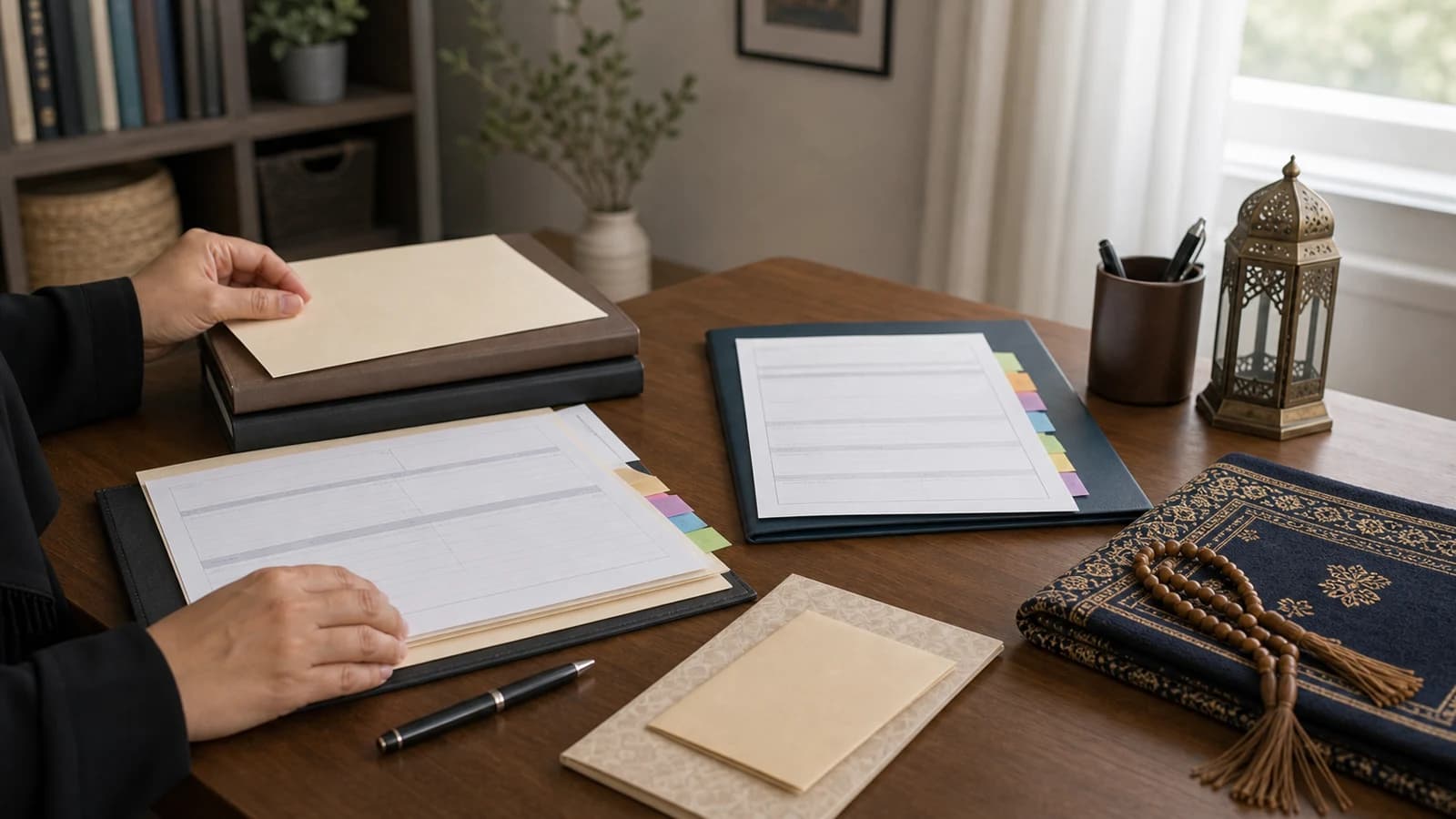
The first page should list the civil marriage date, separation date if any, court location, case number if filed, spouse contact details, children, immediate safety concerns, lawyer or legal aid contact, interpreter need and next deadline. Then create separate tabs: court forms, service proof, financial records, parenting papers, safety records, religious documents and communications. A nikah certificate, mahr agreement or imam letter may matter deeply, but it does not replace the civil court forms required by the state.
- Court file: petition, summons, response, case number, filing receipt, service proof, hearing notice, temporary orders and signed agreements.
- Family records: civil marriage certificate, nikah papers, mahr note, children’s birth certificates, school records, medical insurance and parenting schedule.
- Money file: income proof, tax returns, bank records, debts, rent or mortgage, vehicles, business records, benefits, zakat obligations and shared expenses.
- Safety and privacy: threats, police reports, shelter notes, blocked contacts, safe mailing address, interpreter needs and who may receive updates.
- Muslim care notes: imam contact, iddah questions, respectful communication, children’s prayer routine, Eid and Ramadan schedule and family shura boundaries.
Do not put every conflict into the first court filing just because it hurts. Separate facts from accusations: dates, records, payments, messages, witnesses and existing orders. If a spouse says mahr is owed, property was promised, money was borrowed, or family members paid expenses, write the document that supports the claim and who has a copy. Religious hurt may be real, but the court file needs specific evidence.
Mediation needs a folder, not memory
If mediation or settlement discussion is possible, prepare a one-page issue list: children, housing, vehicles, bank accounts, debts, support, insurance, documents, religious items, family heirlooms, Eid and Ramadan schedules, travel consent and communication rules. Bring options, not only anger. A request like “exchange children at the school parking lot at 5:30 p.m. on Fridays” is easier to test than “be fair.”
Family shura can help only when it protects privacy and lowers harm. Decide who is allowed in the conversation, whether an imam is giving pastoral support or legal advice, and what will not be discussed in a group chat. Children should not carry messages between adults. If relatives are pressuring a spouse to sign or stay silent, write what happened and speak with qualified help.
Safety changes everything. If there are threats, immigration pressure, financial control, stalking, forced religious language, child abduction concerns or violence, do not treat the file as ordinary paperwork. Keep safe copies, use a safe device when needed, and ask legal aid or a court self-help center about urgent options. Prayer can steady the heart; safety planning needs addresses, phone numbers and documents.
Close each step with a date and copy plan
After every filing, mediation meeting or family agreement, write what changed, what remains open, who has copies and the next deadline. Scan signed papers, but keep originals secure. A useful Muslim divorce checklist leaves the spouse with civil court steps visible, religious questions separated, children protected from adult conflict, safety records preserved and the next document task written down.


