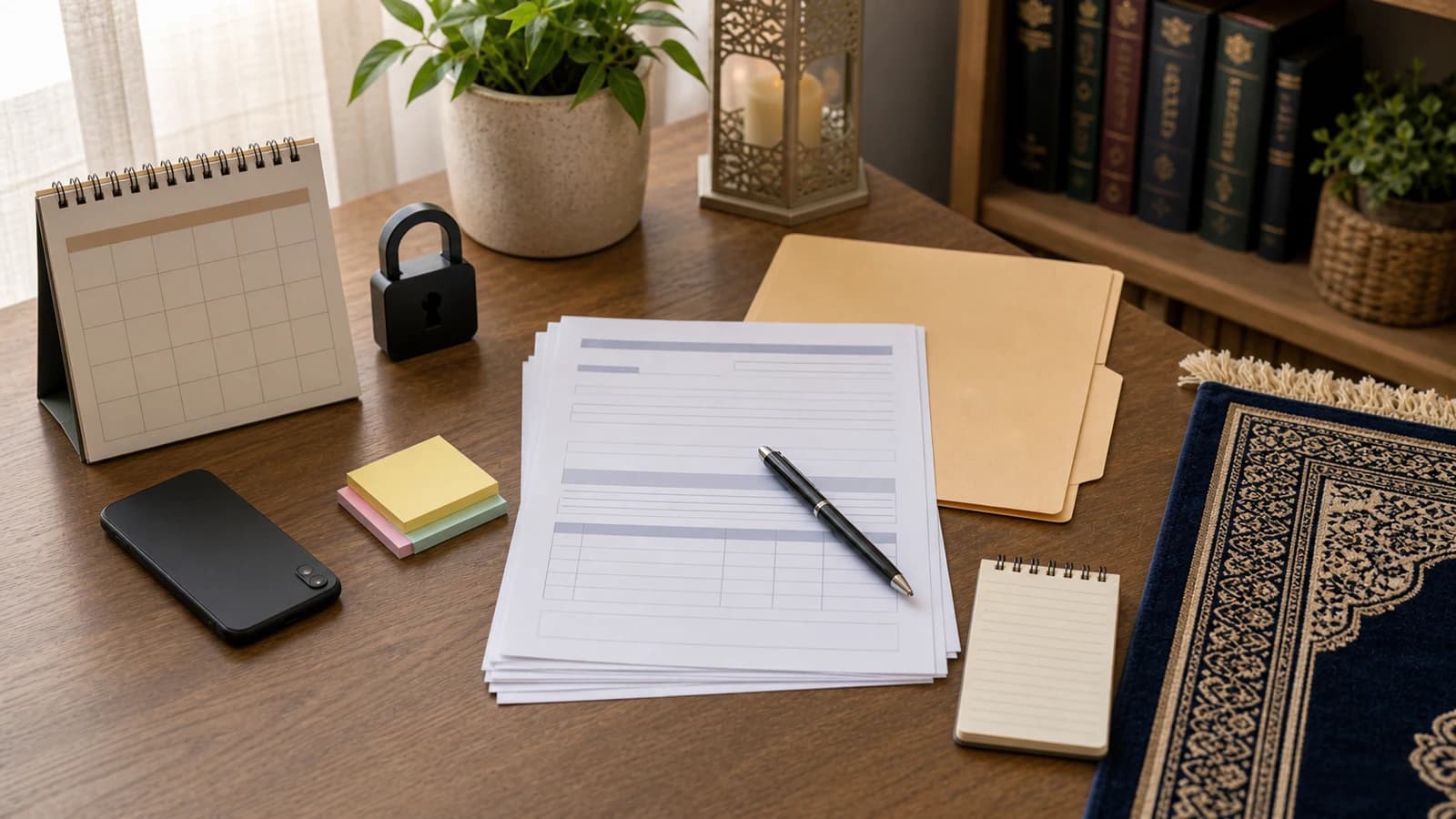
Muslim Legal Aid Appointment Checklist for Court Papers Interpreter and Prayer
A practical Muslim legal aid appointment checklist covering court papers, deadlines, evidence, interpreter needs, immigration questions, privacy, prayer timing and safe document sharing.
A Muslim legal aid appointment checklist should help a household arrive with facts instead of fear. Legal aid may involve eviction, debt collection, domestic violence, benefits, family court, employment, immigration, school rights, consumer problems or a letter that looks official but is hard to understand. Muslim families may also be protecting modesty, language access, prayer timing, family privacy, immigration status, community reputation and children who should not hear every adult detail. The appointment folder keeps the urgent issue visible.
Use this with the Muslim eviction notice checklist if housing papers triggered the appointment, and with the Muslim immigration appointment checklist if status documents or agency notices are involved. This guide is not legal, immigration, court, financial, safety, tax or religious advice. It is a document organizer for preparing to ask a qualified provider for help.
The sources set the referral map. USAGov legal aid information keeps the search for help grounded. Legal Services Corporation material reminds families that civil legal aid has provider and eligibility boundaries. LawHelp points toward state-level legal resources. U.S. Courts pro se forms help separate forms from legal strategy. DOJ immigration provider material keeps immigration-specific help distinct. The Muslim layer adds interpreter questions, gender-sensitive meetings, prayer breaks, family shura, confidentiality and avoiding shame-driven delay.
Build the appointment folder around the deadline
The first page should list the deadline, hearing date, response date, agency appointment, lockout date, benefit cutoff, immigration date or collection deadline. Then add the court or agency name, case number, names on the papers, phone numbers, notices received, what happened, what the household wants, and what has already been tried. If there is no deadline, write that too. Legal helpers need to know whether the clock is already running.
- Case facts: court or agency, case number, names, address, deadline, hearing date, notice date and requested action.
- Documents: notices, lease, bills, letters, screenshots, contracts, pay stubs, benefit papers, school emails or immigration records.
- People: who is involved, who lives in the home, interpreter need, safety concern, disability need and preferred contact method.
- Questions: what result is needed, what deadline scares the family, what papers are missing and what should not be shared casually.
- Muslim household layer: prayer timing, modesty request, childcare, family privacy, masjid support and safe transportation.
Do not bring a box of unsorted papers as the only plan. Put the most urgent document on top. Highlight dates, not emotional sentences. Make a one-page timeline: what happened first, what notice came next, what payment or call happened, and what deadline is coming. If screenshots matter, print or save them in order with sender, date and phone number visible when safe.
Separate legal aid, court forms and community support
Legal aid is one track: eligibility, provider fit, conflict check, appointment and advice. Court forms are another: blank forms, filing rules, signatures and service requirements. Community support is a third: rides, childcare, translation help, emergency funds, imam support or safety planning. A masjid volunteer can help organize documents, but that does not make them the lawyer. A court form can help structure a filing, but it does not tell the household what strategy is safe.
Interpreter and communication needs should be named before the meeting. Write the preferred language, whether the person reads English, whether they need an interpreter, whether a family member should not interpret sensitive facts, and whether a phone, video or in-person appointment is safest. For some families, gender-sensitive communication or a private room matters. Put the request in respectful practical terms so the provider can respond.
Immigration and safety questions should be marked clearly. If papers involve immigration court, USCIS, ICE, asylum, removal, visas, public benefits, domestic violence or child custody, write that on the first page. Do not send identity documents, addresses or status details to strangers who promise quick help on social media. Use verified provider paths and ask about confidentiality before sharing sensitive documents.
Prayer can support steadiness without replacing deadlines. If an appointment or hearing overlaps salah, write the time and ask what is possible. Arrange childcare, transportation and phone battery before the meeting. If family members disagree, hold shura before the appointment and decide who speaks, who listens and what private facts should be discussed only with the provider.
Leave with next actions in writing
At the end of the appointment, write what the provider can and cannot do, the next deadline, documents still needed, whether representation is possible, whether another referral is needed and who is responsible for each step. If no help is available, ask where else to look and what deadline remains. Save the notes with the court papers and update the household calendar immediately.
A useful Muslim legal aid appointment checklist keeps dignity in the room: deadline visible, papers sorted, interpreter needs named, privacy protected, community help separated from legal advice and the next action written down before fear fills the silence.


