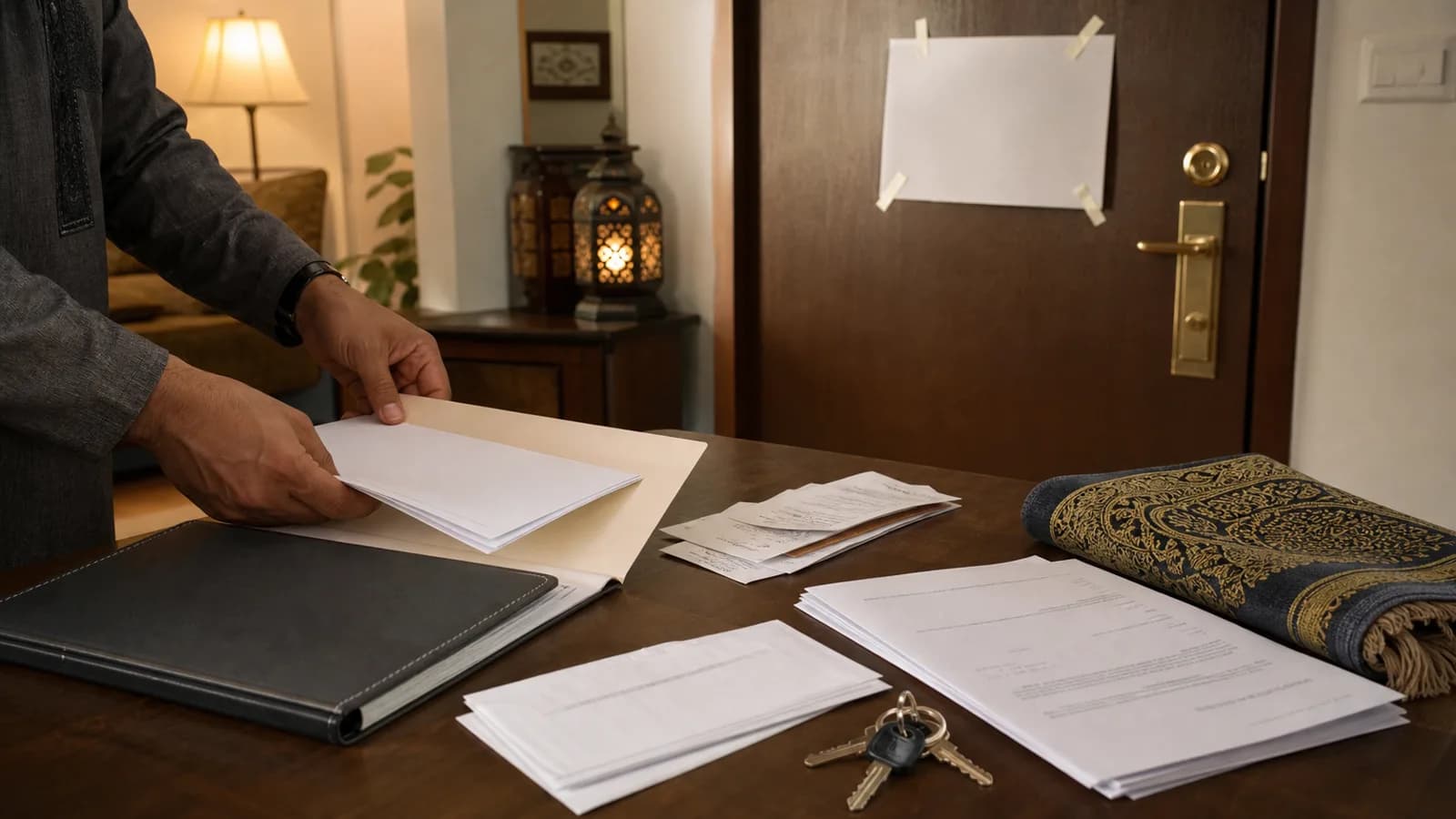
Muslim Eviction Notice Checklist for Rent Court Utilities and Prayer
A practical Muslim eviction notice checklist covering rent ledger, lease, court papers, rental assistance, legal aid, utilities, prayer routine, children, elders and document storage.
A Muslim eviction notice checklist should slow down the panic when a rent problem becomes a housing emergency. A notice on the door can affect children, elders, immigration appointments, school transportation, medicine storage, halal food, prayer space and family dignity. The household needs facts: what notice arrived, what deadline is real, what rent is owed, what court date exists, what help is available and what should not be signed in fear.
Use this with the Muslim rental apartment checklist for lease records, and with the Muslim utility assistance checklist if service shutoff is also part of the crisis. This guide is not legal, housing, debt, benefits, tax, immigration or religious advice. It is a document organizer for renters preparing urgent next steps.
The sources set the response frame. USAGov eviction material keeps official renter paths visible. CFPB renter help and debt collection resources help households separate notices, payment pressure and documentation. HUD rental assistance material keeps help programs in the folder. Legal Services Corporation material points families toward civil legal aid. The Muslim layer adds prayer space, Ramadan or Jumuah timing, children and elders, halal food storage, masjid support and family privacy.
Photograph the notice and build the rent folder
The folder should include photos of every notice, envelope, posting date, lease, rent ledger, receipts, money order records, text messages, repair requests, utility bills, payment plan offers, court papers, rental assistance applications, legal aid contacts and a family safety plan. Put the exact deadline on the first page. If there is a court date, it should be impossible to miss when anyone opens the folder.
- Notice record: photograph, date received, landlord name, property address, claimed amount, deadline and court date if any.
- Rent record: lease, ledger, receipts, money orders, bank proof, text messages, repair requests and disputed fees.
- Help paths: rental assistance, legal aid, housing counselor, masjid or zakat support, family loan terms and utility help.
- Household safety: children, elders, disability, medicine storage, school route, halal food, pets if any and emergency contact.
- Muslim routine: prayer space, Ramadan schedule, Jumuah timing, family shura and calm communication before signing anything.
Do not guess what the notice means from the title alone. Some papers are warnings, some demand payment, some start a court process and some are court documents with hearing dates. Local law controls many details, so write the document name, date, deadline and source. If court papers appear, legal help should be checked early. A well-meaning relative may know another state, another year or another building, not the rule affecting this household.
Make the contact sheet specific. Write the landlord or property manager, the local court clerk if a case number exists, the Legal Services Corporation locator or local legal aid intake, the HUD rental assistance contact, the CFPB renter-help page, any city or county rental assistance office, and the utility company if shutoff pressure is tied to the rent crisis. A folder that only says “call someone” will fail under stress. A folder with names, dates, phone numbers and confirmation notes can still work at 8 a.m. on a hearing day.
Separate money, court and safety decisions
Money decisions should be written before anyone promises payment. List the claimed rent, late fees, utilities, repairs, deposits, assistance applications, partial payment offers and whether payment changes the case. Keep receipts for every payment. If a debt collector contacts the household, compare the claim with the rent ledger and ask for written information. Panic payments can make a hard situation even harder.
Rental assistance questions should be prepared with documents: ID, address, lease, rent owed, income, household members, utility bills, unemployment or benefit records and any notice or court paper. If a masjid, zakat fund or family member helps, record the amount, date and purpose respectfully. Housing stress can strain relationships; written clarity protects dignity.
Safety planning is not surrender. Write where children sleep if the worst happens, where medicine is stored, who can hold documents, how school transportation continues, what happens to halal food in the freezer, how prayer space and modesty are protected, and who can drive elders to appointments. A household can fight the eviction and still prepare an emergency bag.
Prayer and family conversation should steady the response. Pick one calm time after salah to review the folder instead of arguing all night. Make dua, then assign tasks: one person calls legal aid, one gathers receipts, one checks rental assistance, one updates the court date, one watches children. Spiritual trust works best with visible responsibility.
Record the next deadline after every call or hearing
After a call, application, payment or hearing, write what happened, who said it, what proof exists, what deadline is next and what document is missing. Save screenshots and confirmation numbers. If the family receives a new paper, photograph it immediately and add it to the folder.
A useful Muslim eviction notice checklist keeps fear from running the household: notice preserved, rent records gathered, legal help checked, assistance pursued, utilities considered, prayer routine protected and the next deadline written down. The crisis may still be serious, but it is no longer scattered across memory.


