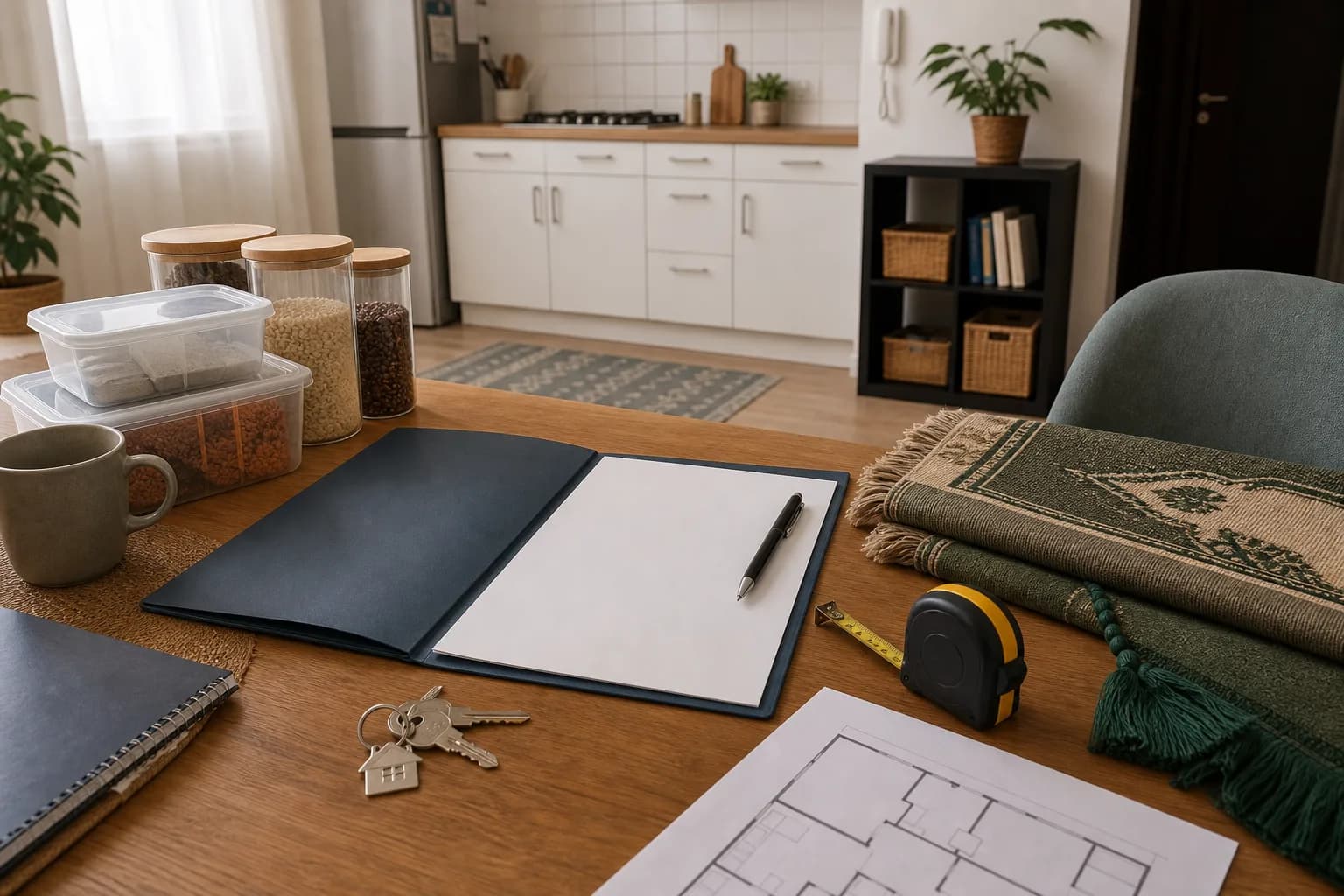
Muslim Rental Apartment Checklist for Prayer Halal Kitchen and Lease
A practical Muslim rental apartment checklist covering lease documents, fair housing, rental scams, prayer space, halal kitchen setup, roommates, move-in photos and tenant screening records.
A Muslim rental apartment checklist should start before the application fee is paid. The apartment has to work for ordinary life: rent, lease, deposit, tenant screening, commute, safety, utilities, prayer space, halal kitchen setup, roommate expectations, guests, modesty and moving records. A renter who only asks about square footage can still end up with a kitchen they cannot comfortably use, a roommate conflict over food, or a landlord conversation that happens without documentation.
Use prayer times when judging the commute and daily routine, and keep the qibla finder ready when checking where a prayer mat can fit. This guide is not legal advice. It is a practical document for Muslim renters who want to combine normal rental due diligence with faith-specific needs without turning every viewing into an awkward speech.
The sources explain why the checklist has both legal and practical parts. HUD and the Department of Justice keep fair housing visible. The FTC rental scam page helps renters avoid fake listings and pressure payments. CFPB renter pages explain housing help and tenant screening reports. Together they support a careful approach: verify the listing, understand the lease, document communications and decide whether the home can support prayer, halal food and household dignity.
Verify the listing before discussing religious details
Start with fraud prevention. Confirm the property exists, the person showing it has authority, the lease names the right party, the payment method is normal, and the rent is plausible for the area. Do not send a deposit because someone says another applicant is waiting. Do not rely only on social media messages. Ask for the application process, fees, screening criteria, lease start date, utilities, deposit rules and move-in condition process in writing.
- Application: screening fee, tenant screening report, income proof, IDs and refund rules.
- Lease: rent amount, due date, late fees, guests, subletting, repairs, utilities and notice period.
- Move-in: photos, inspection checklist, meter readings, keys, mailbox and building access.
- Prayer: quiet corner, qibla direction, floor space, noise expectations and guest prayer needs.
- Kitchen: halal storage, shared cookware, pork or alcohol handling, fridge space and roommate rules.
If the listing passes basic checks, then inspect Muslim-specific daily use. Is there a clean, calm corner where prayer can happen without blocking a hallway? Can shoes be kept away from the prayer area? Is the bathroom layout practical for wudu? Is there enough kitchen storage to separate halal food if roommates are not Muslim? Is the landlord or roommate expecting frequent visitors to be treated differently from other tenants? These are ordinary housing questions when asked calmly and specifically.
Write roommate and kitchen rules before move-in
Shared housing needs written expectations. Muslim renters should not assume a roommate understands halal food, pork cross-contact, alcohol storage, Ramadan schedules, early suhoor noise, guests for iftar, Friday prayer timing or modest dress at home. A short roommate note can cover fridge shelves, cookware, dishes, trash, cleaning, guests, quiet hours, prayer space and what happens if someone accidentally uses the wrong pan. The goal is not to police the house. The goal is to prevent resentment from unclear rules.
Fair housing issues should be handled with facts. If a landlord or agent says something troubling about religion, dress, family status, national origin or guests, write down the date, time, exact words, people present, messages and documents. Do not rely on memory weeks later. A renter may need local tenant help, fair housing help or legal advice, and those conversations are stronger when the record is clear.
Tenant screening deserves its own folder. Keep the application, screening disclosure, fee receipt, landlord messages, denial notice if any, and the report source if disclosed. If a problem appears, the renter needs enough information to ask what was used. A Muslim renter should not mix every rejection into one religious complaint, but should also not ignore a pattern of unfair treatment. Careful records let the facts speak.
A useful record has names and dates. Keep the HUD fair housing page, the Department of Justice Fair Housing Act page, the FTC rental listing scam warning and the CFPB tenant screening report explainer in the research folder. For each apartment, save the listing URL, agent name, viewing date, application fee, deposit amount, promised repairs, screening company if known and the exact lease version. If the renter later needs help, those details matter more than a general feeling that the process was unfair.
Make move-in evidence part of the religious checklist
On move-in day, take photos before unpacking: floors, walls, windows, appliances, sink, bathroom, locks, smoke alarms, mailbox, parking spot and any damage. Then set up the practical Muslim routine: prayer area, clean storage for prayer clothing, halal shelf, labelled containers, pantry staples, qibla note and a plan for Friday prayer travel. Use the halal grocery label guide when restocking the kitchen.
A good rental checklist protects both rights and daily worship. It does not assume every landlord is hostile, every roommate is careless or every question is legal. It simply treats housing as the place where faith becomes routine: praying on time, eating safely, hosting respectfully, keeping documents and leaving the unit with evidence. That is not extra. For a Muslim renter, that is how a lease becomes a livable home.


