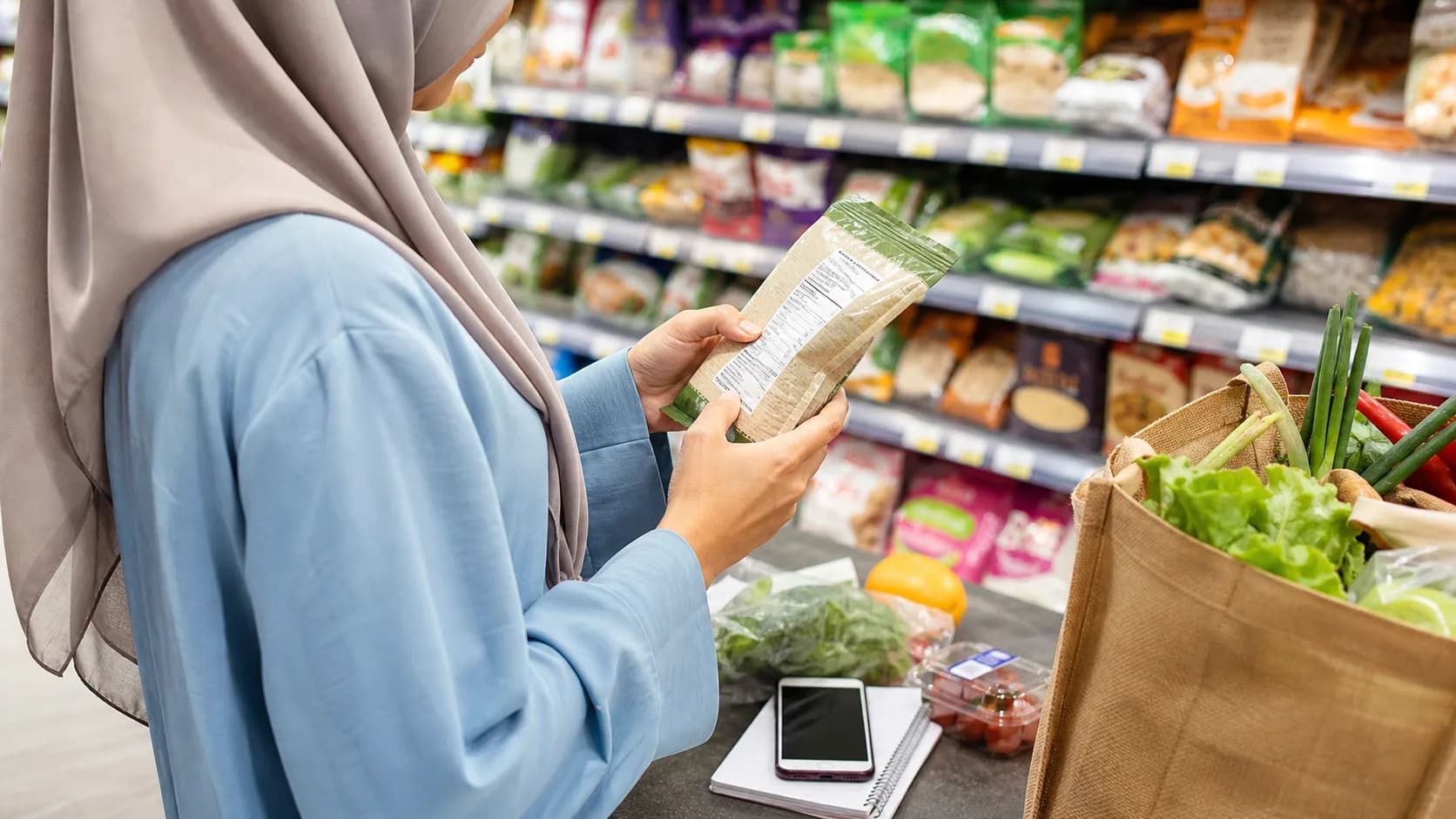
Halal Grocery Label Guide for Ingredients Certification and Confident Shopping
A practical halal grocery label guide for Muslim shoppers covering ingredients, allergens, label claims, halal certification, gelatin, alcohol, enzymes and uncertainty.
A halal grocery label guide should make shopping faster without pretending every package gives a perfect answer. Some labels list ingredients clearly. Some highlight allergens. Some carry halal marks. Some use vague terms such as flavoring, enzymes, gelatin or processing aids. A Muslim shopper needs a method: read the required label first, look for a credible halal claim, identify uncertainty, and decide whether to buy, ask or choose a safer alternative.
This guide pairs well with practical family planning pages such as the Muslim family travel checklist and the halal airline meal booking guide. Grocery confidence matters at home, but it also matters when packing snacks for school, airports, road trips and Ramadan evenings.
The sources cover different layers of the problem. FDA food-allergy information helps shoppers understand allergen labels. USDA FSIS claims guidance helps with meat and poultry label claims. Canada Gazette halal labelling regulations show that halal claims can be regulated directly. GOV.UK food packaging and labelling pages explain packaging duties in another jurisdiction, and FAO Codex halal guidelines give a broader vocabulary for halal terminology. None of these replace a scholar or trusted certifier; they help shoppers read the package more intelligently.
Separate label mechanics from halal confidence
The ingredient list answers one question: what the manufacturer declares on the label. The allergen statement answers another: whether certain major allergens are present under that system. A halal logo or claim answers a third question: whether the product is presented as halal under a certifier, authority or manufacturer claim. These signals overlap, but they are not identical. A dairy-free product is not automatically halal. A vegetarian product can still contain alcohol-based flavoring. A product without pork in the allergen statement may still have a questionable animal-derived ingredient.
- Read the ingredient list first, including parenthetical details after additives.
- Check allergen statements, but do not treat them as a halal audit.
- Look for halal certification or a clear halal claim and identify who stands behind it.
- Flag high-uncertainty words such as gelatin, enzymes, natural flavor, emulsifier and alcohol flavoring.
- When the product is for children, guests, Ramadan or travel, choose the lower-uncertainty option.
The hardest items are often snacks, desserts, supplements, sauces and prepared foods. Gelatin may be animal-derived. Enzymes can be microbial, plant-derived or animal-derived. Natural flavors may be harmless, but the label may not reveal enough detail for a stricter shopper. Alcohol can appear as an ingredient, carrier or flavor component. The right action depends on the shopper's standard, local scholarly guidance and trust in the manufacturer or certifier.
Read halal marks with the same care as ingredients
A halal mark is useful only if the shopper knows what it represents. Some marks belong to recognized certifiers. Some are retailer claims. Some are words on packaging without a familiar authority. The Canada Gazette halal labelling regulations are useful because they remind shoppers that a halal claim can be tied to disclosure and rules in some jurisdictions. In other places, the shopper may need to check the certifier website, product database or manufacturer response.
For meat and poultry, pay closer attention. A halal label on meat is more consequential than a halal-friendly label on a bag of rice. Look for the certifier, plant or producer information, and whether the claim appears on the actual package, not only on a shelf tag. If the label is unclear, ask the store for the supplier or choose a product with clearer certification.
For imported foods, remember that label rules and halal systems change by country. A package may follow one jurisdiction's packaging law while being sold in another market. Translated stickers can help, but they can also omit nuance. If the original label, sticker and certification claim disagree, treat the product as uncertain until verified.
Build a simple shopping decision rule
Use a three-basket method. Green basket: clear halal certification or simple ingredients with no concern under your standard. Yellow basket: unclear terms that require a manufacturer check or scholar/certifier guidance. Red basket: obvious pork, alcohol as a product feature, non-halal meat, or a claim you cannot trust for the purpose. This method is not a fatwa. It is a way to stop standing in the aisle for ten minutes over every snack.
Families can save time by keeping a short approved-products note: staple snacks, school lunch items, travel foods, Ramadan desserts and guest-safe products. Update it when formulas change, because products can be reformulated. The label on today's package is the source, not last year's memory.


