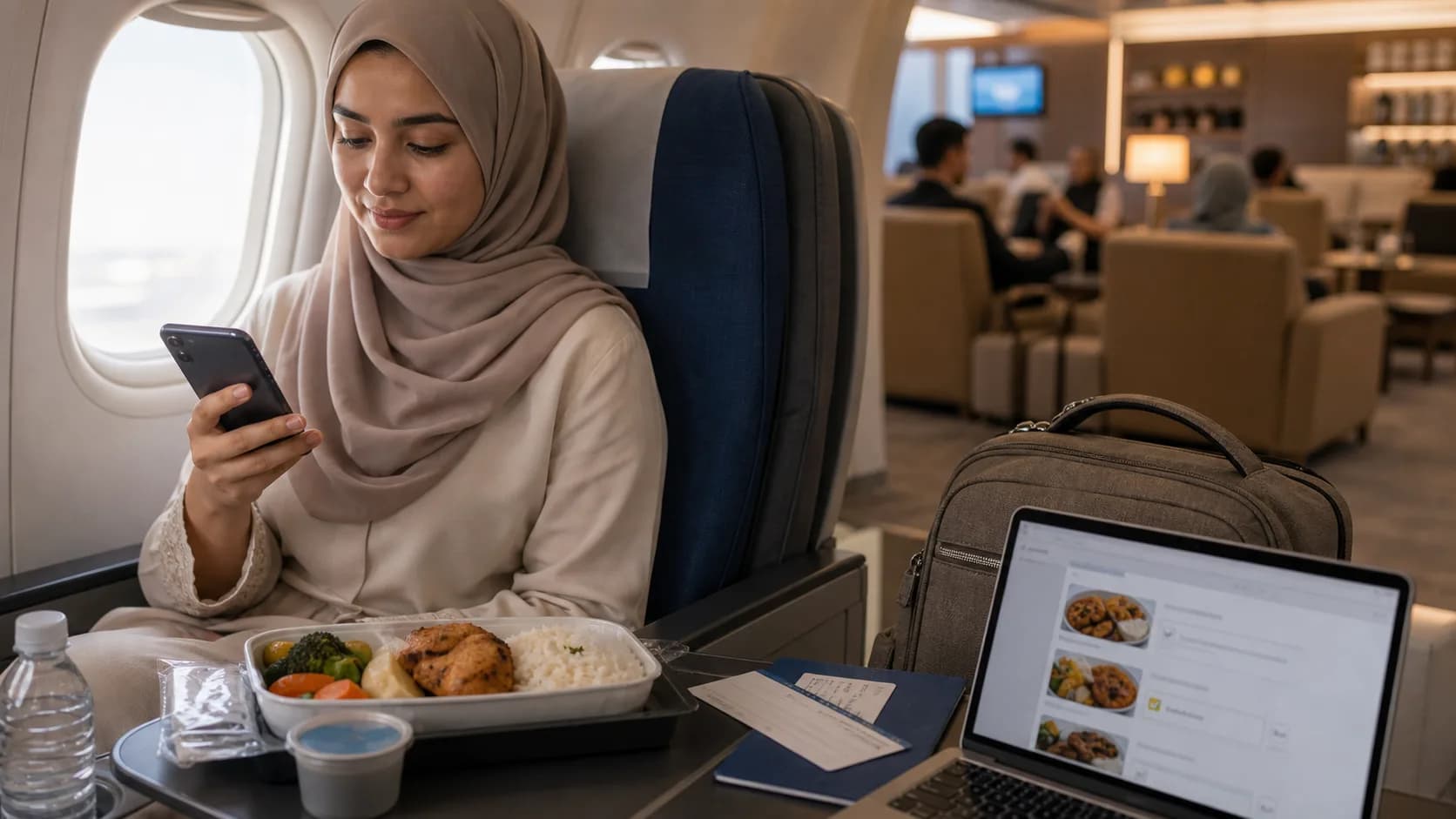
Halal Airline Meal Booking Guide for Muslim Travelers
A practical halal airline meal booking guide covering Muslim meal requests, special-meal deadlines, operating carriers, confirmation habits and backup food planning.
Halal airline meal booking sounds simple until a traveler discovers the wrong place to ask. Some airlines use “Muslim meal,” some use halal language, some route the request through dietary requirements, and some depend on the operating carrier rather than the marketing airline that sold the ticket. A Muslim traveler should not wait until boarding to solve this. The safest time to handle the meal is when the booking is still editable.
Use this guide with travel prayer times and the qibla finder when planning long-haul routes. Food, prayer and sleep interact. A traveler with a 13-hour flight, a transit airport and a hotel check-in does not only need one meal label. They need a route plan: what is served onboard, what is available during layover, and what snack backup is safe to carry.
Airline source pages are the right starting point. Emirates publishes dietary-requirement information. Qatar Airways, Singapore Airlines, British Airways and Turkish Airlines publish special-meal pages. The labels and rules are not identical, and that is why a universal blog answer is weak. The traveler should check the exact operating airline, route, deadline and booking channel.
Concrete names matter here. Emirates may place the request under dietary requirements, while British Airways presents special meals under food and drink information. Qatar Airways, Singapore Airlines and Turkish Airlines each maintain their own special-meal pages. A traveler comparing those pages should look for the same practical fields: meal name, route restrictions, request deadline, who can request it, whether child meals are separate and whether the rule changes after online check-in.
Request the meal where the operating airline can see it
The first mistake is requesting the meal only from a travel agent note, group organizer chat or generic booking reminder. The request needs to appear in the airline reservation system for the operating carrier. This matters on codeshares. A ticket may be sold by one airline and flown by another. If the operating carrier cannot see the special meal, the cabin crew may have no way to recover it at altitude.
The second mistake is requesting too late. Airlines often require special meals to be requested a set number of hours before departure, and the deadline can differ by airline or route. The practical habit is simple: request during booking, confirm after ticketing, check again after schedule changes, and verify in the airline app or website before online check-in closes.
Keep evidence simple. A screenshot of the airline booking page, a confirmation email, or an app screen showing the special meal can help at check-in if something disappears. It does not guarantee recovery, but it gives the traveler and staff a clearer starting point. Group travelers should not rely on one organizer’s spreadsheet unless each passenger can also see their own meal request in the reservation.
Know what Muslim meal does and does not prove
A “Muslim meal” or halal meal request is not the same as a full audit of the airport lounge, partner airline, child meal, snack basket or return flight. It usually refers to a special meal loaded for a specific passenger on a specific sector. Families should request for every passenger who needs it and for every flight segment where meals are served. Do not assume a child meal is halal unless the airline page or booking flow says so.
Some travelers also care about alcohol handling, gelatin, cross-contact or whether the meal is certified by a specific authority. Airline pages may not answer every personal standard. When certainty matters, contact the airline, keep the answer in writing if possible and bring a backup that follows security and customs rules. The goal is not suspicion; it is reducing ambiguity before the cabin door closes.
Separate cabin meals from lounge meals. A Muslim meal loaded on the aircraft does not automatically say anything about the departure lounge, partner lounge, airport restaurant, hotel breakfast, children’s snack box or arrival meal. Families should also check each flight segment. The outbound sector, return sector and connecting sector may be operated by different carriers with different meal systems.
Build a backup plan for the whole route
A good food plan covers four zones: airport before departure, onboard meal, transit airport and arrival. If a special meal is missed, the traveler may still have vegetarian, seafood or snack options, but those are not automatically halal. If a child refuses the meal, a simple packed snack can prevent a long argument during turbulence. If a layover is overnight, the airport food plan matters more than the onboard meal.
For long trips, write the meal plan next to the prayer plan: flight number, operating carrier, special meal requested, confirmation status, layover food backup and arrival meal. This small note turns a vague hope into a route-level plan. It is especially useful for families, elders, students, group tours and anyone traveling through unfamiliar airports.
The final check should happen when online check-in opens. Confirm that the seat, operating carrier and meal request still match the plan. If the airline changed aircraft or timing, re-check the meal. If the meal cannot be confirmed, carry a simple backup and adjust expectations early. That is much calmer than discovering the problem after the tray service has already passed the row.


