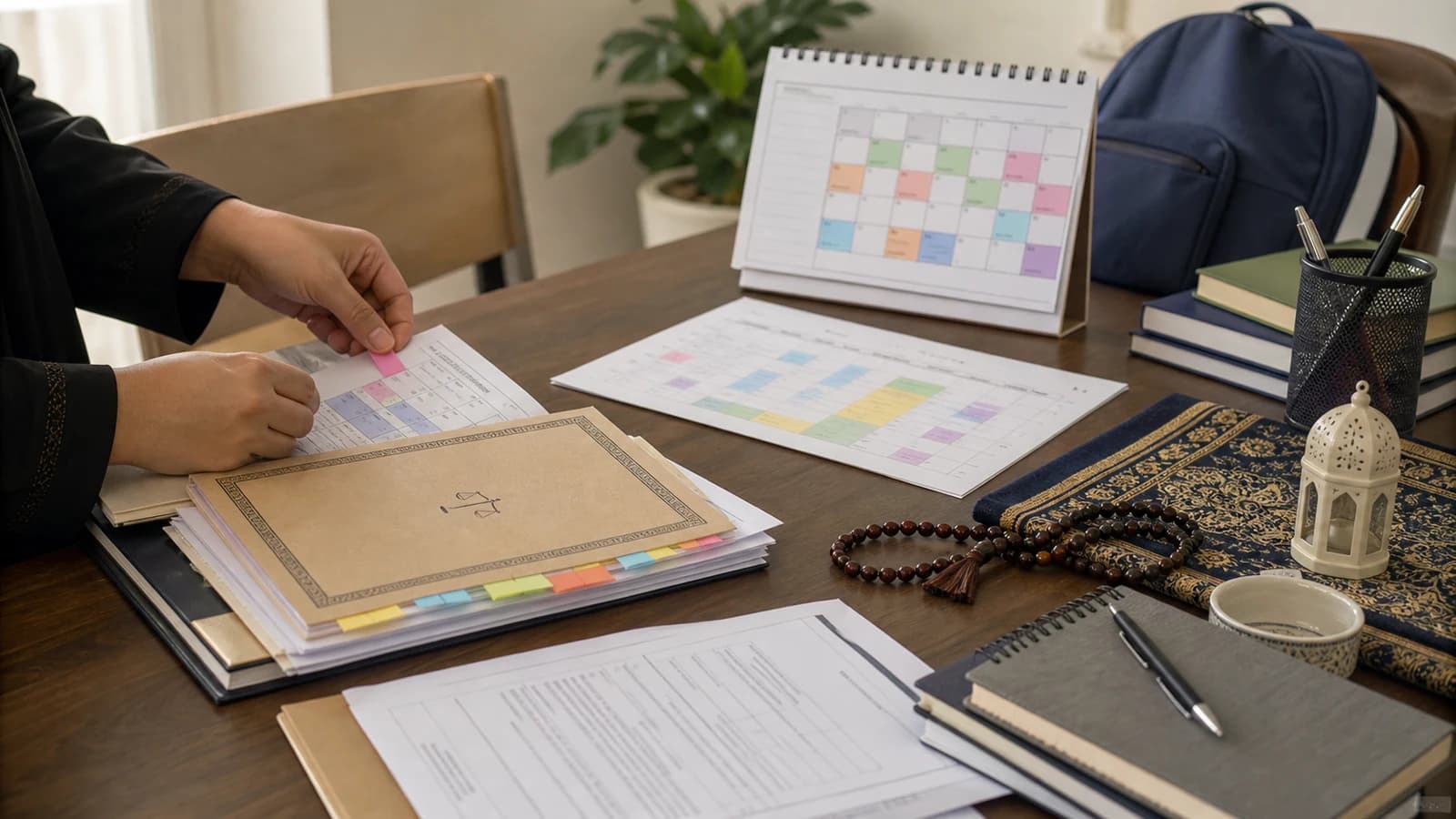
Muslim Child Custody and Parenting Plan Checklist for Court School and Prayer
A practical Muslim child custody and parenting plan checklist covering court papers, school pickup, Eid, Ramadan, prayer, medical decisions, travel documents, safety and communication records.
A Muslim child custody and parenting plan checklist should protect the child from becoming the messenger between adults. Parenting plans may involve custody, parenting time, school pickup, holidays, transportation, medical decisions, passports, travel consent, communication apps, emergency contacts, counseling, child support papers and safety concerns. Muslim families may also need to name Eid, Ramadan, Jumuah, prayer routines, halal meals, modesty, mosque classes, Qur’an study, extended family visits and how parents will avoid using religion as a weapon.
Use this with the Muslim legal aid appointment checklist before meeting an advocate, and with the Muslim school enrollment checklist when school records and pickups need updating. If abuse, stalking, threats or child safety risks are present, also use the Muslim domestic violence safety checklist. This guide is not legal, custody, court, mediation, safety, child welfare or religious advice. It is a document organizer for a careful parenting plan conversation.
The sources set the court map. California Courts custody material keeps parenting time language visible. California agreement guidance keeps written terms in focus. California parenting-plan resources show the practical questions parents need to answer. Washington Courts forms show why state form navigation matters. Florida Courts material keeps parenting plan and time-sharing terms concrete. USAGov legal aid material keeps affordable help in the folder. The Muslim layer adds prayer, Eid, Ramadan, halal meals, family shura and the discipline to keep the child’s stability above adult anger.
Start with the child’s week, not the parents’ argument
The first page should list the child’s full name, school, grade, teachers, medical needs, allergies, therapy, mosque or weekend class, usual prayer or bedtime routine, transportation needs and safe emergency contacts. Then map an ordinary school week before debating holidays. Who picks up? Who drops off? What happens on sick days, early dismissal, snow days, parent-teacher meetings and school forms? A plan that cannot survive a Tuesday afternoon will not survive Eid travel.
- Court and identity papers: case number, existing orders, birth certificate, passports, school records, medical insurance, emergency contacts and legal aid notes.
- Weekly schedule: school pickup, drop-off, homework, bedtime, mosque class, therapy, sports, weekend travel and exchange location.
- Decision topics: education, medical care, counseling, religious instruction, travel consent, passport storage and communication with teachers.
- Muslim family calendar: Eid, Ramadan, Jumuah, tarawih, halal meals, modest clothing, Qur’an classes, masjid events and extended family visits.
- Safety and communication: blocked contacts, supervised exchange, app messages, missed visits, late pickups, threats, police reports and child statements.
Religious routines should be written as child-centered details, not slogans. “The child attends Qur’an class on Saturdays from 10 to 12 unless sick or traveling” is clearer than “the child must be raised Islamic.” “Both parents may take the child to Eid prayer when it falls on their parenting time, and parents will discuss Eid travel 30 days ahead” is easier to follow than a fight the night before Eid. The plan should explain what happens when Ramadan affects sleep, school, medicine or athletics.
Separate faith practice from control
A parenting plan can respect Islam without turning faith into leverage. Parents should write how prayer, halal food, modesty, mosque attendance, names, language, Islamic school, relatives and holidays are handled. They should also write what neither parent may do: insult the other parent’s faith, pressure the child to report on the other home, hide records, block school communication or use an imam as a substitute for required court steps. Family shura is useful only when it lowers conflict and protects the child.
Travel documents need special care. Passports, birth certificates, notarized travel consent, school trip forms and medical authorizations should not disappear into one parent’s drawer without a written rule. If overseas relatives, Umrah, Hajj, funeral travel or family weddings are likely, write notice periods, itinerary sharing, emergency contacts and document return dates. Name spelling across Arabic, Urdu, Bengali, Turkish, Malay, Somali or other languages should be checked against passports and school files.
Safety changes the plan. If there are threats, domestic violence, stalking, substance use, abduction risk or unsafe exchanges, do not treat the situation as an ordinary scheduling disagreement. Save messages, police reports, shelter notes, medical records and witness names. Ask legal aid, a court self-help center or a qualified lawyer about safe next steps. Prayer can give courage, but a safety plan needs concrete locations, phone numbers and documents.
Review the plan before school years and Ramadan
Parenting plans age quickly. Review the folder before a new school year, address change, new job schedule, health diagnosis, Ramadan, Eid travel, passport renewal or a child’s new activity. Save agreed changes in writing and keep the child out of adult negotiation whenever possible. A useful Muslim child custody checklist leaves the family with court papers organized, school routines clear, religious practices named calmly, safety concerns separated and the next parenting decision written down.
Sources
- California Courts: Child Custody and Parenting Time.
- California Courts: Prepare a Custody and Visitation Agreement.
- California Courts: Resources to Develop a Parenting Plan.
- Washington State Courts: List of All Forms.
- Florida Courts: Parenting Plan and Time Sharing.
- USAGov: Find a Lawyer for Affordable Legal Aid.


