Muslim School Enrollment Checklist for Records Vaccines Halal Lunch and Prayer
A practical Muslim school enrollment checklist covering proof of address, birth records, immunizations, halal lunch, school meals, prayer questions, language support, anti-bias safety and family documents.
A Muslim school enrollment checklist should make the first week less chaotic for the child and less intimidating for the parent. Enrollment can involve proof of address, birth records, prior school transcripts, health forms, vaccine records, emergency contacts, transportation, school meal forms, language support and parent portals. Muslim families may also need to plan halal lunch, modest clothing, prayer questions, Ramadan communication, Eid absences and safety if the child has already experienced anti-Muslim teasing.
Use this with the Muslim school food allergy checklist if meals or medicine are involved, and with the Muslim student prayer guide when prayer timing needs a school conversation. This guide is not legal, medical, education, nutrition, civil-rights or religious advice. It is a document organizer for families preparing enrollment carefully.
The sources set the practical frame. USAGov keeps official education navigation in view. CDC child vaccine information keeps health records in the folder. USDA FNS school-meals material helps parents separate meal-program questions from halal packing routines. U.S. Department of Education prayer guidance helps families talk about religious expression without turning the first day into a debate. Department of Education shared-ancestry discrimination material keeps anti-bias safety visible when Muslim identity overlaps with Arab, South Asian, Sikh, immigrant or other protected community concerns.
Build the enrollment folder before registration day
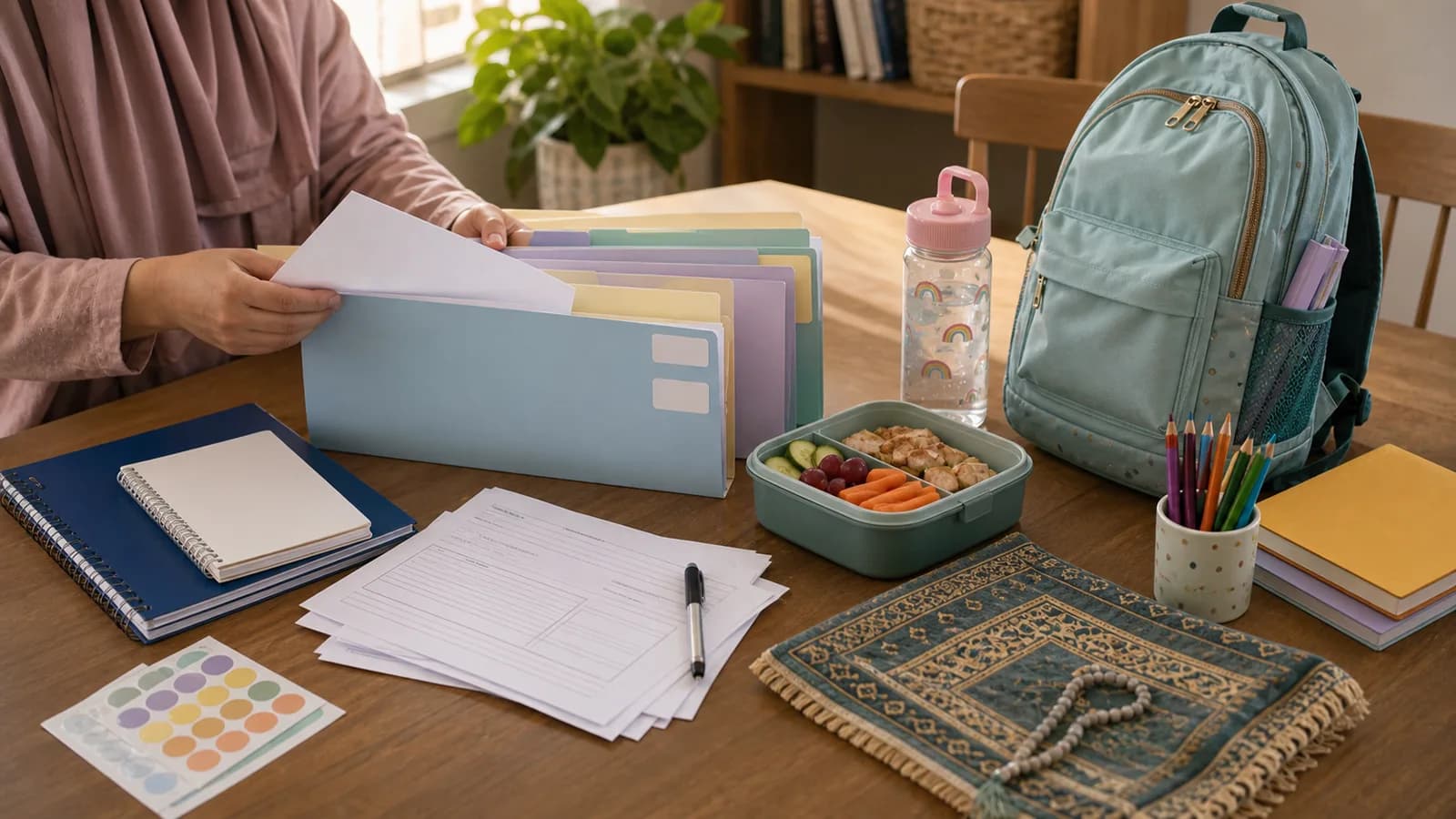
The folder should include student name, date of birth, proof of address, parent or guardian identification, birth certificate or other accepted identity record, prior school records, immunization record, health forms, emergency contacts, custody or pickup notes if relevant, transportation request, language support request, school meal application, allergy or medication forms, and a page for religious or cultural routines. Put the school name, office number, enrollment contact and first-day time on the front page.
- Identity and address: birth record, guardian ID, proof of residence, custody notes if relevant and emergency contacts.
- School records: prior school transcript, grade placement, IEP or 504 plan if any, language support and parent portal login.
- Health records: vaccines, medication forms, allergy plan, doctor contact and nurse communication.
- Food and routine: halal lunch, school meals, water bottle, Ramadan note, snack rules and lunchroom contact.
- Religious and safety notes: prayer timing, Eid absence, modesty in sports or changing areas, anti-bias concern and who to contact.
Enrollment day should not be the first time the family names its needs. If the child needs language support, a nurse plan, special education records, an allergy plan, transportation, a halal lunch routine or help understanding online portals, write it down. Ask for the office or staff member responsible for each item. A broad complaint like “the school never understands us” is harder to solve than a specific note: bus route, nurse form, lunch plan, prayer timing, portal password.
Separate health, meals and religious routine
Health records should be handled with the school nurse or enrollment office. Keep vaccine records, medication authorizations, asthma or allergy plans and doctor contacts together. If a family has medical, religious or legal questions about vaccination, those questions should be handled through the school district rules and qualified professionals, not by guessing from social media.
Food planning deserves its own page. A child may need packed halal lunch, school meal information, allergy forms, food-sharing boundaries or Ramadan adjustments. Write whether the child can eat vegetarian options, needs no pork or gelatin, has allergies, carries snacks, or should call a parent before accepting unfamiliar food. Clear meal notes prevent a hungry child from becoming the messenger for an adult conversation.
Prayer and religious expression should be discussed calmly. If an older student may need time for Dhuhr or Jumuah, write the schedule, location question and supervision issue. If the child is young, the practical question may be Eid absence, modest clothing in gym, Ramadan fatigue, or how teachers discuss Islam in class. The goal is respectful clarity, not making the child carry every adult anxiety into homeroom.
Anti-bias safety belongs in the folder because a child may not report teasing in adult language. Write who to contact if the child is called a slur, mocked for hijab, pressured about terrorism, bullied for lunch, excluded during Ramadan or targeted because of perceived ancestry. Keep dates, screenshots and names if something happens. A parent does not need to be dramatic to be organized.
Review after the first Friday
After the first few days, ask what actually happened: bus, lunch, bathroom, nurse, prayer timing, teacher names, friends, teasing, homework portal and pickup. Update the folder with missing documents and staff contacts. A family that reviews after Jumuah or another calm weekly time can catch problems before they become a semester of confusion.
A useful Muslim school enrollment checklist gives the child a softer landing: records ready, health forms gathered, lunch planned, prayer questions named, safety contacts written and the school relationship started with specific facts instead of panic.


