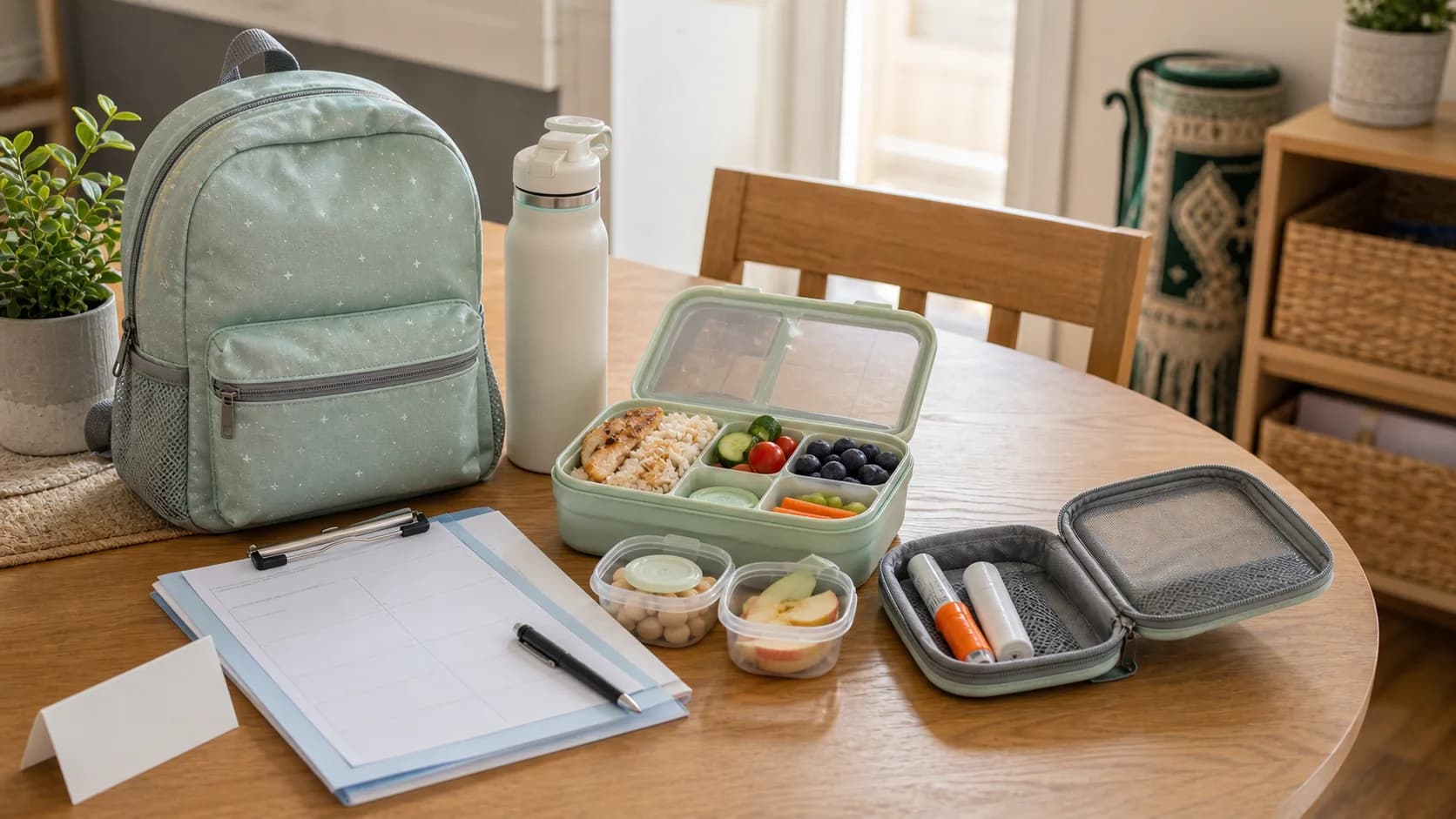
Muslim School Food Allergy Checklist for Halal Lunch and Medication
A practical Muslim school food allergy checklist covering halal lunch notes, allergen plans, medication forms, emergency contacts, ingredient labels, teacher communication and accommodation questions.
A Muslim school food allergy checklist has to be clearer than “my child eats halal.” Teachers, lunch staff, nurses, substitutes and after-school staff need instructions that work on a busy day. If a child has allergies, the stakes are medical. If a child has halal restrictions, the stakes are religious and family trust. The parent document should explain both without mixing them into one vague request that nobody can act on during lunch.
Use this with the Muslim childcare checklist for younger children and the halal grocery label guide when choosing packaged snacks. This guide is not medical advice, legal advice or a substitute for school policy. It is a practical parent document for organizing allergy forms, halal lunch instructions, medication permissions and teacher communication before the school year starts.
The sources show why the checklist needs both safety and communication. CDC school food-allergy material and USDA school employee guidance keep emergency planning visible. FDA food-allergy information supports label awareness. FoodSafety.gov covers basic packed-lunch safety. The Department of Education disability discrimination page reminds families that some allergy situations may require a formal accommodation discussion, not only a hallway note.
Write two separate notes: allergy plan and halal meal note
The allergy plan should be medical and precise: allergen, reaction signs, emergency medication, where medication is stored, who may administer it, emergency contacts, doctor forms and what the child can say. The halal meal note should be practical and precise: no pork, no gelatin if the family avoids it, no meat unless provided or certified, vegetarian substitutions if allowed, birthday treats rules, cafeteria options and whether the child may share food. Separate notes prevent staff from treating a life-safety allergy and a religious food rule as the same kind of preference.
- Allergy file: diagnosis, symptoms, emergency action plan, medication form and nurse contact.
- Halal note: safe foods, unsafe foods, cafeteria substitutions, birthday treats and food-sharing rules.
- Lunch handling: cold pack, labelled containers, reheating instructions and leftover rules.
- School contacts: teacher, nurse, cafeteria manager, after-school staff and substitute-teacher note.
- Accommodation: formal plan questions, field trips, class parties, Ramadan schedule and emergency drills.
A child should not be expected to manage the whole system. Older children can practice phrases such as “I have an allergy,” “Please check my plan,” or “I only eat the food my parent packed,” but adults still need written instructions. Substitutes, volunteers and cafeteria staff may not know the family. A note that says “halal only” may not explain gelatin candy, pepperoni pizza, marshmallows, meat broth, shared serving spoons or birthday cupcakes. The more predictable the note, the less pressure lands on the child.
Connect lunch packing to school safety
Packed halal lunches should be easy for the school to handle safely. Use labelled containers, cold packs when needed, clean utensils, simple reheating instructions and a written rule for leftovers. If the child has allergies, avoid sending confusing mixed containers unless the child and staff can identify them easily. If a lunch needs refrigeration, confirm who stores it and when. Food safety is not only a kitchen issue; it becomes a classroom issue when lunch sits in a backpack all morning.
Ingredient labels matter for both allergy and halal reasons, but they answer different questions. The FDA allergen source helps families think about major allergens and label awareness. Halal questions may include pork derivatives, gelatin, alcohol flavorings, meat source or cross-contact. Parents should not expect school staff to research every ingredient during a party. Instead, provide a short safe-snack list, a few approved packaged items and a rule for uncertain foods: do not serve until a parent confirms.
Medication documents should be completed before school starts. If the child uses epinephrine, inhalers or other emergency medication, follow the school's medical form process and confirm storage. Write down who should be called first, whether the child can self-carry if allowed, and what after-school programs should do. If the school says an informal note is enough for a serious allergy, parents should ask for the formal process so the plan survives staff changes.
Accommodation questions should stay factual. Does the allergy require a formal plan? Who coordinates it? How are class parties handled? What about field trips, bus rides, Ramadan activities, food-based lessons, science projects or holiday events? If the issue is religious food, ask for the practical meal arrangement. If the issue is disability-related allergy safety, ask about the school's official accommodation route. Mixing the two can make both harder to solve.
Test the first week and update the note
The first week is a live test. Check whether the child received the right food, whether unsafe snacks were offered, whether medication storage is correct, whether the teacher and nurse both have the plan, whether after-school staff know the rules and whether the child can explain the basics. If something fails, update the written note. Do not rely only on a quick apology at pickup. The next adult may never hear that conversation.
A useful Muslim school food allergy checklist protects health without making halal needs vague. It tells staff what is medical, what is religious, what is allowed, what is not allowed, who to call and where medication is kept. The child gets fewer awkward lunch moments, the school gets clearer instructions and parents can trust that the system is written down instead of floating in memory.


