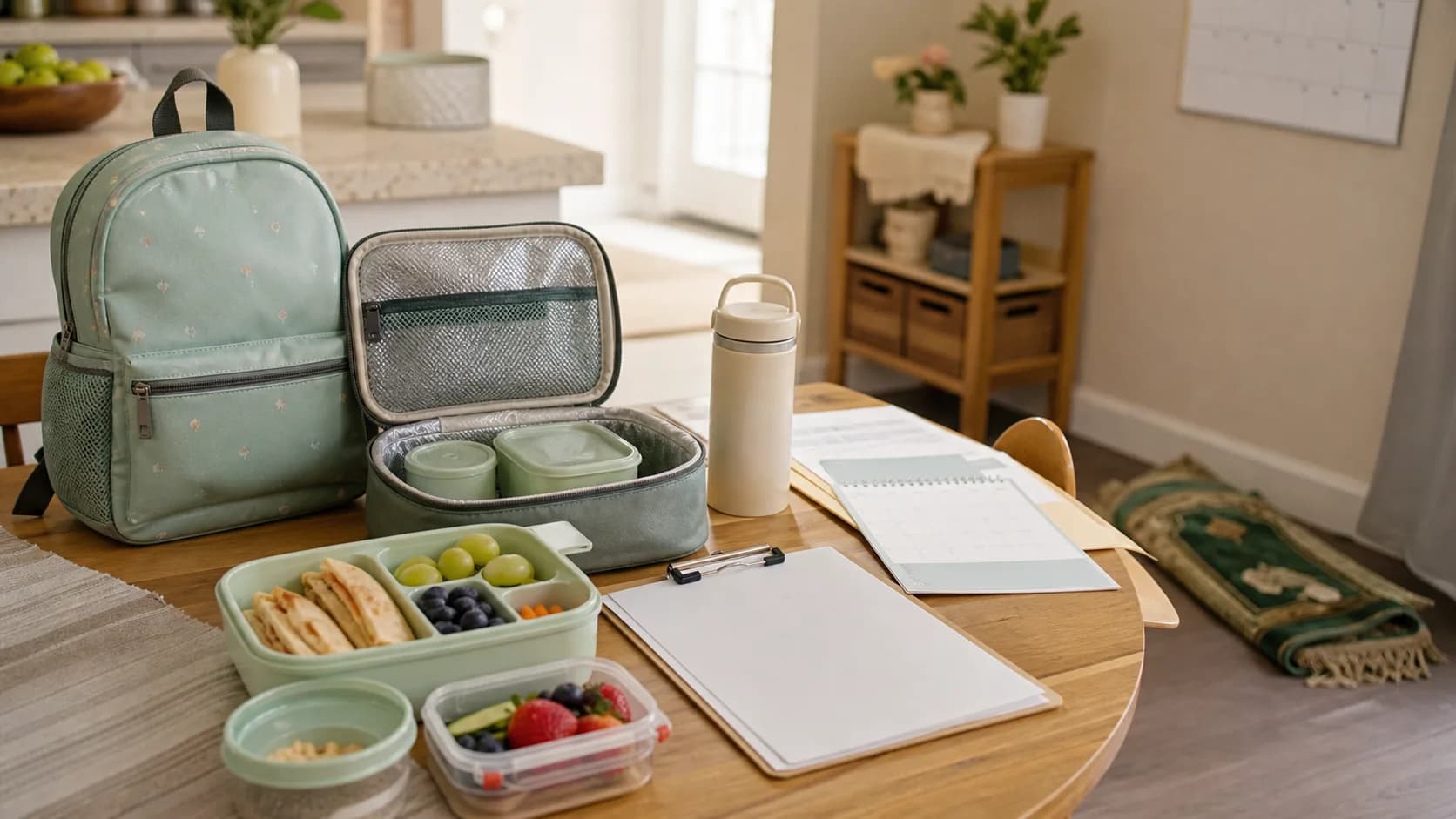
Muslim Childcare Checklist for Halal Meals Prayer and Family Documents
A practical Muslim childcare checklist covering daycare tours, halal meals, allergies, prayer and modesty expectations, emergency contacts, immunization records, pickup authorization and first-week routines.
A Muslim childcare checklist should sit between two worlds: normal childcare due diligence and the family's religious routine. Parents still need licensing, staff ratios, safety, emergency contacts, allergies, immunization records, pickup authorization and illness policies. They also need halal meals, pork and gelatin rules, modesty expectations, prayer language, Ramadan notes for older children, Eid absences and a respectful way to explain what the child can and cannot eat.
Use this with the Muslim new baby checklist, prayer times and the qibla finder when the childcare schedule affects family routines. This guide is not medical, legal or religious fatwa advice. It is a practical document for parents who want the provider to understand the child clearly before the first week, not after the first lunch mistake.
The source set keeps the checklist grounded. ChildCare.gov explains how families can search for and compare childcare and why regulated health and safety requirements matter. CDC child development material reminds parents to watch the child's growth and behavior, not only paperwork. FoodSafety.gov highlights children under five as a higher-risk group for foodborne illness. HHS immunization guidance keeps vaccine records in the enrollment folder.
Ask the childcare questions before enrollment
During a tour, parents should ask the same questions every time so providers can be compared fairly. How are children supervised? Who is allowed to pick up the child? What is the illness policy? How are medicines handled? What happens during naps? How are meals stored and reheated? Can parents send food from home? Are foods shared between children? How are allergies recorded? Where are emergency contacts kept? These are standard questions, and the Muslim-specific details fit naturally inside them.
- Meals: halal-only items, no pork or gelatin, labelled containers, reheating rules and snack substitutions.
- Documents: enrollment forms, emergency contacts, pickup authorization, immunization records and medicine forms.
- Health: allergies, illness policy, sunscreen or diaper products, developmental notes and sleep routine.
- Faith routine: Islamic words the child knows, prayer exposure, Ramadan or Eid notes and modesty expectations.
- Communication: daily report method, photo consent, incident reports, language needs and urgent-call order.
Halal meal instructions should be short and unmistakable. Do not write only “no non-halal food” if the teacher does not know what that means. Say whether the child may eat vegetarian food, fish, cheese, gelatin candy, marshmallows, birthday cake, food cooked with alcohol, pork-derived ingredients or food from another child's plate. If the family sends all meals, say that clearly. If the provider may offer substitutes, list safe examples. The note should help a busy teacher at snack time, not require a theology lesson.
Keep health and faith details in one child folder
The child's folder should include enrollment forms, immunization records, allergy plan, medicine authorization, emergency contacts, pediatrician, dentist, insurance card, pickup list, court or custody documents if relevant, photo permission and a one-page halal meal note. Add a short faith note only where it changes daily care: words the child uses for prayer, whether the child needs modest clothing for naps or water play, Eid absence dates if known, and whether family photos or religious activities require parent permission.
Food safety is not separate from halal planning. Young children are more vulnerable to foodborne illness, so packed meals need cold packs, clean containers, clear dates, reheating instructions and a plan for leftovers. If the child is too young to explain what they can eat, the container and provider note must do the explaining. A parent should not rely on the child to refuse a snack when every other child is eating it.
Developmental notes make the checklist more human. Record sleep changes, separation anxiety, toilet training, speech concerns, sensory needs, favorite comfort items and languages used at home. A Muslim family may also note religious words the child hears, such as salah, dua, halal or Eid, so a provider is not confused by normal family vocabulary. The goal is not to make the provider responsible for religious instruction. It is to help the provider care for the real child in front of them.
The first week should be treated as a test of the system. Check whether the lunch returned correctly, whether snacks were substituted safely, whether the child slept, whether pickup authorization worked, whether incident reports are clear and whether staff used the right emergency number. If something goes wrong, fix the written process. A friendly apology is nice, but the next teacher needs a clear note, not only a memory of a conversation at the door.
Make the daily routine easy to repeat
A repeatable routine keeps everyone calmer: labelled bag, labelled lunch, water bottle, spare clothes, prayer or faith note if needed, medicine form, pickup code, and a short goodbye. For older preschool children, parents can practice simple phrases: “This is my lunch,” “I do not eat pork,” or “Please ask my parent.” For families restocking food, the halal grocery label guide can help parents choose snacks with fewer surprises.
A good Muslim childcare checklist is protective but not suspicious. It helps the provider do the right thing on a busy day, helps parents compare programs honestly, and helps the child feel known rather than managed. The best version is short enough to use, specific enough to prevent meal mistakes, and complete enough that documents, health, faith and pickup rules are not floating in separate conversations.


