Muslim Domestic Violence Safety Checklist for Documents Shelter Prayer and Children
A careful Muslim domestic violence safety checklist covering emergency documents, safe contacts, shelter, children, immigration-sensitive records, prayer, faith pressure, device safety and support resources.
A Muslim domestic violence safety checklist must be written with care because safety can change quickly. Abuse may involve physical harm, threats, forced sex, financial control, immigration threats, phone monitoring, isolation, religious manipulation, child-related pressure, humiliation, stalking or control over prayer and community contact. If someone is in immediate danger, they should use local emergency help if it is safe to do so. This document is not a substitute for a trained advocate, lawyer, clinician, shelter or emergency responder.
Use this with the Muslim identity theft checklist if documents or accounts were controlled, and with the Muslim public benefits appointment checklist if food, health coverage or children need support. This guide is not legal, immigration, medical, mental-health, shelter, police, custody or religious advice. It is a careful document organizer for survivors and trusted helpers.
The sources set the safety frame. WomensHealth.gov and CDC material keep domestic violence and intimate partner violence visible beyond physical injury. DOJ Office on Violence Against Women material keeps safety and victim-resource questions in view. USCIS material reminds families that abused spouses, children and parents may have immigration-sensitive pathways that should not be handled through gossip. SAMHSA keeps emotional and behavioral health support visible. The Muslim layer adds faith pressure, imam or masjid boundaries, prayer, children, modesty, family honor language and privacy around documents.
Use a safe device and build the folder quietly
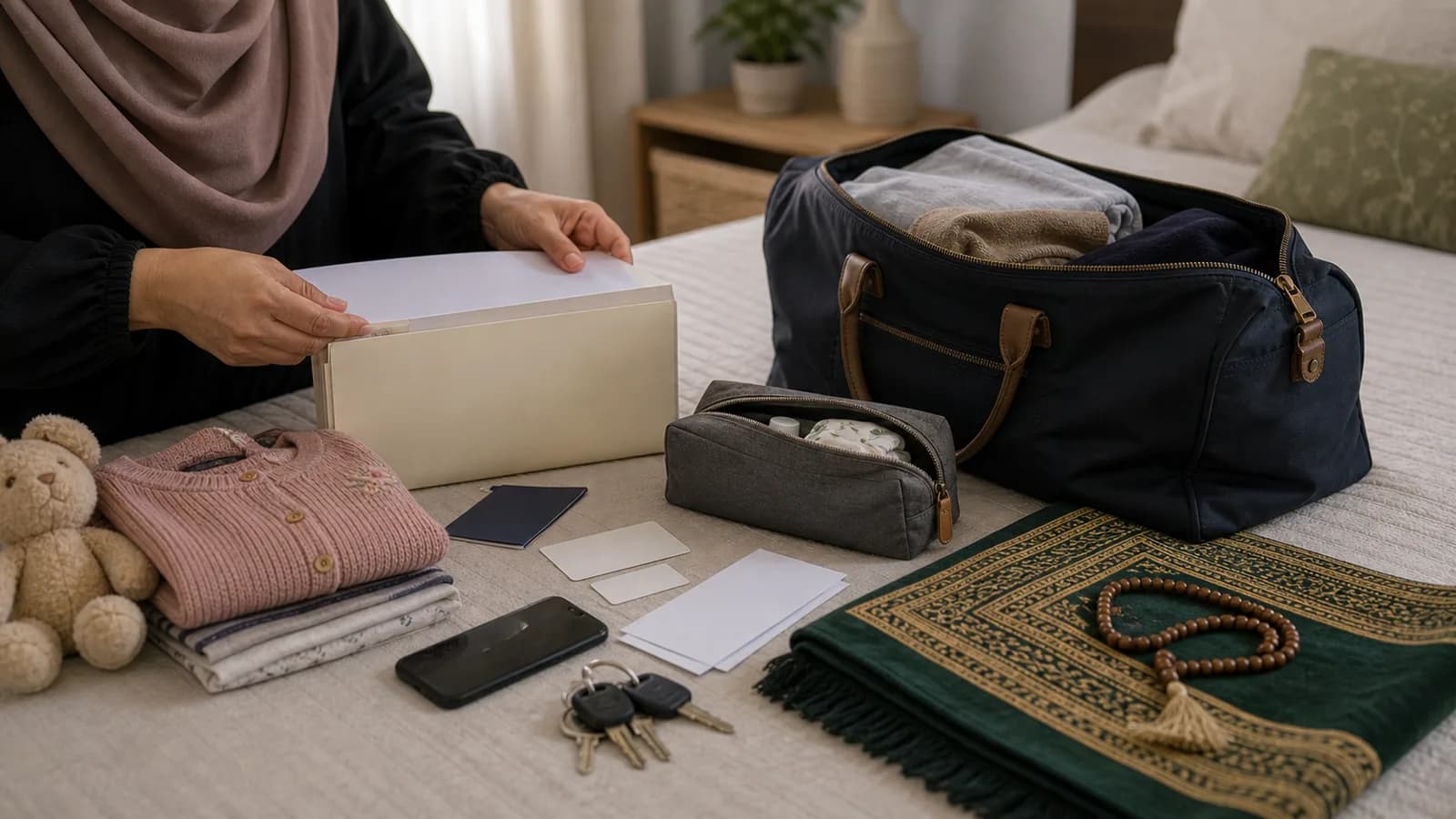
The folder should include identification, birth certificates, passports, immigration papers if relevant, health insurance cards, medicine list, school records, custody or court papers if any, bank information, emergency cash if safe, keys, safe contacts, shelter or advocate contacts, children's essentials, prayer items, device-safety notes and a plan for where documents can be stored without increasing danger. If the abuser monitors phones or papers, the survivor may need a trusted person, library computer, advocate or safer device.
- Immediate safety: emergency number, trusted contact, safe exit route, code word, transportation and where children go.
- Documents: IDs, passports, birth records, immigration papers, school records, health cards, medication list and court papers if any.
- Money and accounts: emergency cash if safe, bank card, benefits card, phone charger, account privacy and identity-theft concern.
- Faith and community: safe imam or advocate, unsafe family pressure, prayer items, modest clothing and a plan for religious manipulation.
- Follow-up: shelter contact, legal aid question, immigration-sensitive help, counseling or helpline, school notification and device safety.
The checklist should never demand that a survivor leave immediately or stay indefinitely. Safety planning is personal and risk-based. A person may need to prepare documents, protect children, find transportation, speak with an advocate, identify a safe relative, change passwords, preserve evidence or avoid leaving obvious signs. A helper should ask what is safest, not what looks brave from the outside.
Separate danger, documents and faith pressure
Danger is the first track. If weapons, strangulation, stalking, threats, forced sex, escalating violence, child harm, immigration threats or suicide threats are present, the safety plan may need trained help quickly. Documents are the second track: IDs, school papers, medicine, benefits, bank records and immigration papers. Faith pressure is the third track: being told that Islam requires silence, that family honor matters more than safety, or that seeking help is betrayal. These tracks overlap, but they should not be confused.
A Muslim survivor may need spiritual support, but not every religious-sounding voice is safe. A trusted imam, chaplain, Muslim therapist, advocate or elder should protect safety and dignity, not pressure the person back into danger. If community members leak information, shame the survivor, excuse abuse or demand mediation when it is unsafe, they should not be treated as safe contacts. Prayer can bring strength; it should not be used as a leash.
Children need their own plan. Write school pickup permissions, emergency contacts, medicines, allergies, comfort items, copies of documents, safe adults and what children should do if violence starts. Do not make children carry adult secrets beyond their age. If school staff, pediatricians or counselors need to know something, write who can be told and what is safe to share.
Digital safety belongs in the folder because a phone can become a tracking device. Write whether location sharing, shared cloud accounts, banking apps, family plans, cameras, car trackers, prayer apps, messaging apps or browser history could expose the survivor. A safer device, new email, trusted mailing address or advocate may be needed before changing passwords, because sudden changes can also raise risk.
Keep the next step small and documented
The next step may be one call, one copied document, one safe bag, one appointment, one school update or one conversation with an advocate. Write it down with the safest time and safest method. If the survivor chooses not to act today, the folder can still help tomorrow. Survival is not a straight line.
A useful Muslim domestic violence safety checklist protects agency: documents gathered carefully, children considered, faith pressure named, unsafe helpers avoided, official resources listed, prayer respected and the next safe step written down. The point is not to make a public scene. The point is to help someone stay alive, believed and less alone.


