Muslim Public Benefits Appointment Checklist for SNAP WIC Medicaid and Documents
A practical Muslim public benefits appointment checklist covering SNAP, WIC, Medicaid, Benefits.gov screening, income records, household documents, halal food needs, prayer timing, privacy and follow-up.
A Muslim public benefits appointment checklist should turn a stressful application into a prepared conversation. SNAP, WIC, Medicaid and related benefit programs can involve identity records, household size, income, rent, utilities, pregnancy or child information, medical needs, interviews, notices and upload portals. Muslim households may also need to explain halal food realities, Ramadan meal timing, transportation to clinics, family privacy and who is allowed to speak for whom.
Use this with the Muslim utility assistance checklist if bills are part of the crisis, and with the Muslim health insurance appeal checklist if coverage problems continue. This guide is not benefits, legal, tax, immigration, medical, nutrition or religious advice. It is a document organizer for families preparing carefully.
The sources set the public-benefits map. USDA FNS material keeps SNAP and WIC visible. Medicaid.gov keeps health coverage application steps in the folder. Benefits.gov helps households screen possibilities before applying. USAGov keeps families pointed toward official benefit information. The Muslim layer adds halal food needs, prayer timing, Ramadan schedule, modesty at appointments, family privacy and respectful recordkeeping.
Build one benefits folder before the appointment or interview
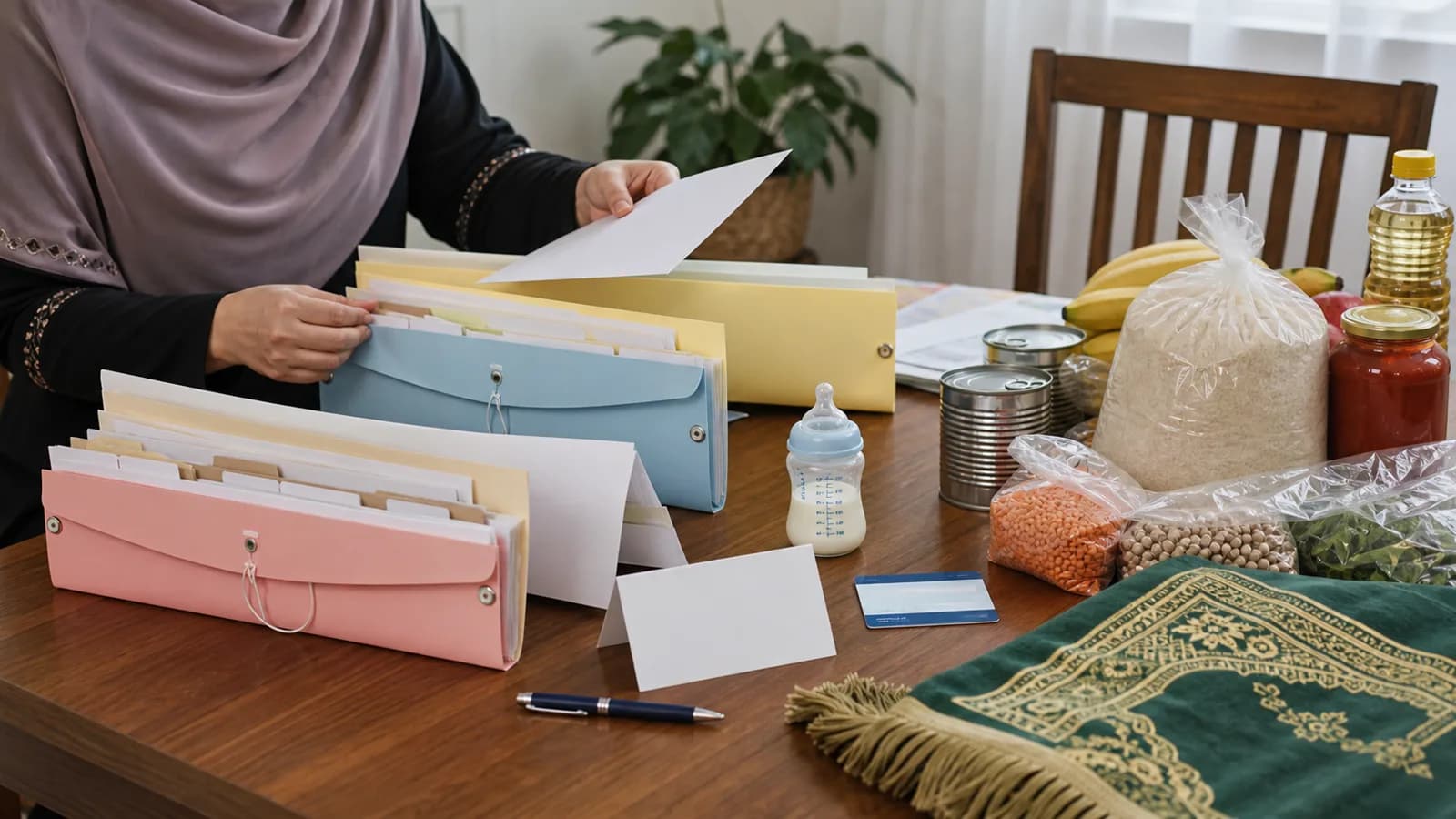
The folder should include government identification, address proof, household member list, income records, rent or mortgage information, utility bills, child information, pregnancy or infant records if relevant, medical coverage cards, notices, case numbers, appointment time, phone number, portal login plan, interpreter request if needed and a page of questions. The point is to stop searching for documents while an interviewer is waiting.
- Identity and household: ID, address, household members, birth dates, school or childcare details and contact information.
- Money records: income, job change, layoff, rent, utilities, childcare cost, medical cost and bank or benefit notices if requested.
- Programs: SNAP food help, WIC clinic or nutrition appointment, Medicaid application, renewal notice and benefit screening result.
- Muslim needs: halal food access, Ramadan timing, prayer around appointments, modesty during clinic visits and family privacy.
- Follow-up: case number, upload deadline, interview notes, missing document list and next call date.
SNAP preparation should start with the household story in plain facts: who lives together, who buys and prepares food together, what income changed, what rent and utilities cost, and what notices have arrived. If a halal grocery route or food desert affects the budget, write it as a practical need rather than an argument. The application still follows program rules, but the family understands its own food reality.
Separate SNAP, WIC and Medicaid questions
Different programs can ask different questions. SNAP is centered on food assistance and household finances. WIC may involve pregnancy, infants, young children, nutrition appointments and clinic logistics. Medicaid focuses on health coverage and may require follow-up about household, income or medical coverage. A single folder can hold all records, but each program should have its own page so details do not blur.
Appointments should include a communication plan. Decide who speaks, who translates if allowed, who keeps the child calm, who writes notes and who uploads documents. If the applicant is an elder, a teenager, a new parent, a disabled person or someone with limited English, protect their voice. Family help is good; speaking over the applicant can create mistakes.
Privacy matters. Benefits applications can involve sensitive income, immigration, medical, household and family information. Use official portals and phone numbers. Be careful with unofficial helpers who ask for login credentials, photos of every document or payment for vague promises. If a masjid or community group helps, keep the boundary clear: help with organization is not a reason to hand over more private records than necessary.
Prayer and appointment timing should be ordinary logistics. Write whether Dhuhr, Asr or Maghrib may fall during travel, clinic waits or phone interviews. If Ramadan fasting or a child feeding schedule affects a WIC appointment, plan food, water for non-fasting children and transport. A prepared routine helps the family stay calm without making worship a last-minute problem.
End every appointment with a missing-document list
After the call or visit, write what was submitted, what is missing, who received it, what deadline applies and how the family will confirm receipt. Save notices, screenshots, upload confirmations and case numbers. If a denial or reduction arrives, keep it for review instead of throwing it away in frustration.
A useful Muslim public benefits checklist respects both dignity and detail: official sources checked, documents gathered, halal food needs named, prayer schedule planned, privacy protected and follow-up written down. The family may still be under pressure, but the next action is no longer hidden.


