Muslim Court Fee Waiver Checklist for Filing Income Interpreter and Prayer
A practical Muslim court fee waiver checklist covering filing fees, income proof, indigency forms, interpreter needs, service copies, prayer timing and privacy.
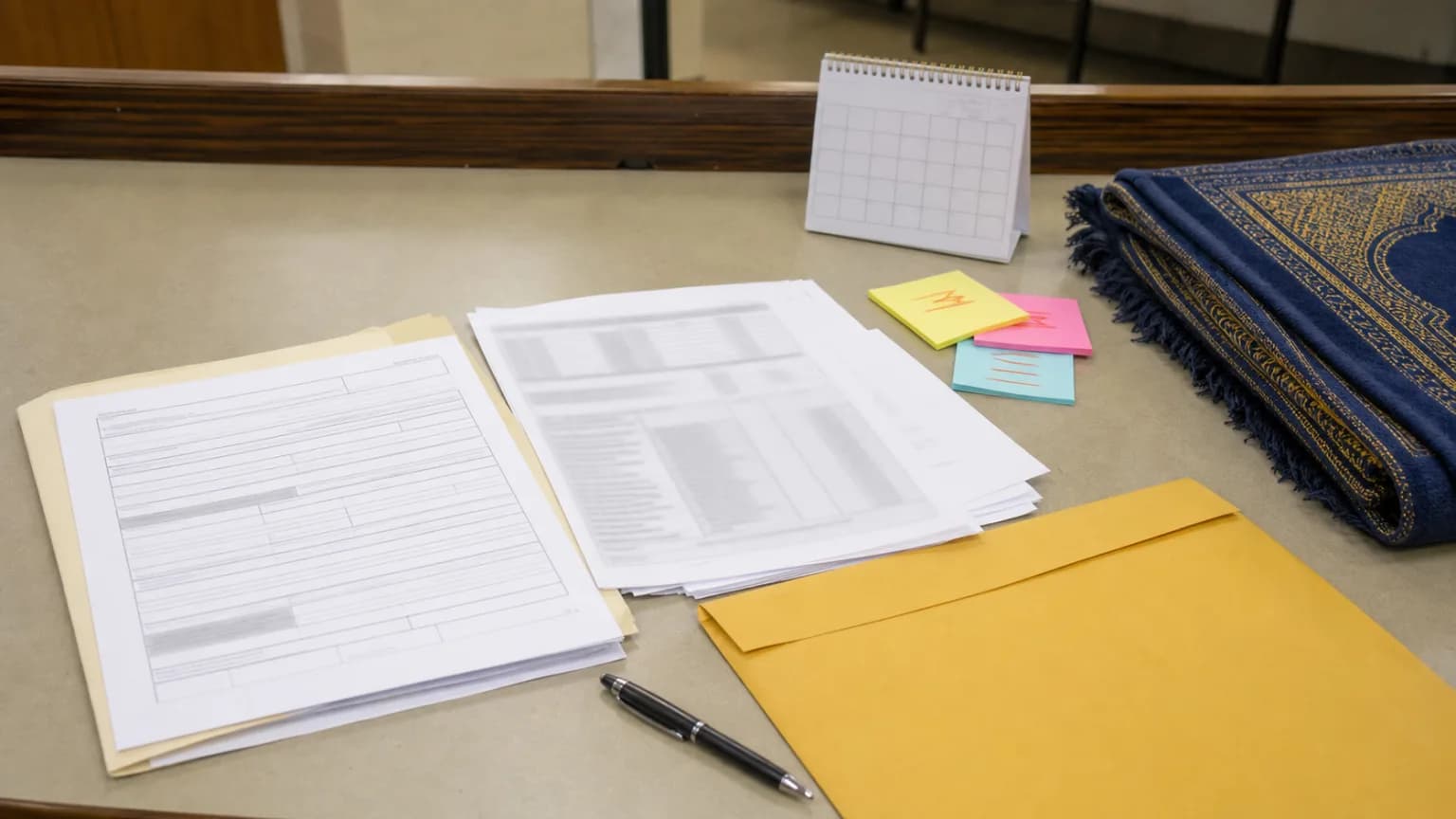
A Muslim court fee waiver checklist should help a filer ask the court about filing costs without mixing a private hardship story into every conversation. The folder may include the fee waiver application, case type, court name, filing deadline, requested fees, income proof, benefits letters, rent, utilities, childcare, service copies, interpreter request, address privacy concerns, prayer timing and a record of what was filed. The point is not to make the court understand every family pressure; the point is to answer the court form cleanly and keep the next filing step visible.
Use this with the Muslim small claims court evidence checklist if the fee waiver is part of a money claim, with the Muslim divorce document checklist if a family court case is involved, and with the Muslim legal aid appointment checklist when a clinic or advocate will review the papers. This guide is not legal, court, benefits, tax, financial or religious advice. It is a document organizer for a court fee waiver request.
The sources set the fee waiver map. U.S. Courts keeps federal fee waiver forms and fee context visible. California Courts, Illinois Courts, Washington Courts and Arizona Courts show why local forms, proof categories, waiver versus deferral language and court-specific instructions matter. The Muslim layer adds interpreter planning, modesty concerns, prayer breaks, family privacy, careful speech during conflict and boundaries around who may see income or household hardship records.
Start with the court, case type and exact fee request
The cover sheet should list the court name, county or district, case number if one exists, case type, filing deadline, form names, filing fee, service fee, copy fee, interpreter need, hearing date, mailing address and whether the request is a waiver, deferral or other fee relief. Then divide the folder into court forms, income proof, benefits proof, expenses, case filing, service, language access, privacy and follow-up. A person filing in state court should not rely on a federal form. A person filing in federal court should not assume a state self-help packet is enough.
- Court file: court name, case type, form packet, filing deadline, fee schedule, clerk instructions, case number and hearing date.
- Proof file: pay stubs, benefits letters, unemployment, disability, SNAP, Medicaid, rent, utilities, childcare and household-size notes.
- Filing file: complaint, petition, motion, answer, appeal paper, service copies, envelopes, upload receipt, stamp page or e-filing confirmation.
- Access file: interpreter request, disability access note, safe mailing address, phone access, transport limits and prayer-time conflict notes.
- Muslim care notes: keep family conflict private, avoid public blame, plan salah around filing windows and limit who handles income documents.
Income proof should be organized in the same order the form asks for it. If the court asks for monthly income, do not bury that number inside scattered bank screenshots. Put pay stubs, benefit letters, unemployment proof, rent, utility bills, childcare costs and medical expenses into clear tabs. If a masjid, relative or friend helps with food, rent or transport, record it carefully only if it is relevant to the court form. A helper can drive someone to the clerk or scan pages without needing the entire family conflict file.
Plan filing day like a document appointment
Court filing days can collide with work, school pickup, Jumuah, daily salah, fasting fatigue or language barriers. Write the practical plan before leaving home: who carries the originals, who keeps copies, which counter or portal is used, when the court opens, whether phones are allowed, what ID is needed and where the prayer break can happen without missing a call. If an interpreter is needed, request it through the court process rather than asking a child or family member to translate sensitive legal facts.
After filing, save the stamped copy, e-filing receipt, clerk note, payment decision, order granting or denying the waiver, next deadline, service proof and any request for correction. If the court grants a deferral rather than a waiver, put the possible later payment date on the cover sheet. If the request is denied, write what the court said before deciding whether to refile, pay, ask legal aid or seek other help. A useful Muslim court fee waiver checklist leaves the filer with forms in the right jurisdiction, proof organized, privacy protected, prayer logistics handled and the next court step visible.


