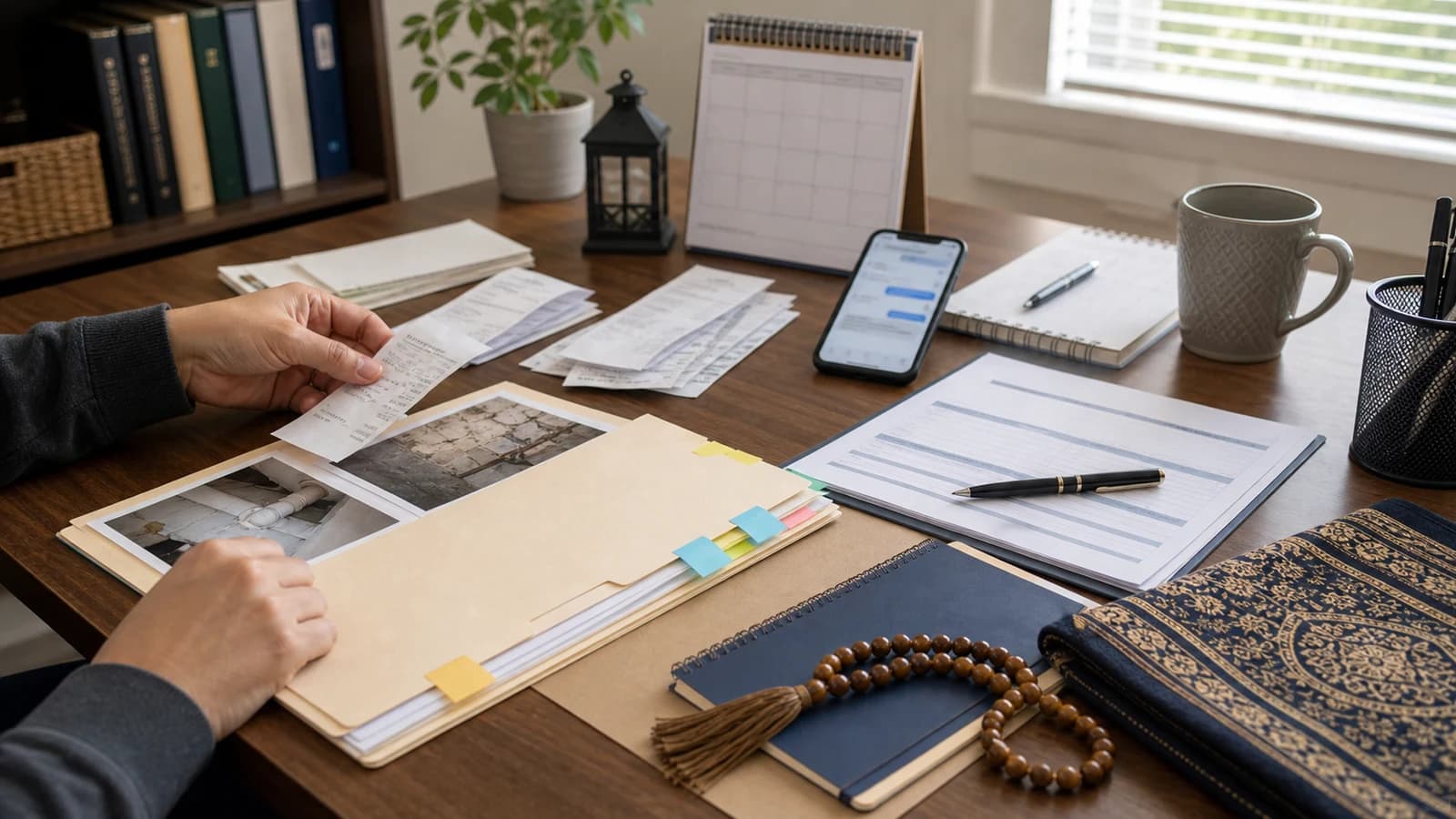
Muslim Small Claims Court Evidence Checklist for Receipts Photos Witnesses and Prayer
A practical Muslim small claims court evidence checklist covering receipts, photos, contracts, messages, witnesses, repair records, interpreter needs, prayer timing and settlement notes.
A Muslim small claims court evidence checklist should help a household or small business owner bring facts, not frustration, to court. Small claims disputes may involve unpaid work, deposits, repairs, rent, property damage, used car problems, contractor issues, loans, damaged goods, service agreements, text messages, photos, receipts, invoices, witnesses and settlement attempts. Muslim readers may also need to plan prayer timing, modest courtroom dress, interpreter needs, halal business records, family loans, masjid-community relationships and whether settlement would preserve rights without feeding anger.
Use this with the Muslim legal aid appointment checklist before getting help, and with the Muslim tenant repair request checklist or Muslim home repair contractor checklist when the dispute is about housing or repair work. This guide is not legal, court, debt collection, business, mediation, safety or religious advice. It is a document organizer for preparing evidence and court-day logistics.
The sources set the small-claims map. California Courts explains the small claims process. California court-date guidance keeps evidence preparation visible. Mass.gov small claims material shows state procedure and limits matter. Texas State Law Library material keeps pleadings, service and judgment questions in view. USAGov legal aid material keeps help options visible. The Muslim layer adds prayer timing, adab, truthful testimony, halal business records, family amanah and the wisdom to separate settlement from surrender.
Start with what you want the judge to see first
The first page should list the plaintiff, defendant, court, claim amount, filing deadline, hearing date, service status, interpreter need, settlement offer, payment requested and the three strongest pieces of evidence. Then attach documents in order: contract, invoice, receipt, photos, messages, repair estimates, bank records, delivery proof, police or inspection report if relevant and witness names. Do not make the judge reconstruct the timeline from a phone full of screenshots.
- Claim basics: parties, address, court, amount, deadline, service proof, hearing date, interpreter need and settlement history.
- Evidence packet: receipts, invoices, contracts, photos, videos, messages, emails, bank records, repair estimates, warranty notes and inspection reports.
- Witness file: names, contact information, what each person saw, dates, language needs and whether testimony or written statement is allowed.
- Muslim household notes: prayer timing, modest dress, truthful testimony, family loan records, halal business records and community relationship boundaries.
- After hearing: judgment, payment plan, collection steps, appeal information if available, copies stored and next deadline.
Evidence should be printed or saved in a stable order. A screenshot without date, sender and context may be weaker than a PDF export or printed thread with dates visible. Photos should show the full item and close-up damage. Receipts should match the claim amount. If a contractor promised one thing in a text and did another on site, place the estimate, payment receipt, photos and messages together.
Prepare for court day like an appointment, not a debate
Court day logistics matter. Write the courthouse address, room, arrival time, parking or transit, prayer window, interpreter request, childcare plan, modest clothing plan, phone charging and document copies. If the hearing may overlap Dhuhr or Asr, plan respectfully; do not arrive late and blame the court. If the other party is a relative, neighbor, masjid member or customer, decide beforehand what settlement would be acceptable.
Truthful testimony is not the same as telling every painful detail. Small claims court usually needs what happened, when, what was promised, what was paid, what went wrong, what evidence proves it and what amount is requested. Avoid insults, religious accusations and family gossip unless directly relevant. A calm sentence with a receipt often travels farther than a dramatic speech.
If language access, disability access, safety concerns or legal complexity is present, write that before the hearing. A landlord dispute, debt collection problem, domestic conflict, discrimination issue or business dispute may need advice beyond a simple small claims checklist. Legal aid or a court self-help center can help a person understand whether small claims is the right path.
Keep judgment and collection papers separate
After the hearing, save the judgment, payment agreement, receipt, collection forms, appeal information if any and dates for follow-up. If the other party pays, write how and when. If settlement happens outside court, keep a signed note and proof of payment. A useful Muslim small claims evidence checklist leaves the claimant with facts organized, prayer and court logistics planned, truthful testimony prepared and the next post-hearing step written down.


