Muslim Home Repair Contractor Checklist for Estimates Permits and Safety
A practical Muslim home repair contractor checklist covering estimates, licenses, permits, payment records, scams, lead safety, family privacy, prayer space and halal kitchen protection.
A Muslim home repair contractor checklist should protect both the house and the household routine. Repairs can disturb prayer space, modesty, halal kitchen storage, children's schedules, elder care, work-from-home calls and family privacy. They can also create ordinary risks: rushed estimates, unclear licenses, missing permits, unsafe dust, payment pressure, fake contractors and unfinished work. A written folder keeps the project from becoming a string of promises in text messages.
Use this with the Muslim rental apartment checklist if the home is rented, and with the qibla finder if a room layout changes. This guide is not legal, construction, safety, financial or religious advice. It is a document organizer for Muslim households who want estimates, permits, family boundaries and payment records in one place before work begins.
The sources define the practical frame. FTC home improvement scam guidance keeps payment pressure and fake contractors visible. HUD home improvement information keeps repair programs and planning in view. EPA lead renovation guidance matters when older homes are disturbed. CSLB and Mass.gov contractor pages remind households that licensing or registration checks are local and document-based. The Muslim layer adds prayer area protection, modesty boundaries, halal kitchen separation and family schedule planning.
Build a contractor folder before the first deposit
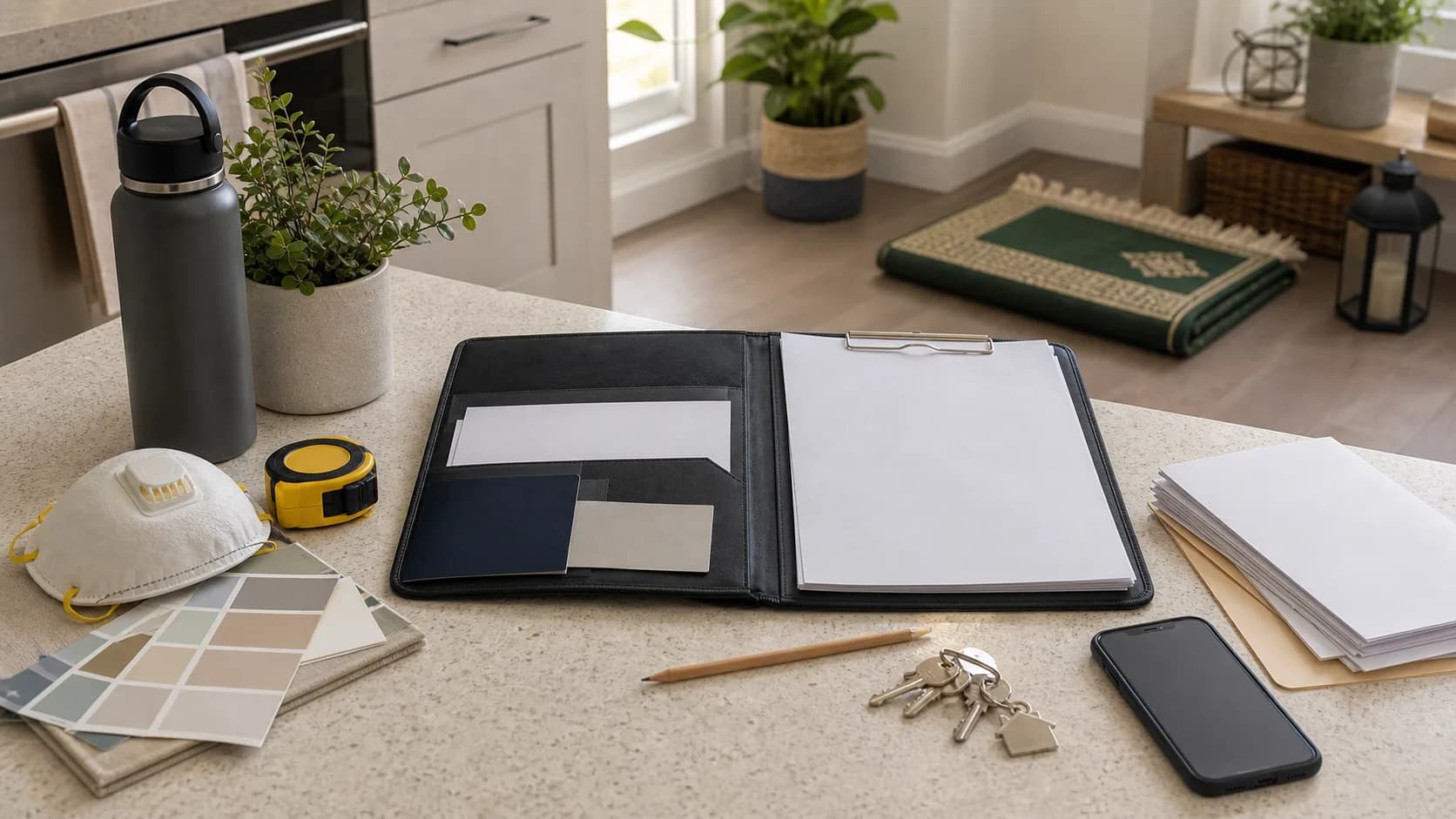
The contractor folder should include the project scope, photos, measurements, written estimates, contractor name, license or registration checks where applicable, insurance documents if relevant, permit questions, start date, work hours, payment schedule, change-order rules, warranty, cleanup plan and communication method. Add family boundaries: which rooms are off-limits, where shoes or dust barriers go, when prayer needs quiet, whether workers may enter when only certain family members are home, and how the halal kitchen will be protected.
- Scope: exact work, materials, rooms affected, dust plan, cleanup and who buys supplies.
- Contractor: license or registration check, insurance question, references, written estimate and contact person.
- Money: deposit, milestones, payment method, receipts, change orders and final walkthrough.
- Safety: lead, dust, electrical, water shutoff, children, elders, pets and emergency access.
- Muslim routine: prayer space, modesty, kitchen separation, work hours, Ramadan or Jumuah timing and guests.
Payment pressure is a warning sign. Do not pay the full amount before work begins. Do not rely on a handshake for a large project. Do not accept a sudden “today only” price without time to check the contractor. Save receipts and payment method records. If a contractor says permits are unnecessary, ask why and verify locally. If a project changes, write the change before paying for it. A family may be trusting, but trust should not require blank paperwork.
Protect worship and household dignity during work
Muslim-specific planning belongs in the work schedule, not in embarrassed last-minute instructions. Decide where prayer will happen if the usual room is dusty. Decide whether workers can see into bedrooms or prayer clothing storage. Decide how family members will move through the home with modesty intact. Decide whether the kitchen needs sealed containers, separate shelves or temporary meal prep outside the work zone. Tell the contractor practical boundaries, not a lecture.
Lead and dust questions matter for real health, not just cleanliness. If the home is older or paint will be disturbed, the EPA lead renovation source is a reason to ask about safe work practices and containment. Families with children, pregnant people, elders or health conditions should make the safety plan explicit. A prayer mat covered in dust is annoying; a child breathing renovation dust is more serious. The checklist should treat both dignity and safety as part of the same household protection.
A good estimate is specific enough to compare. It should say what is included, what is excluded, what materials are assumed, who handles disposal, what happens if hidden damage appears and when payment is due. If one estimate is much cheaper, ask what is missing. If a contractor promises everything verbally, ask for it in writing. If the work affects a rented home, get landlord permission in writing before changing anything that could affect the lease or deposit.
The final walkthrough should happen before final payment when possible. Check the work, cleanup, receipts, manuals, warranty, permit sign-offs if relevant, keys, access codes and leftover materials. Photograph the finished work. Save the contractor folder with home records. If there is a dispute, the folder should show dates, promises, photos and payments rather than a family argument about who remembers what.
Keep a household repair log
After the project, update a repair log with contractor name, date, cost, materials, warranty and any safety notes. Pair it with the Muslim moving house checklist if the repair is part of preparing to move. A home repair is not only a transaction. It changes the place where the family prays, eats, rests and receives guests.
A useful Muslim home repair contractor checklist turns a noisy project into a managed one. The family knows who is entering, what is being done, what it costs, how safety is handled, where prayer happens and how the halal kitchen stays clear. That is the kind of order that keeps a repair from taking over the whole household.


