Muslim Moving House Checklist for Address Changes Halal Kitchen and Prayer
A practical Muslim moving house checklist covering movers, address changes, mail forwarding, important documents, utilities, prayer setup, halal kitchen boxes and family communication.
A Muslim moving house checklist should not begin with boxes. It should begin with documents, address changes, mover verification, prayer routines, halal kitchen setup, school or work timing, mosque contacts, medicine, utilities and family communication. Moving can make worship and food feel temporary for weeks. A clear list keeps the family from losing documents, missing mail, eating whatever is easiest and discovering on Friday that the new route to Jumuah takes twice as long.
Use the Muslim rental apartment checklist before signing the lease, then use prayer times and the qibla finder during move-in week. This guide is not legal or financial advice. It is a household planning document for Muslim families and roommates who want the move to protect paperwork, prayer, food and safety at the same time.
The sources support a practical sequence. USPS handles mail forwarding. USAGov points to address-change categories. FMCSA and the FTC explain mover verification and moving-scam caution. Ready.gov financial preparedness keeps important documents visible. The Muslim layer adds what standard moving lists often miss: first prayer in the new home, halal kitchen boxes, mosque contacts, Ramadan or fasting routines, and relatives who need the correct address.
Create a move folder before packing begins
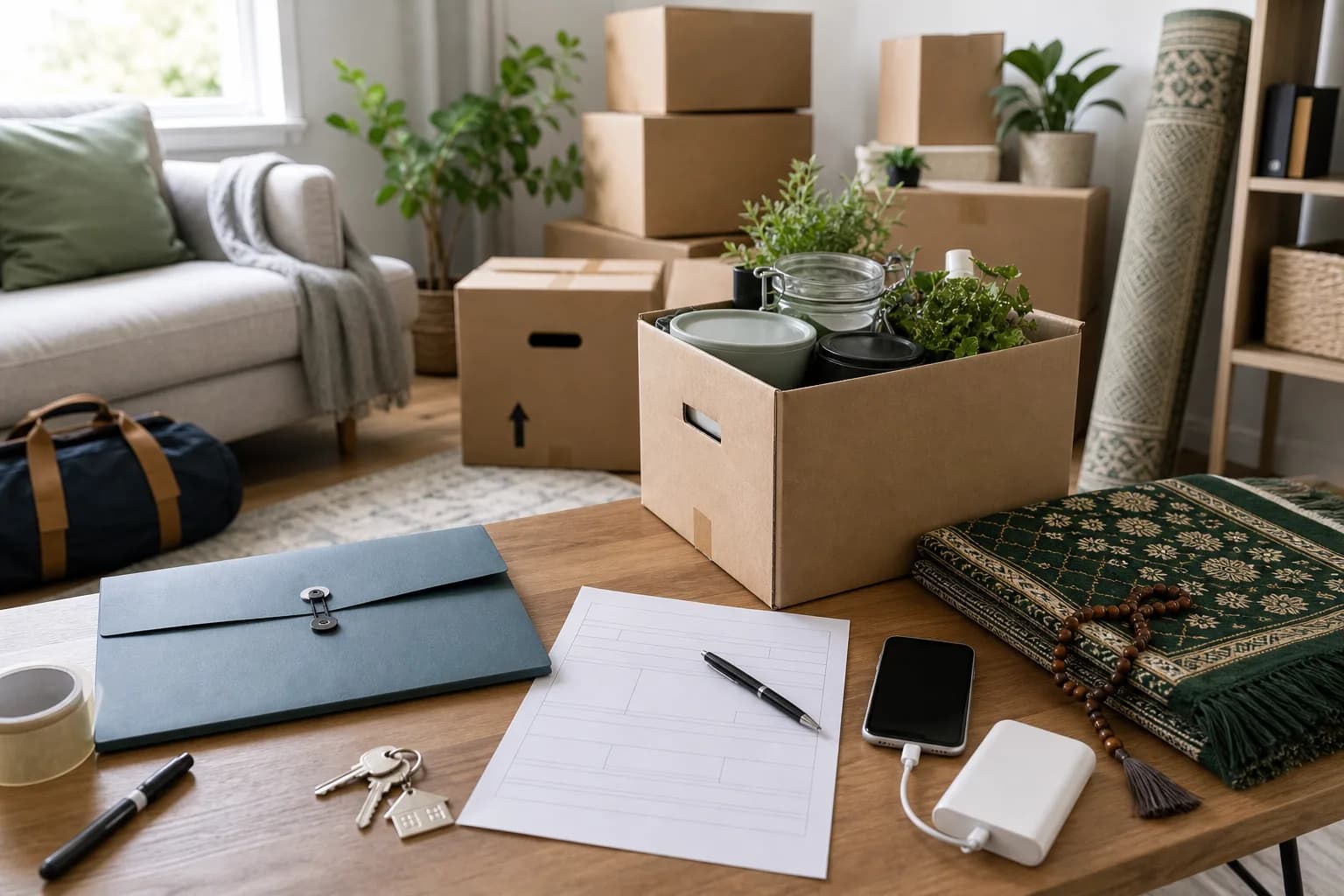
Make one move folder that is never packed into the truck. It should hold IDs, lease or closing documents, mover estimate, mover registration details where relevant, inventory, payment receipts, mail forwarding confirmation, utility start dates, medicine list, school or childcare records, insurance, emergency contacts and the new address written exactly as it should appear. Add mosque contacts, landlord or building contacts, parking instructions and the phone number of the person who has the keys.
- Address: mail forwarding, government records, banks, schools, workplace, insurance and subscriptions.
- Movers: written estimate, company details, inventory, payment method, pickup time and delivery window.
- Documents: IDs, lease, birth certificates, passports, medicine list and emergency contacts.
- Prayer: qibla direction, prayer mat box, clean corner, Friday route and first-week schedule.
- Kitchen: halal pantry box, labelled cookware, freezer plan, cleaning supplies and first meal plan.
The halal kitchen should be packed intentionally. Put the first-week halal food, basic cookware, labelled containers, spices, rice or pasta, tea, dates, child snacks and cleaning cloths in boxes that are opened first. If the new home has a shared kitchen, write down what cookware is private, what shelves are halal-only, and what happens with pork or alcohol storage. If relatives are helping, tell them which boxes are kitchen-first and which boxes should not be mixed.
Check the mover and payment trail
Mover problems can ruin the whole week. Verify the company, keep a written estimate, understand whether the price can change, photograph valuable items, and keep a simple inventory. Do not let a mover pressure the family into sudden cash, unclear extra charges or a different delivery agreement without a written record. The FTC warning about moving scams is especially relevant when the family is tired, fasting, travelling with children or trying to move before a lease deadline.
Prayer planning should happen before the first night. Choose the clean corner, find qibla, unpack prayer mats and modest clothing, and decide where shoes stay. If the family is arriving close to Maghrib or Isha, the prayer box should travel in the car, not at the back of the truck. If movers or relatives are in and out, keep one room or corner calm enough for salah. A move is busy, but prayer should not become a treasure hunt.
Address changes need a checklist of institutions, not a vague reminder. Mail forwarding helps, but it does not update every record. Work through banks, employer, school, doctor, pharmacy, vehicle or license agency, tax or benefit office, insurance, mosque mailing list, online shopping accounts and relatives who send documents. For separated families or students, decide which address should be used for school, medical, tax and travel records.
Use the source institutions as checkpoints. USPS covers forwarding, USAGov points to address changes, FMCSA covers interstate mover checks, the FTC explains moving-company scam signals, and Ready.gov keeps financial records visible. Put four dates on the calendar: mail forwarding start, utility start, mover pickup and first work or school day from the new address. A family that sees those dates together can protect prayer, transport, food and documents instead of discovering conflicts one at a time.
Make the first week easy on worship and meals
The first week should have a low-friction worship and food plan. Save the new home's prayer times, Jumuah route, nearest halal grocery, nearest regular grocery with clear labels, pharmacy, urgent care, school route and mosque contact. Plan three simple meals before the move so the family is not forced into expensive delivery or unclear ingredients. The halal grocery label guide can help when restocking unfamiliar shelves.
A good Muslim moving checklist is not sentimental. It is practical mercy. It keeps documents out of the wrong box, protects the family from mover pressure, gets the address updated, opens the halal kitchen first and makes the first prayer in the new home calm. The move is successful when the family can sleep, eat, pray and find its papers without reopening every box in the living room.


