Miswak Explained: The Plant, Religious Practice and Dental Evidence
Understand miswak and Salvadora persica, the religious reports behind its use, and how to read modern dental evidence without overstating benefits.
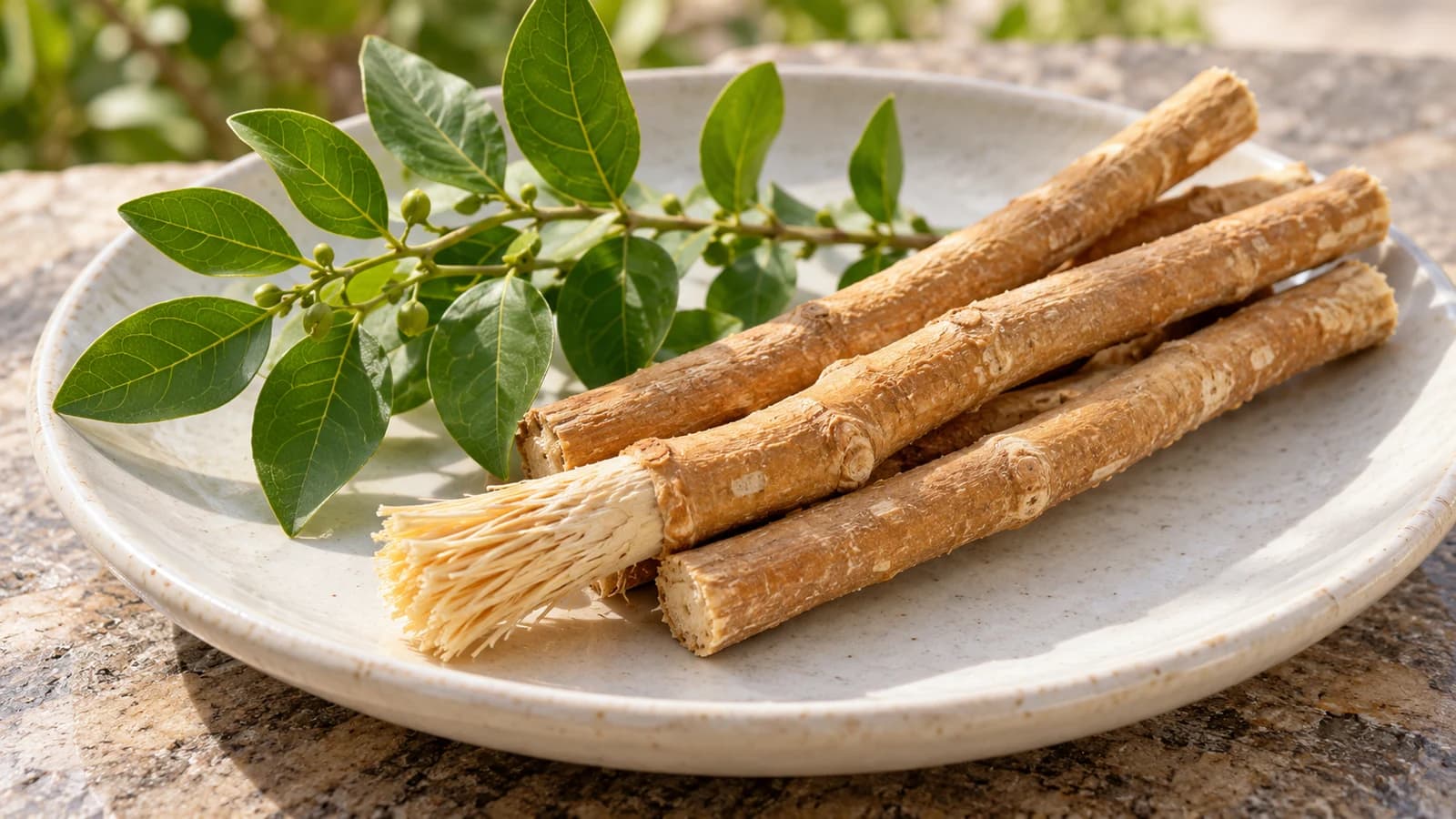
Miswak, also called siwak, is a traditional tooth-cleaning stick and the practice associated with using it. It is commonly made from Salvadora persica, a plant often called the toothbrush tree or arak. Its place in Islamic religious practice and its effects on oral health are related topics, but they require different kinds of evidence.
A religious report can document a recommended practice. A botanical record can identify a plant. A clinical study can examine particular outcomes under specified conditions. None of those sources alone establishes every claim made for a product sold under the name miswak.
The miswak plant and the prepared stick
Kew’s account of Salvadora persica describes a shrub or small tree associated with hot, dry regions of Africa and Asia, including the Arabian Peninsula. Small stems and roots have been used as chewing sticks. The plant and the prepared item should be distinguished: a sealed twig in a shop is a manufactured and stored product, not simply a living botanical specimen.
The brush-like end is made from the plant’s fibers. The TDV Encyclopaedia of Islam’s miswak entry describes the term and its historical use, while also discussing that other plants have been used for tooth-cleaning sticks. A general label such as natural toothbrush therefore does not, by itself, identify the species in a particular packet.
That distinction matters when reading research. A study of a named plant, a standardized extract or a particular prepared stick does not automatically describe every item carrying a similar common name. Botanical identity, preparation and actual use belong in the description of what was studied.
For an unfamiliar product, begin with its stated plant identity, intended use and manufacturer’s instructions. If those are missing, a photograph or a familiar religious name does not supply them. This is a question about identifying an object, separate from deciding whether a particular religious practice is recommended.
Kew also records preserved examples of the plant and its uses in its Economic Botany Collection, including stems, roots, bark, fruit, chewing sticks and toothpaste made from the plant. Such a collection helps document the material relationship between a species and everyday human practices. A preserved chewing stick can be studied as an object, while a toothpaste can show how the same plant has entered a manufactured product.
The questions asked of those objects are not the same as the questions asked in a clinical trial. A botanical collection may help establish what a material is or how it has been used. It does not automatically verify every health statement printed on a current packet. When an advertisement shows a plant photograph next to a treatment claim, separate the identification of the plant from the evidence for the treatment. Both may be presented on one page, but they still require different support.
What the religious reports actually say
Sahih al-Bukhari 887 records a statement connecting siwak with prayer and explicitly referring to the difficulty a universal command would cause. The report explains the importance attached to the practice; its wording should be preserved rather than rewritten as a claim that every prayer is invalid without a particular commercial stick.
Sahih al-Bukhari 245 describes the Prophet cleaning his mouth with siwak when getting up at night. This is a different reported setting. Identifying both the text and its occasion is more accurate than combining all references into one undifferentiated list of promises.
The TDV entry discusses how religious scholars have understood miswak and notes differences in detailed practice. Readers seeking guidance about fasting, ritual preparation or the view followed in a particular community should ask a qualified teacher who can identify the relevant school and evidence. This introduction does not turn one community’s procedure into a rule for everyone.
For broader context, our wudu guide distinguishes shared features from school differences. Mouth cleaning, ritual washing and prayer remain distinguishable acts even when they occur close together in a person’s daily routine.
Why a twig, an extract and a toothpaste are not interchangeable evidence
A whole stick acts through physical contact and the way it is handled. An extract examined in a laboratory may be tested at a specified concentration. A toothpaste can combine plant-derived ingredients with other substances. These are different interventions, so the name of the plant is not enough to make their results interchangeable.
Consider a claim based on bacteria exposed to an extract in a laboratory. That can be evidence about the tested material under those conditions. It is not, on its own, a measurement of what happens to a person’s teeth over years of everyday use. The route from a laboratory observation to a practical recommendation requires additional clinical evidence.
The same principle applies when comparing miswak with a toothbrush. The comparison needs to say how each was used, for how long, by whom and with what additional products. A study involving trained adults should not silently become a recommendation for every child or someone with a different dental condition.
Product claims are easier to assess when they identify the material and the outcome. Improved plaque scores, changes in bacterial counts and prevention of cavities are not three interchangeable descriptions of a single result. Ask which outcome was actually measured before accepting a broad statement that something is better for teeth.
What a modern systematic review can and cannot establish
A 2025 systematic review in Scientifica examined miswak against conventional oral-health measures in adults. It included 10 studies with a combined 442 participants in its qualitative analysis, covering research published between 2011 and 2023. The authors reported promising antibacterial and antiplaque findings while calling for more clinical research.
The review did not produce a pooled meta-analysis because the included work varied substantially in methods and reported data. Its adult study criteria also excluded people undergoing orthodontic treatment. Those limits matter: the review should not be presented as a universal replacement instruction for children, people wearing braces or every person with existing dental disease.
Reading a review critically does not mean dismissing either the research or the religious practice. It means matching the conclusion to the population, methods and outcomes studied. A promising result can justify further investigation without proving a large commercial claim or establishing that other parts of oral care are unnecessary.
When a short social-media post says that science has proved miswak superior, look for a named study and a description of the comparison. A citation that does not identify the preparation, participants or measured outcome leaves the central question unanswered.
How miswak fits beside established oral-care guidance
The American Dental Association’s home oral-care guidance recommends brushing twice daily for two minutes with fluoride toothpaste and cleaning between the teeth daily. It also distinguishes general recommendations from advice tailored by a dentist to an individual’s needs. These recommendations concern a complete routine, not simply the choice of one material.
The ADA’s separate toothbrush guidance discusses soft bristles, gentle pressure and reaching the different tooth surfaces. The Canadian Dental Association’s brushing and flossing information likewise emphasizes regular cleaning and warns against forceful scrubbing. Neither source makes an unlabelled twig a universal substitute for a personalized dental plan.
A dentist can explain how a person’s chosen practice fits with fluoride exposure, cleaning between teeth, existing restorations or particular gum concerns. Mention the actual product and how it is used, rather than asking only whether natural products are good or bad. That makes the discussion specific enough to be useful.
Religious significance does not require exaggerated treatment claims. Someone can value miswak as a religious practice while still following appropriate dental care. Conversely, a clinical result about a cleaning technique does not decide its religious status.
Practical questions before adding a new product
Check what the item is and what instructions accompany it. Keep plant identity, preparation, storage and intended use together rather than assuming that every supplier uses the same material or process. An intact packet is not proof of every claim printed on it, and an expensive presentation does not establish greater religious merit.
Avoid transferring precise instructions between different products without checking that they apply. A prepared stick, a manufactured brush and a toothpaste containing an extract have different physical forms. A marketing description should not replace the instructions for the item actually being used or advice given for an individual dental condition.
If you are uncertain about technique, have sensitive areas, wear dental appliances or experience persistent irritation, ask a dentist about appropriate use rather than increasing pressure or frequency in response to a promotional claim. This is especially relevant when a product is being considered for a child: adult research is not automatically evidence for a child’s routine.
For visitors encountering the practice in a religious setting, observation is not a demand to imitate every action immediately. Our first mosque visit guide explains how to ask practical questions respectfully. A person’s private routine should not be used as a test of another visitor’s belonging.
Keep the meaning, the habit and the claim separate
The language around miswak often combines three statements: this is a traditional object, this is a valued religious practice, and this has a particular health effect. Each may be worth discussing, but the evidence supporting one is not automatically evidence for the others. A careful explanation identifies the plant, names the report and describes the actual clinical outcome.
The same distinction helps with daily learning. A morning supplication has wording and a reported context; a cleaning practice has a physical method and its own context. They can form parts of a person’s day without becoming one combined rule.
Our explanation of dua and salah also separates supplication from ritual prayer. Keeping these categories clear protects both religious understanding and practical health decisions: a devotional act should not be sold through unsupported medical promises, and a health question deserves evidence appropriate to the person and product.