Hilye Meaning: Written Descriptions, Calligraphic Panels and Museum Examples
A hilye describes Muhammad through words. Learn its common panel layout, compare documented examples, and distinguish calligraphy, decoration and later mounting.
A hilye is a written description associated especially with the Prophet Muhammad, and the name also identifies calligraphic compositions presenting that description. You may encounter the spellings hilya and hilyah, or the fuller Turkish name hilye-i şerif. The familiar panel communicates through writing rather than a drawn likeness. Its text, arrangement and physical support each deserve attention.
A circle surrounded by smaller roundels can be a useful starting clue, but it is not enough to identify an artist or date an object. A museum record may distinguish the writing from later decoration, while another example may be mounted on folding wood or placed inside a bottle. These differences become clearer when the literary form and the individual artwork are considered separately.
What hilye means: a description before a panel
The TDV Encyclopaedia of Islam’s hilye entry explains the term through meanings associated with adornment and describes its development in literature and calligraphy. In Ottoman usage, it came to refer particularly to accounts of Muhammad’s qualities and to works presenting those accounts. A hilye can therefore be a text in a literary setting as well as an artwork intended for display.
This distinction prevents an easy misunderstanding. The existence of an influential panel arrangement does not mean that the descriptive tradition began with that arrangement. A literary account, a calligrapher’s chosen passage and a decorated sheet are related things, but they are not identical objects. The entry also discusses descriptions of other religious figures within the broader literary genre; the common Muhammad panel is the focus here.
When a catalogue uses the expression verbal portrait, understand portrait as a comparison about representation through language. It does not mean that a hidden face should be reconstructed from the ornament. Nor does this particular tradition establish a complete history of images across every Muslim society. Describe what this work does: it presents a named subject through selected words and a designed composition.
A hilye is also different from a mushaf, the physical written copy of the Quran. A panel may include a Quranic verse alongside other text without becoming a complete Quran. Our mushaf guide explains the distinction between a text, a manuscript leaf and a volume. The same attention to the scope of the object is useful here.
How to follow the common calligraphic layout
Several collection records describe a recognisable arrangement: a heading at the top, a central roundel containing the description, smaller surrounding areas, a horizontal inscription band and a lower rectangular continuation. The Library of Congress uses the Turkish terms başmakam for the top area, göbek for the central circle and etek for the lower section. These names help a reader follow the composition rather than treating the page as unrelated decoration.
In the examples discussed below, the top area contains the basmala, the opening formula invoking God. The smaller areas name the first four caliphs, while the horizontal band includes Quran 21:107. Our Bismillah and basmala guide explains that formula in its own right. Finding it at the top of a sheet does not identify everything written below it.
Start with the reading relationships. A central text may continue in the lower rectangle; the signature may follow that continuation. A large script in a horizontal band can have a different function from the smaller descriptive writing. Before translating an isolated phrase, locate it within the page. This helps avoid presenting a heading, a Quranic citation or an artist’s signature as though each belonged to the descriptive account itself.
Keep the layout flexible. A common arrangement is an aid to comparison, not a compulsory diagram for every object bearing the name. An absent crescent, an additional inscription or a different mount should prompt a closer reading of the record. It should not automatically lead to a claim that a work is incomplete, incorrectly made or outside the tradition.
Hafız Osman and a sheet with more than one date
The TDV biography of Hafız Osman identifies the Ottoman calligrapher with the development of the hilye as a panel composition. He lived in the seventeenth century and died in 1698. An association with his influential format should be distinguished from attribution of an individual surviving sheet to his hand. A later artist can work within a familiar arrangement without being its original designer.
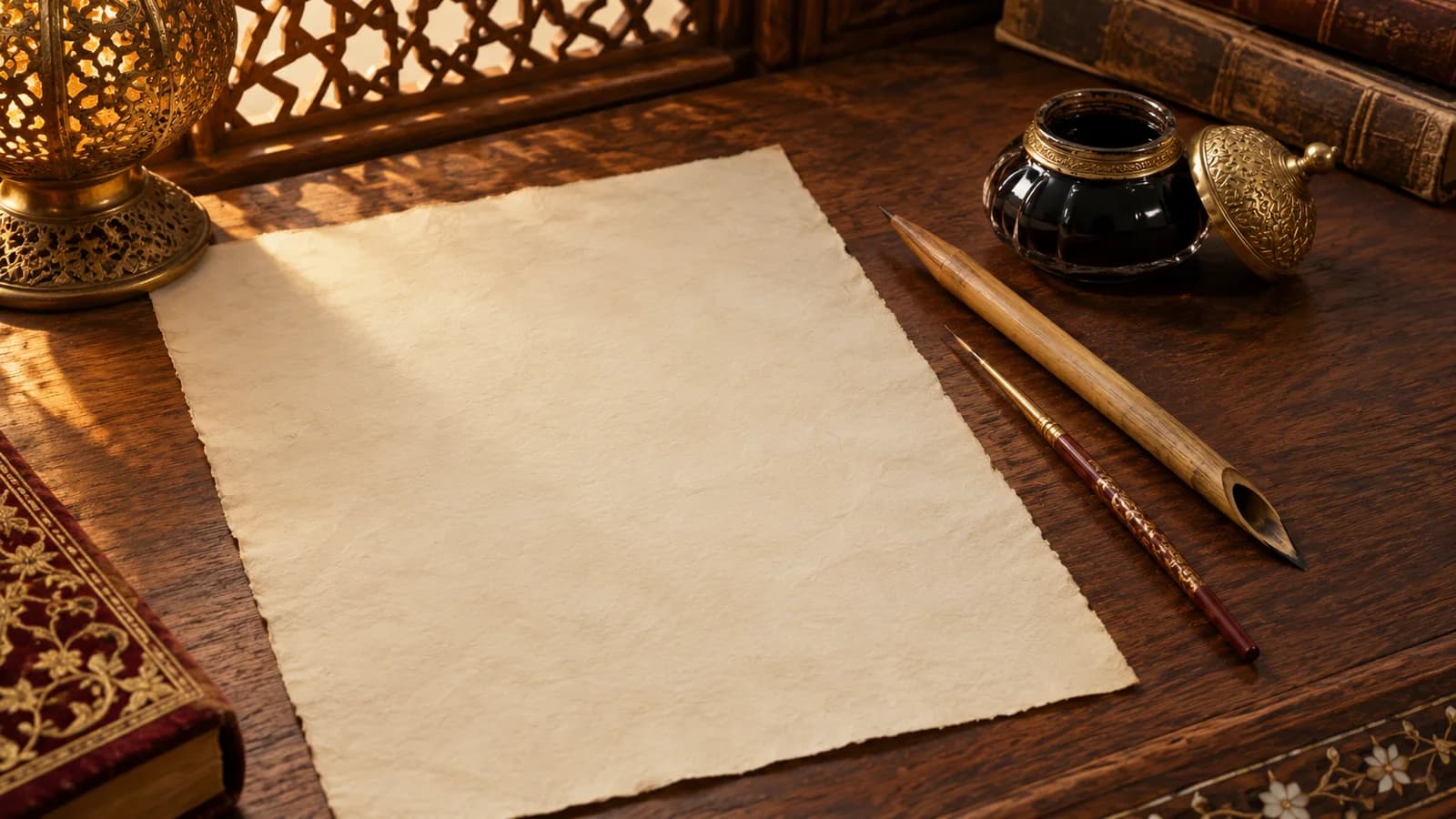
The Sadberk Hanım Museum’s Hilye-i Şerif record, published through its official Google Arts & Culture collection, attributes the calligraphy to Hafız Osman and dates it around 1670. The support is cream-coloured paper with ink, gold and paint. The museum separately dates the decoration in the areas without text to the early twentieth century. That later layer belongs in an explanation of the present object.
The record identifies naskh in the principal description, rayhani in the upper basmala and jali thuluth in the Quranic band. The main description begins in the central circle and continues below. Its measurements also distinguish the complete sheet, 51 by 41 centimetres, from the writing field, 31.2 by 20.5 centimetres. Both dates and dimensions need labels to remain useful.
A careful short caption could therefore say that the calligraphy is dated around 1670, with later decoration identified by the museum. Saying simply that every visible part was made in 1670 would erase the distinction. Conversely, dating the entire work only by its later ornament would hide the earlier writing. An object can have a history of additions while remaining a meaningful example of a calligraphic tradition.
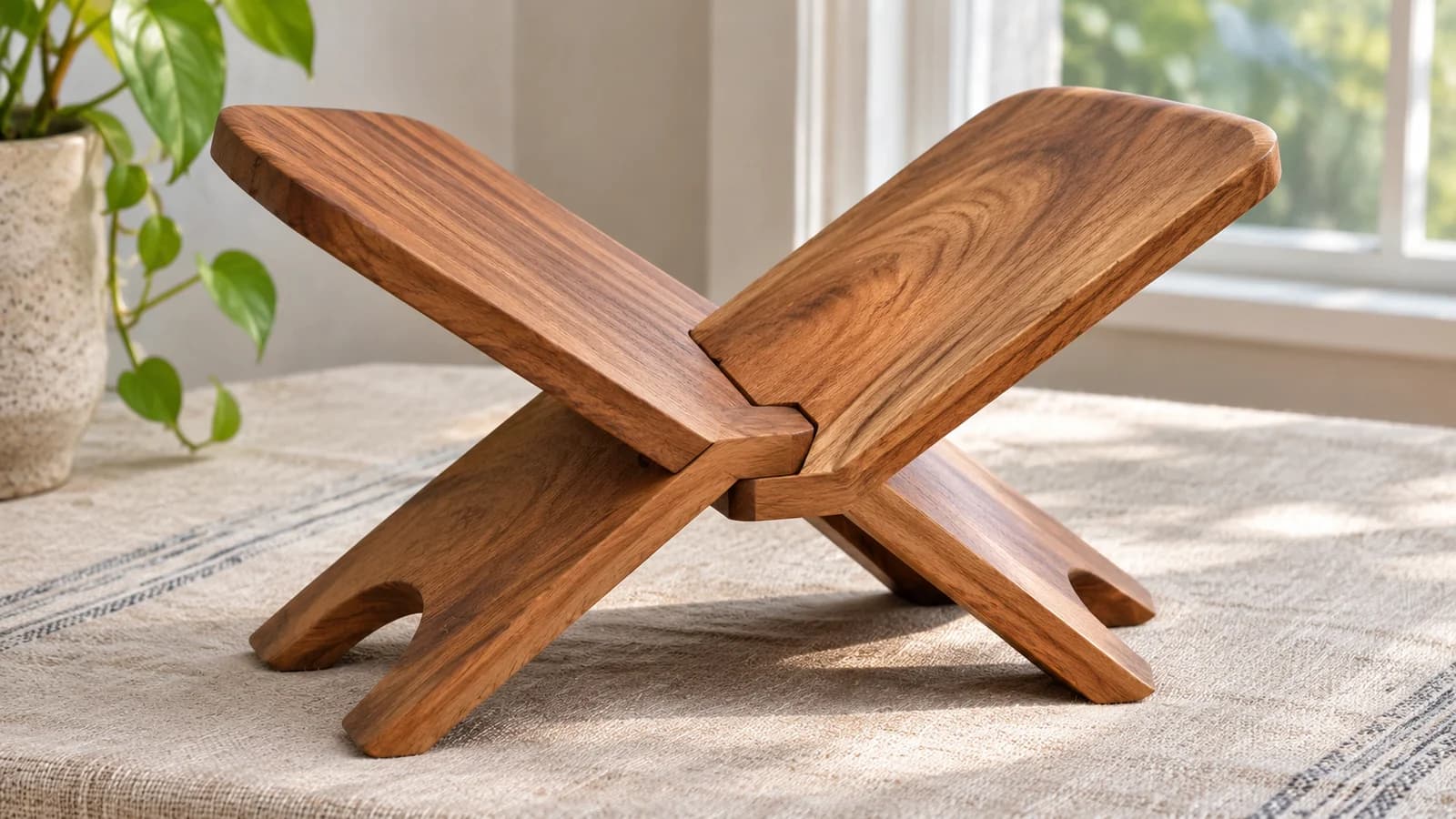
A folding wooden example at the Library of Congress
The Library of Congress record 2019714648 describes a hilye mounted on wood with folding side panels. It catalogues the work as made in 1130 AH/1718 CE at the Galata Palace in Istanbul by Dihya Salim al-Fahim, using thuluth and naskh. The two side panels contain checkerboard arrangements of the Ninety-Nine Names of God. Those additions belong to this particular composition, rather than defining every hilye.
The physical arrangement changes what a viewer encounters. A reproduction showing only the central panel would leave out the side inscriptions and the relationship between the parts. When describing the object, state whether the image shows the whole opened mount, one panel or a detail. The format of the photograph is not necessarily the format of the artwork.
The catalogue compares the folding construction with a triptych and proposes a possible relationship with image-making practices in Constantinople or Istanbul. That is a curatorial suggestion about the form. It is not proof of a documented act of borrowing by the maker. A comparison can help someone imagine a structure while the proposed historical explanation remains a hypothesis.
For a research note, separate the dated inscription, the catalogue attribution and the interpretation of the mount. All three can be useful, but they answer different questions. The first concerns what the record reads, the second identifies the artist as catalogued, and the third explores how the object may relate to a wider visual environment.
A signed paper composition in the Khalili Collections
The Khalili Collections’ Hilyah, CAL 459, is catalogued as Ottoman Turkey. It is made with ink, gold and opaque watercolour on paper mounted on card, and measures 48 by 32.8 centimetres. The record identifies the signature of Mehmed Tahir and names thulth and naskh as its scripts. It does not provide a precise object date in the displayed catalogue fields.
Its explanation discusses the central descriptive roundel, the continuation below, surrounding names and inscription panels. A crescent can outline the roundel, but the wording treats that feature as frequent rather than unavoidable. This is a useful reminder that an introductory diagram cannot substitute for the description of a specific work.
For readers new to these names, our Arabic calligraphy script guide introduces several script families. Recognising a family can clarify a catalogue, but it does not authenticate a signature or date an unrecorded sheet. Two works may use related scripts while differing in their artists, materials and collection histories.
When a record omits an exact date, leave that field open in your own note. A signature supplies one kind of identification; the period in which an artist worked supplies context. Neither gives permission to invent a manufacture year. Keeping CAL 459 in the caption allows another reader to return to the actual entry instead of relying on an unsupported date copied from elsewhere.
A hilya inside a bottle at Qatar National Library
Qatar National Library’s Hilya Inside a Bottle presents another physical form. The library identifies the calligrapher as Muhammad Shihab al-Din and gives an Ottoman date of 1219 AH/1804 CE. Its discussion connects the object with the familiar calligraphic arrangement, including a central description and surrounding names. A hilya does not have to be encountered as a large flat sheet on a wall.
The library describes historical devotional use and reports a belief in protection from misfortune, including the giving of hilyas as housewarming gifts in some regions. Reported belief is the relevant category. It should not become a claim that possessing a particular object prevents accidents, illness or other harm. Understanding a historical use does not require endorsing a promised effect.
The bottle also makes the relationship between writing and container especially visible. A caption needs to identify both, rather than replacing the descriptive tradition with a vague label such as decorative bottle. At the same time, the unusual container should not be assumed to explain all hilyas. It is one documented example of a wider set of ways to preserve and display writing.
If an exhibition photograph leaves the text too small to read, use the institution’s account for the identification and say so. The ability to recognise the general arrangement is different from independently reading every line. That distinction is particularly helpful when a small image circulates without the original collection label.
How to describe a hilye without losing its history
Begin with three questions: what is written, how is the writing arranged, and what physical object carries it? These questions work together. A circle alone does not establish a hilye; a known passage alone does not identify its calligrapher; a decorative mount alone does not date the sheet it contains. An accurate description connects the evidence available for each part.
Use a compact comparison note with separate fields for institution and identifier, attributed artist, date and its qualification, support and later additions. For the Sadberk example, the writing and decoration require separate date statements. For the Library of Congress example, the folding side panels require attention. For CAL 459, retaining an unspecified precise date is more accurate than filling the gap by guesswork.
These are reading examples, rather than a method for authenticating an object offered for sale. Similarity to a museum image does not establish an unrecorded object’s origin. Our guide to manuscript provenance, colophons and collection records explains why manufacture, inscription, ownership and later acquisition should remain distinct. A convincing story about one of those stages does not supply the others.
Finally, keep description separate from a personal religious requirement. These records document texts, artists, materials and uses in particular settings. They do not establish that every Muslim home must display a hilye or that every circular calligraphic design carries the same content. A reader gains more from a clear account of one work than from a broad claim that the record cannot support.