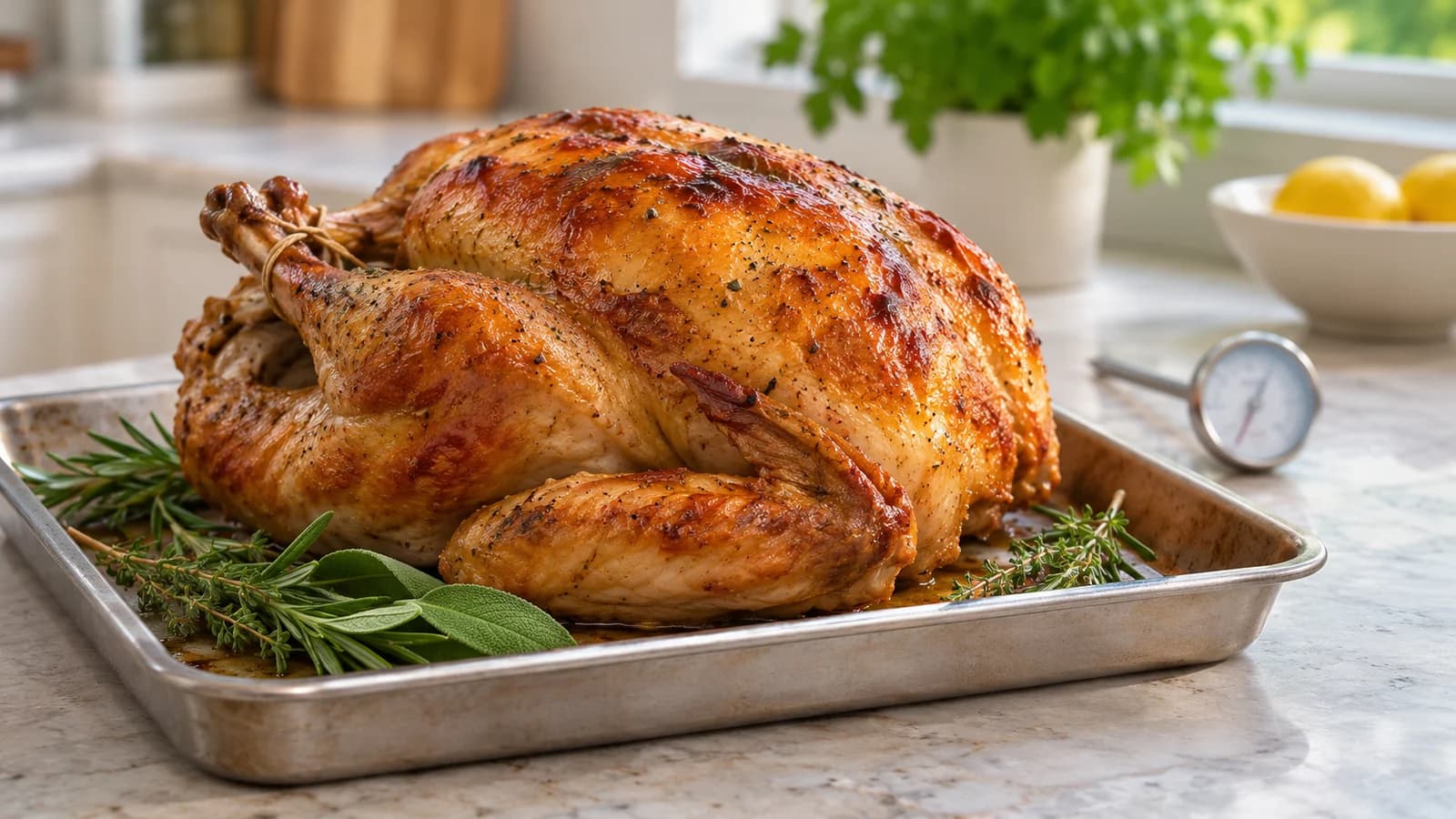
Halal Turkey for Thanksgiving 2026 From the Label to the Oven
Check a turkey’s halal certificate, added ingredients and gravy before buying, then plan safe thawing, cooking and leftovers using U.S. food-safety guidance.
For a halal turkey meal, check the particular bird’s certification, every added ingredient and the food served alongside it. Then plan thawing and cooking separately from the religious check. For a home-roasted turkey in the United States, use a food thermometer to confirm at least 165°F (74°C) in the required places, including the centre of any stuffing. U.S. Thanksgiving falls on Thursday, November 26, 2026, leaving time to confirm a purchase and clear refrigerator space.
Start with the product you will actually buy
A label saying turkey tells you the species. To make a purchasing decision, you also need to know how this product was prepared and what certification covers it. A plain whole bird, an injected turkey breast, a smoked turkey and a ready-to-serve meal can have different ingredients and supply chains. Ask for the current packaging or a clear photograph of the exact product, including the back of the pack. Our introduction to halal food and certification explains the wider meaning of that check.
Before paying, record the brand, product name, pack size and the name of the certifier printed on the label. If the retailer substitutes a different product at collection, compare it again. An order for a plain raw bird does not automatically identify a marinated or fully cooked alternative. For a catered dinner, ask whether the answer concerns only the meat or the whole prepared dish. These questions let the person supplying it answer precisely instead of giving a general assurance about the store.
The U.S. Office of Personnel Management calendar confirms the November 26 date for 2026. Work back from the day you will cook rather than assuming every delivery has the same storage needs. Check whether the order arrives frozen, chilled or already cooked and obtain its storage instructions. Availability, delivery dates and substitutions require confirmation with the seller.
Match the halal claim to its certifier and scope
Use the issuing organisation’s own records to check a certification claim. IFANCA’s certified-product search is one example of a first-party starting point. Match the manufacturer and product as closely as the record permits. If a name is missing or the packaging differs, ask the manufacturer or certifier for clarification, using the actual item name and any certificate details you have. A search result needs to be read in the context of its named products.
Halal Monitoring Services provides a current directory with certification status and product scope. Its information limits explain that a record can apply to a particular location, product or department. A missing record means the service has not confirmed current certification through that result. It does not on its own settle the religious status of every product a shop sells. Check the entry’s scope and date and clarify uncertainties before relying on it.
Households may follow different certifiers or requirements about slaughter. Ask guests which evidence they need while there is still time to arrange a suitable product. Keep the relevant label with the meal information so they can identify it. Our guide to checking halal logos and official records describes the same process in more detail. Certification checks are most effective when they refer to a product you can actually identify.
Read the broth, glaze, gravy and stuffing as well
Some turkeys are sold with an added solution, seasoning or a separate gravy packet. Read those components individually. Look at broth, stock, flavourings, fats and any named cooking wine or spirits in the recipe you plan to use. If the ingredient list leaves a point that matters to your household unresolved, ask the producer or certifier. IFANCA’s description of its certification process includes review of ingredients and production, which is why identifying the certified finished product matters.
A home cook controls the ingredients added after opening the pack. Write down the products used for basting and gravy, and consider sausage, stock and fats in stuffing. A relative preparing a separate dish can send the ingredient list beforehand. The same approach works for a purchased meal: specify whether you need information on the stuffing and sauce as well as the turkey. Our guide to halal seafood and differences between legal schools provides a related example when considering a seafood side dish.
Place the checked ingredients together before starting. If several people use the kitchen, identify which spoon belongs to each pan and which board is for raw meat. A label saved on a phone can help if a guest asks what stock was used. Keep the procedure simple enough that another cook can follow it when you step away. For the principles applied to another type of poultry, see our explanation of halal chicken.
Give a frozen bird enough time to thaw
Use a refrigerator kept at 40°F (4°C) or below. Place the wrapped turkey in a container that catches leaks. The USDA’s safe-thawing guide allows about 24 hours for every 4–5 pounds of turkey, roughly 1.8–2.3 kilograms. Its answer on storage after thawing allows another 1–2 days in the refrigerator before cooking.
A 16–20 pound bird therefore needs about 4–5 days for refrigerator thawing. For cooking on Thursday, November 26, check your bird’s weight and count the required full days back, allowing for its instructions. Do not choose a date from the headline of a general reminder without checking the weight. Clear a low shelf and a suitable container before collection, so the turkey can go straight into refrigeration rather than wait while you rearrange the kitchen.
For cold-water thawing, keep the bird in a leakproof bag, fully cover it with cold tap water and change the water every 30 minutes. Allow about 30 minutes per pound and cook immediately once thawed. Microwave thawing follows the appliance instructions and also requires immediate cooking. These are alternatives to plan and supervise. Leaving the turkey on a counter overnight exposes its outer parts to unsafe temperatures while the centre may remain frozen.
Prepare the kitchen to keep raw juices contained
The CDC’s turkey-preparation guidance describes how raw turkey and its juices can spread germs. Wash your hands with soap and water for at least 20 seconds before and after handling the bird. Use a separate board for foods such as bread or vegetables that will not undergo the same cooking. Put cooked turkey on a clean platter, and wash equipment and work surfaces after contact with raw poultry.
Follow the FDA’s clean-and-separate advice, including avoiding washing raw poultry, which can splash contamination around the sink. Arrange the roasting pan and utensils before opening the wrapping. If you need to reach for a spice jar or a phone, wash your hands first so that raw juices do not move onto it. Keep ready-to-eat side dishes away from the raw preparation area.
Religious ingredient checks and hygiene both have a place in the same kitchen. A verified label is useful when deciding what to buy. During preparation, clean utensils, separation and temperature control are still needed. Agree on those tasks with anyone sharing the cooking, particularly if one person is handling the bird and another is assembling salad or bread at the same time.
Use a thermometer for the turkey and any stuffing
The USDA’s home-roasting guidance uses an oven set no lower than 325°F, about 163°C. Confirm a minimum internal temperature of 165°F (74°C) in the thickest breast and the innermost thigh and wing areas, avoiding bone. Cooking time depends on weight and preparation, so plan with the product instructions and use the thermometer to determine when it is ready. A browned surface or a pop-up indicator cannot measure all three places.
Cooking stuffing in a separate dish makes it easier to check. The USDA’s stuffing guidance calls for its centre to reach 165°F (74°C). If you put stuffing in the bird, do so immediately before cooking and measure the centre separately. Let a stuffed bird stand for 20 minutes after it leaves the oven before removing the stuffing and carving. That standing period follows reaching the required temperature.
These numbers describe U.S. consumer guidance for the preparation discussed here. Follow the relevant local authority and product instructions if cooking in another jurisdiction or using a different method. For a home meal, deciding in advance who will measure the temperatures and where the clean serving platter will stand helps turn the guidance into a workable final check.
Serve, cool and label leftovers promptly
The FDA’s refrigeration guidance recommends prompt cooling: refrigerate perishables within 2 hours, or within 1 hour when the air temperature exceeds 90°F (32°C). Divide remaining food into smaller, shallow containers. Check that the refrigerator remains at or below 40°F (4°C) and has room for air to circulate. Prepare the containers before guests arrive if you expect to send portions home.
Use refrigerated cooked leftovers within 3–4 days, or freeze them, and reheat to 165°F (74°C), following the CDC’s leftovers advice in its turkey guide. Label containers with the date and identify the gravy and stuffing so the ingredients remain traceable. A guest taking food home needs a plan for keeping it cold during the journey. The simplest meal plan connects the original package, the checked recipe, the cooking measurements and the date on the final container.