Is Chicken Halal? How to Check Meat, Ingredients and Certificates
Muslims can eat halal chicken. Learn how to check raw poultry, nuggets and restaurant dishes, and what a product or outlet certificate covers.
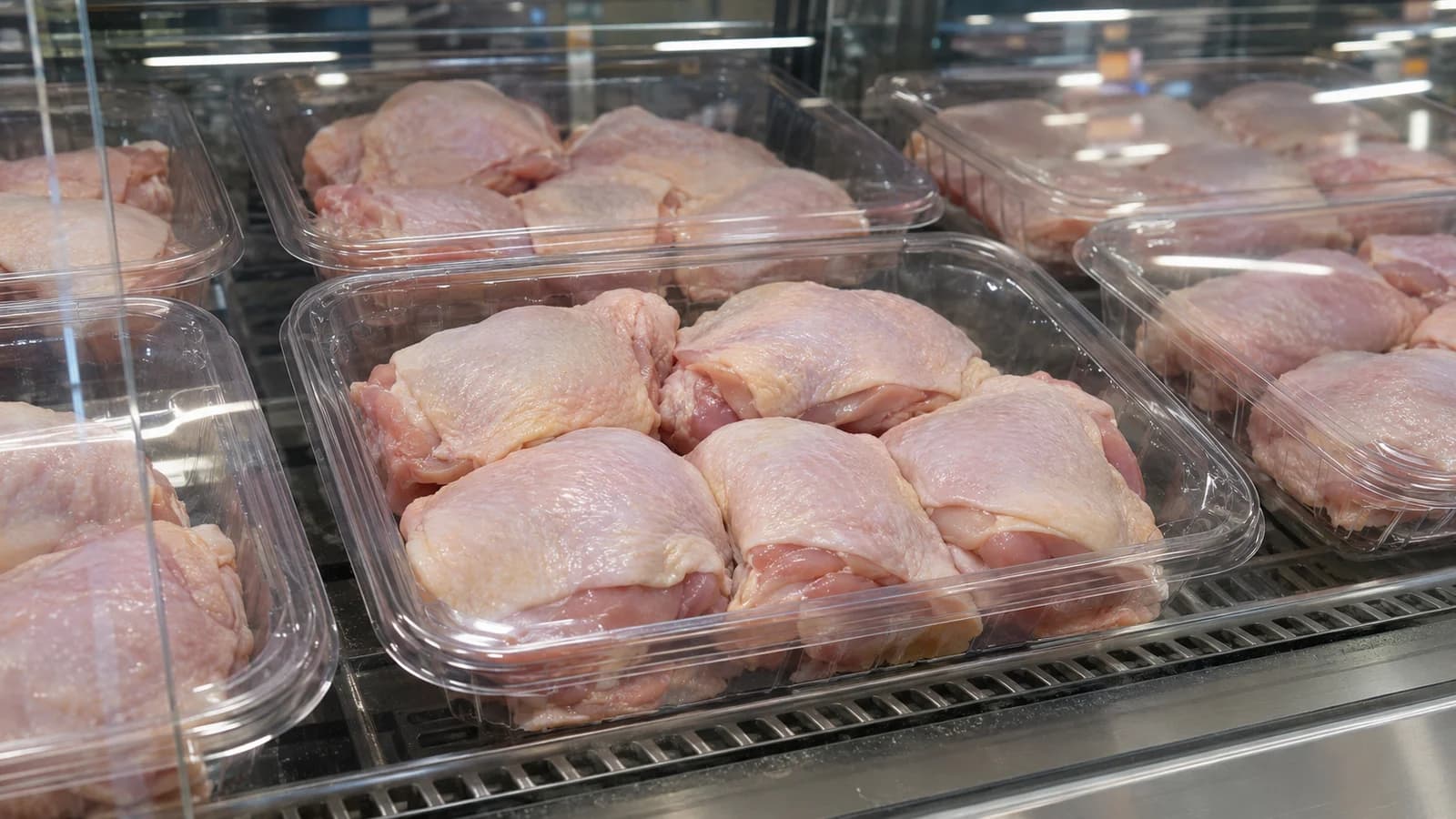
Consider three things you might buy on the same trip: a tray of raw thighs, a bag of breaded nuggets and a takeaway wrap. The first calls for evidence about the meat itself. In the second, the coating and seasonings also matter. With the wrap, you need to know which chicken the kitchen is serving, what goes on it and how it is prepared. These are different questions even when one supplier provides the chicken for all three.
Why chicken can be halal
Halal means permissible in Islamic law. The Netherlands-based Halal Feed and Food Inspection Authority (HFFIA) explicitly names chicken among lawful animals whose meat is permissible when slaughtered in accordance with Islamic requirements. HFFIA's explanation of halal food gives the status of the animal and the condition for its meat.
Qur’an 5:3 lists prohibitions that include carrion, blood and pork, and addresses animals that have died in specified ways. This helps explain why the origin of poultry matters even when a pack contains a single ingredient. The guide to halal food rules puts those requirements in the wider context of Islamic dietary practice.
Raw chicken from a butcher, poultry from a supermarket and the same cut from a farm shop all raise the same question about the source of the meat. If a butcher buys chicken from more than one supplier, ask which supplier provided the batch on display. A certificate from a supplier is most useful when the shop can connect that document to the chicken you are actually buying.
What a certifier's poultry standard tells you
Two certifiers can agree that chicken is a permissible species and apply different rules to how it enters the food supply. One example is stunning before slaughter. The United Kingdom's Halal Monitoring Committee (HMC) FAQ describes a general no-stunning criterion. Canada's Halal Monitoring Authority (HMA) FAQ says it allows certain forms of stunning for poultry under its own controls. Its approval is conditional on meeting those controls. Both descriptions apply to the named certification bodies.
The same Canadian HMA FAQ says the body rejects machine slaughter for chicken and explains that hand slaughter alone is only one part of its assessment. This illustrates why a shopper whose religious practice depends on a specific method needs the issuer's published standard as well as the name on the label. Ask the certifier about poultry specifically. Its policy for another animal can differ, and a brief phrase on a packet may cover just one requirement. If the treatment of a given product matters to you, check the issuer’s policy and whether an exception applies.
Country of origin can help identify the supplier and likely certifying body. It gives you a place to start looking for a certificate. In the Codex Alimentarius guidelines on halal claims, the commission acknowledges differences in interpretation among Islamic schools and leaves room for importing authorities to interpret the guidance. For an imported carton, find out which organization certified it and, if relevant to you, whether the authority you follow recognizes that organization for the product in question.
What to look for on raw chicken
Take the product name from the package you are holding. A line that says “chicken breast” may describe one plain cut. Another package beside it may hold breasts with a marinade or added broth. That second pack needs a check of the additional ingredients. Note the exact variety or product code if it is available, the manufacturer or packer, and the name of any halal certifier. A mixed case at a meat counter can contain similar cuts from more than one source.
Then match what you found to the evidence. If the name of the certifier appears beside a mark, open the issuer's own website or contact the issuer and ask about the product or producer. Check any scope and dates the certifier gives. When the mark is unfamiliar, the steps for checking a halal logo against an official record help you distinguish the certifier's record from a seller's product photo. If the listing uses a manufacturer name you cannot match to the packet, ask who makes or packs the product before drawing a conclusion.
Some packages supply different kinds of assurance. Canada gives an example of what to look for in a particular market: the Canadian Food Inspection Agency's guidance on halal claims says the name of the certifying person or body must appear wherever a halal claim is made on the food's label, package or advertisement. That example concerns a claim in Canada. Claims such as “organic” or “free range” concern other features of production. Keep looking for evidence about halal sourcing even if the packaging carries those other claims.
Why nuggets, broth and marinades need a separate check
For products with several ingredients, read the contents of the bag or jar as well as the certification claim on its front. In a breaded chicken strip, the chicken, the coating and any seasoning mixed into the coating all belong to the finished product. In a jar of stock, even a recipe with no visible pieces of meat can contain chicken extract or fat. A marinade or dipping sauce can add another ingredient source. Check a wine-based sauce or an ingredient explicitly identified as pork fat against the requirements you follow before ordering.
Some labels identify the source clearly. Others use a generic ingredient name. Singapore's Islamic Religious Council, Majlis Ugama Islam Singapura (MUIS), illustrates the point with lecithin, which may come from plants or animals. Its consumer guidance on processed food also covers handling, storage and separation. If an ingredient's origin matters and the term is ambiguous, a manufacturer can sometimes supply its source. A certifier can answer the broader question of whether it covered the finished variety. Use the halal ingredient-label reading guide to identify which detail is still missing.
Two bags of frozen chicken can come from one brand but use different recipes. For instance, imagine that the plain strips appear by name on a product certificate while the barbecue-flavored strips do not appear in the same record. Treat the first listing as evidence about the plain strips and ask whether the flavored version has its own listing or falls within a wider scope that the issuer can confirm. The similar design on the bags tells you which company sells them. The certificate describes what that issuer evaluated.
What matters in a restaurant kitchen
Begin with a question staff can answer precisely: “Is the chicken in this dish from the halal supplier today?” Then, where relevant, ask about the particular preparation. For a fried sandwich, ask what else goes into the oil. For grilled chicken, ask about sauces and how the equipment is used and cleaned. A manager or ingredient sheet can help when the person taking the order only knows the name of the dish.
The Codex guidance treats the origin of the ingredients and contact during handling as separate concerns. It allows halal and other food to be produced on separate lines or in separate areas of the same premises, with controls to prevent contact. It also allows previously used equipment where cleaning meets Islamic requirements. Compare that with the particular issuer's rules before drawing conclusions from the mere presence of both menus in one building. Ask about the preparation of your dish instead of assuming how a shared kitchen operates. Codex guidance on preparation and handling
When a restaurant serves several kinds of chicken, a statement about one dish may leave the others open. A supplier document can establish the source of one cut, while a restaurant certificate may also cover preparation at the named outlet within its approved scope. For a chain, start with the branch address rather than the name alone. The KFC country and branch guide shows how to apply that distinction to one chain without assuming all its kitchens follow the same policy.
How to match a certificate to the food you are buying
Singapore offers a practical illustration of the difference between a factory, a product and a place to eat. MUIS describes separate certification schemes for eating establishments, products, whole manufacturing plants and poultry abattoirs, among others. A certificate that names a poultry abattoir describes a different scope from one that identifies the establishment assembling and selling a chicken meal.
For a product in Singapore, start with the exact item name in the MUIS product directory. For a visit or delivery order, use the MUIS establishment directory and match the outlet or kitchen address. If the listing is under a company name, compare the address or ask the business for details. A directory search can miss a spelling variant or use a different trading name. Contact the issuer if a result is ambiguous or the details on a storefront certificate differ from the listing.
The general procedure works in other markets through the appropriate local certifier or authority. A certificate can be assessed by asking who issued it, what it covers and whether it applies at the time of purchase. If the issuer certifies a product from one plant and your package comes from another, verify that second plant or the specific product before relying on the certificate for the first.
What you can decide when you still lack an answer
If you have confirmed the origin of a plain cut and the standard it follows, you can turn to what you will add in your own kitchen. If you know only that the chicken in a café is halal, the unanswered question is whether the preparation and the rest of the dish meet the same requirements. Ask about the missing detail before deciding whether to order. Narrow questions such as which supplier delivered today's chicken or what shares the fryer are easier to answer than asking someone to explain all the restaurant's procedures.
Keep an unknown product separate from one whose non-halal ingredient is identified. A missing record can leave the product's status unverified, while a confirmed ingredient can resolve the question on its own. When you need a particular certifier's standard, say which one, so the supplier or restaurant knows which evidence to look for.
Sources for the main claims
- Qur’an 5:3 sets out dietary prohibitions relevant to the difference between a permissible animal and the status of its meat.
- The HFFIA halal FAQ identifies chicken as a lawful species and explains the condition for its meat.
- HMC in the United Kingdom and HMA in Canada describe the poultry policies their own certification applies.
- The Codex Alimentarius halal guidelines address labeling, preparation, shared premises and differences in interpretation.
- The Canadian Food Inspection Agency's production claims guidance explains the identification of a certifier where a halal claim appears in Canada.
- MUIS consumer guidance and its certification scheme descriptions distinguish ingredient and handling checks from the scope of specific certificates.