Duha Prayer Time, Rak‘ahs and How to Begin
Learn when Duha prayer starts and ends, how to begin with two rak‘ahs, and how Ishraq relates to this voluntary morning prayer.
Duha is a voluntary morning prayer offered after the sun has risen sufficiently above the horizon and before it reaches its highest daily position. You can start with two rak‘ahs, or units of prayer. Check the sunrise and Dhuhr entries in your local timetable, leave the sunrise interval behind, and choose a time comfortably inside the morning window.
What is Duha, and where does it fit in the day?
Duha, also written Dhuha, is a daytime voluntary prayer. It follows the early morning period and precedes Dhuhr, the obligatory midday prayer. The Prophet’s advice to Abu Hurayrah in Sahih al-Bukhari 1178 includes two rak‘ahs of Duha among regular recommended practices. Someone learning the five daily prayers can therefore keep Duha separate from those obligations while giving it a manageable place in the day.
A second report, Sahih Muslim 720, connects the morning with acts of charity and says that two rak‘ahs of Duha suffice for the charitable acts discussed there. The report places prayer alongside praise, remembrance and helping people. Our explanation of charity beyond monetary gifts explores that wider setting. A reader can value the morning prayer and continue to recognise the other duties and kindnesses described in the same tradition.
Duha has no single worldwide clock time. Sunrise and the middle of the solar day change with place and season. Someone whose morning begins with school runs may pray after returning home. A person who works early might find a suitable break before midday. First establish the local window, then place two units in the part of it you can use.
Finding the start and end from a local timetable
Find the sunrise entry for the day and location. Sunrise itself is a restricted time for prayer, as described in Sahih Muslim 831. For Duha, wait until the sun has risen clear of that interval. Egypt’s Dar al-Ifta describes the window as starting after the sun is high and continuing until just before the zenith. Local teachers and timetables may give a practical offset after sunrise. Use the locally adopted guidance when deciding the earliest minute.
The end relates to solar noon, when the sun crosses the local meridian. The Hong Kong Observatory’s solar transit reference shows that this is a location-dependent astronomical event. Solar noon need not be 12:00 on a civil clock. Dhuhr follows the sun’s movement beyond that highest position. A timetable may include an allowance between the physical event and its listed Dhuhr time. Keep your Duha comfortably before the end instead of using the last few minutes as a target.
Suppose a local timetable lists sunrise at 06:20 and Dhuhr at 12:15. A prayer at 09:00 is a clear example of a mid-morning appointment to investigate using that local guidance. It leaves substantial space after sunrise and before midday. The two entries do not by themselves tell you the exact first permitted minute or the last safe minute. Those require the timetable’s own method and any local instruction about the restricted intervals.
After travelling, check the city and date in the app. An alarm kept from the previous destination may now be too early or too late. For questions about calculation settings, see our guide to why prayer time apps differ. Use the sunrise entry for the place where you will pray and the midday guidance followed there.
How many rak‘ahs should you pray?
Two units are a sound starting point. Egypt’s December 2025 answer about the minimum specifically addresses a person criticised for praying two. It distinguishes the two-unit minimum from recommendations for four or more. This matters when a short notice says “four rak‘ahs” without explaining whether it means the minimum or a fuller recommended form.
There are accounts of longer prayers. In Sahih Muslim 719a, ‘A’ishah describes four units and further prayer as Allah willed. Such reports explain why lessons may encourage more than two. A beginner does not need to settle every discussion about maximum numbers before starting. Learn the form used in your school, begin with two, and ask a teacher how to arrange additional units if you want to extend the practice.
For example, if you have a short break and enough time for preparation and two units, make that your first plan. If you later reserve a longer break, you can decide how much additional prayer fits. The reports supporting two and describing four answer related questions about practice. Reading them together gives more context than taking one number from a poster.
How to offer your first two units
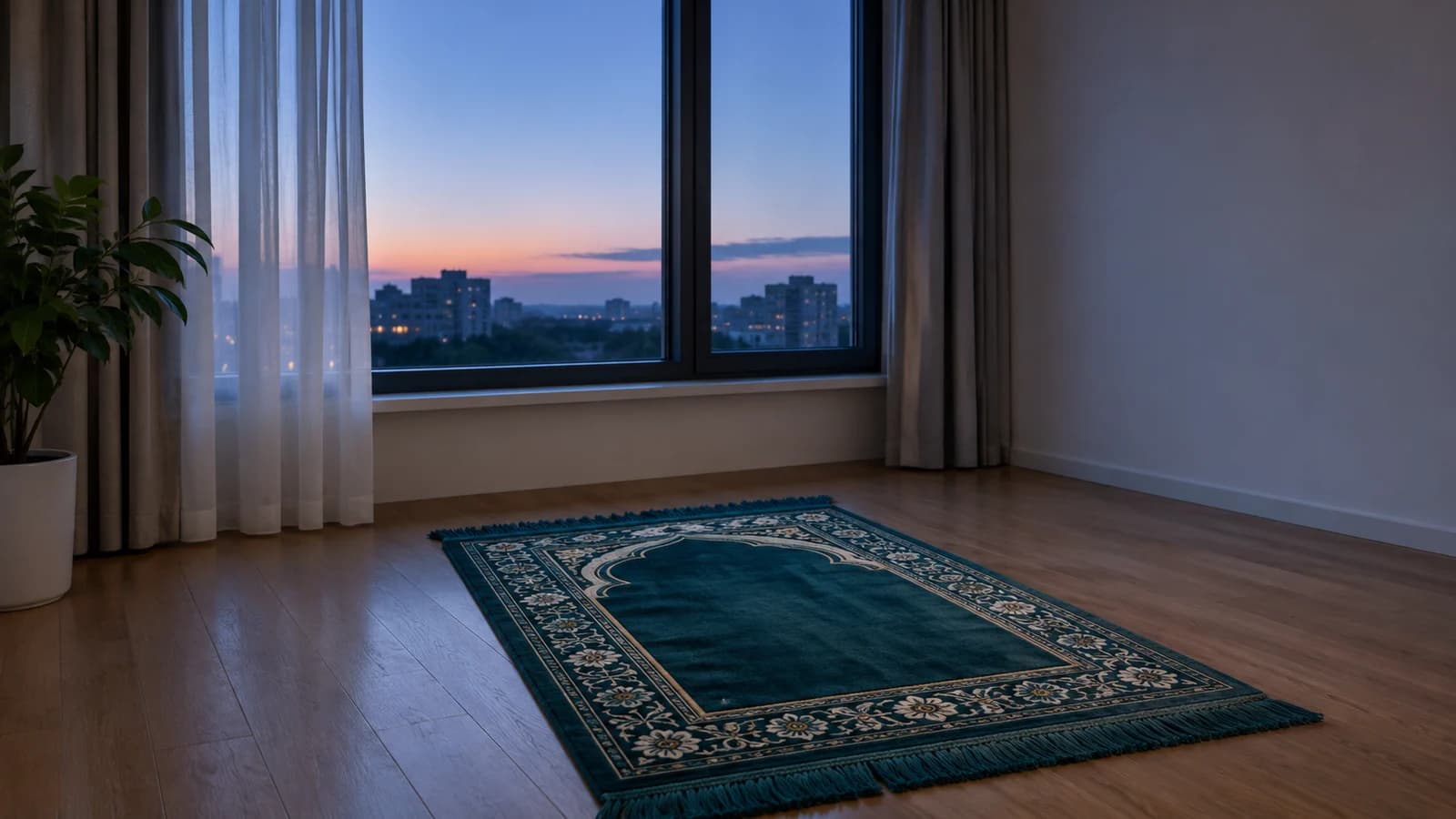
Prepare for prayer as you normally would. Make sure you have the necessary state of purity. If you need to check ablution, our wudu guide explains the steps and relevant differences among schools. Choose a suitable place, face the qibla and intend the voluntary morning prayer. Egypt’s guide to performing salah provides a reference for the usual standing, recitation, bowing and prostration.
Pray two units with the recitation you know, then finish with the closing salutation according to the form you follow. The reports cited here establish Duha without naming a compulsory pair of surahs for these two units. A reader who has learned short passages can use them while continuing to learn. The name of the prayer and the name of Surah al-Duha can easily be confused, so check what a teacher means when recommending a recitation.
You can make a personal supplication after finishing. There is no specific additional text prescribed by the basic two-unit reports cited here. If someone shares a long “Duha dua,” look at its source before treating it as part of the established method. Knowing where the prayer starts and ends helps you distinguish its formal units from a personal request you choose to make afterward.
Ishraq and the preferred part of the morning
Ishraq is a name readers may encounter for prayer soon after the sunrise restriction has passed. Malaysia’s Federal Territories Mufti Office discussion of Ishraq favours treating it as Duha, while acknowledging a difference of scholarly opinion. Under that explanation, the same time rules apply. If your community lists both names, ask how the terms are being used before assuming the timetable requires two separate voluntary prayers.
Sahih Muslim 748a describes the prayer of those who turn to Allah in the later morning, using an image of young camels feeling the heat of the ground. This gives a traditional reason for preferring a later part of the window. It supplies a description of the period. Your own clock time still needs a local timetable, especially in a different climate or season.
The preferences leave room for a workable choice. Someone free shortly after the sunrise interval may choose that time. Someone who can pray later in the morning can leave it until then. If you cannot use your usual slot on one day, look again at the remaining window before deciding whether there is still time. A recurring reminder is useful when you review it against changing sunrise and midday entries.
A simple plan for keeping Duha manageable
Write down the local sunrise and Dhuhr times, and choose a slot well within them after confirming the relevant intervals. Leave time for ablution, finding a place and completing two units without rushing. A 09:00 break in the example above is easier to assess than an alarm set exactly at the earliest suggested minute. Your own school or work schedule may call for a different clock time.
If the room where you pray is unfamiliar, check the direction before the break begins. A phone near metal furniture can mislead a compass. Move to an appropriate place and follow reliable local information. When a colleague asks when you are unavailable, name the short time you have chosen rather than presenting the entire morning window as a fixed appointment. The practical arrangement can change without altering what the prayer is.
Keep Duha distinct from optional night prayer. Our guide to Tahajjud and the last third of the night explains a different window, measured before Fajr. For Duha, the next step is to confirm the daylight window in your own town, choose an achievable period and begin with two units.
If sunrise is listed as 06:20 in the example, a notice using a 20-minute practical allowance would place its suggested earliest start at 06:40. That is how to read the notice’s arithmetic. A different locality may use a different allowance, so take the rule from the timetable you are following. Near midday, check whether the schedule has a separate entry for zawal or solar noon before relying on the Dhuhr number alone.
There is no need to subtract a third of the night for this prayer. The daytime references are different from the Tahajjud calculation. When making a reminder for a household, label it “Duha” and note the sunrise source on the same card. It then becomes clear which part to update when the family travels or the monthly timetable changes, and why an old alarm should be reviewed.