What Is Qawwali? A Guide to Sufi Music, Poetry and Rhythm
Learn how to hear the lead voice, chorus, harmonium and drums in qawwali, with credited recordings and context for the 2026 Houston programme.
Qawwali is a South Asian Sufi devotional music tradition. A lead singer and ensemble turn poetry into a musical exchange, supported by instruments such as the harmonium and by drums and handclaps. A line may return several times, each return offering a chance to hear a different emphasis, a changed melody or the moment the other voices enter. You can begin following that exchange before you know the language of the poem.
Start by identifying the voice that introduces a phrase and the voices that answer it. Then follow the sound of the harmonium and the drum separately. Save the words for a second listen with the track notes at hand. It helps to pick one performance and stay with it for several minutes, long enough to hear what the musicians repeat and how they change it.
How the weekend programmes introduced qawwali
The Islamic Arts Society listed a qawwali programme with Fareed Ayaz and Abu Muhammad for Friday, November 20, 2026, at 7:30 p.m. Houston time. The programme named the Black Box Theater at the Ismaili Center Houston and associated the performers with the Qawwal Bachon ka Gharana of Delhi. The listing records the scheduled artists, place and time. It leaves the set list and the details of the evening unconfirmed.
That Friday listing preceded the main Houston Islamic Arts Festival programme on November 21 and 22. The Houston festival guide puts the evening in the context of the wider programme. The International Day of Islamic Art programme guide explains the separate November 18 observance and how to read event dates and hosts. For readers looking up qawwali after seeing a festival listing, an earlier concert recording can show how the ensemble works. Keep the year and venue of that recording in view when sharing it.
A separate Philadelphia listing used the title Qawwali Mehfil. The Saami Brothers’ announcement gave November 22, 2026, as the local date. The Barzakh Café event listing scheduled the gathering at the Philadelphia Ethical Society at 7 p.m. Eastern Standard Time. The word mehfil can mean a gathering in this context. Here it is part of the advertised event title. Both cities’ listings give readers a starting point for asking how the singers, verses and accompaniment come together.
Hear the lead, the chorus and the beat
In an ensemble, the lead voice can introduce a line or stretch one syllable across several notes. Other singers may repeat the line together, sustain a phrase or answer part of it. Turn your attention to the end of a line and listen for the handover. If several voices enter at once, their timing can make a returning line easier to recognize. A strong choral entrance can stand out even at a steady tempo.
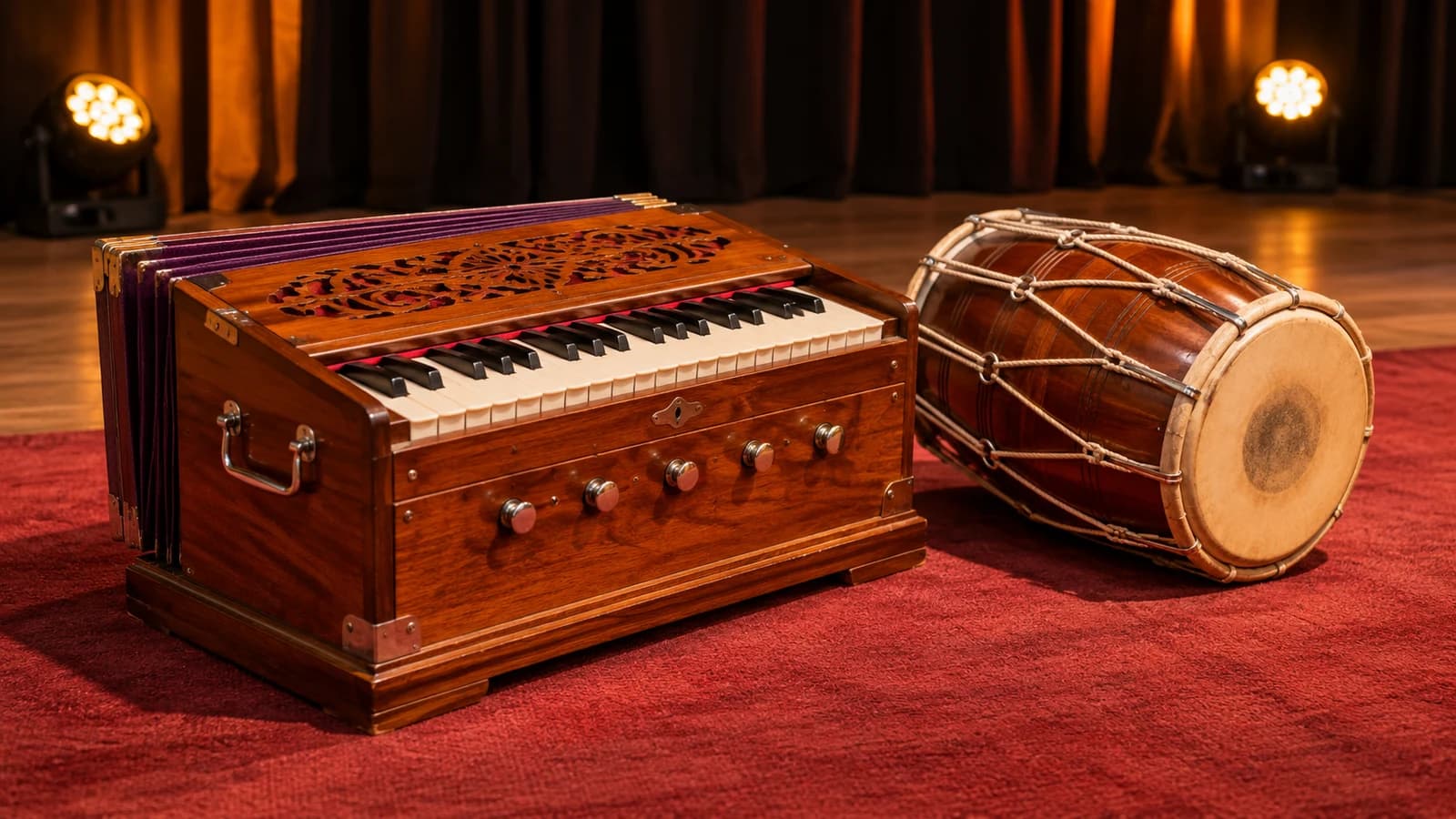
The harmonium is a keyboard instrument with bellows and reeds. Its tone can trace parts of a melody, fill the space between voices or stay audible beneath a sung line. The dholak is a two-headed drum whose ends can produce contrasting sounds. Tabla, when used, is a pair of drums. Handclaps can make the pulse especially easy to follow. To separate these layers by ear, listen first for a sustained reed sound, then for short drum attacks and then for the sharper sound of hands. Credits are more reliable than guessing which drum you hear.
The Smithsonian recording of the Chishty Sufi Sama Ensemble gives you enough information to try that method. Its April 30, 2011 concert in Washington, D.C., features an ensemble associated with Ajmer Sharif, India. The archive credits singers, harmonium, clapping and percussion, including dholak and tabla. It also distinguishes which singers take leading parts on different tracks. Read the personnel list once and close it while listening. When you return to the credits, see which sound you could already identify.
Read the poetry label before looking up the words
A track title such as na’t, hamd, manqabat or ghazal gives you a place to start. A na’t praises the Prophet Muhammad. A hamd praises God. A manqabat is a poem of praise, often for a revered figure. Ghazal denotes a poetic form with a wide range of possible subjects. The credits and programme notes for the particular piece help you find its subject and original language.
The Smithsonian concert lists a Persian na’t and a manqabat in praise of Mu’inuddin Chishty. Its final track is listed as a ghazal. The Smithsonian Folkways catalogue for Pakistan: The Music of the Qawal lists the Sabri Brothers ensemble performing Urdu pieces under the headings ghazal, na’t and hamd. Reading these two sets of credits together shows why it is useful to record the language and poetic form independently. The Folkways archive belongs to the UNESCO Collection of Traditional Music, a catalogue designation for the recording.
Keep a small listening record with a column for the title and another for how the archive describes it. A name may be a poetic term in one track and a specific title in another. Look for the performer, the language and which institution supplied the description. When different versions credit a poem to the same writer, compare the source notes for each before assuming the recorded verses are identical.
Follow repetition through a single performance
Choose one repeated phrase and mark its return with a pencil or a note on your phone. On the first pass, write down whether a soloist or a group delivers it each time. On the second pass, notice how much room the singer leaves between syllables. One delivery might stretch a word, while the next fits the same words into less space or waits longer before the chorus enters. If you can follow those changes, the repetition is already giving you a way to describe the performance.
Next, follow the pulse for several consecutive returns. You may hear the singer fit more activity into a beat while the drum holds a steady pace. Sometimes a passage feels more urgent because more voices are singing or more claps fill the space. To test your impression, keep a light tap through the transition and compare it with the percussion. Notice also when a change in the accompaniment opens up space again for a single voice. Each recording gives you a different pattern to follow.
If the poem is unfamiliar, find a translation identified with the specific track or poet, then replay a short passage. Some catalogue entries give only a summary of the subject. A summary is useful for orientation, while a translation matched to the performance helps establish which words return and how the singer groups them. Jot down the recording link and the time of the phrase if you plan to ask someone about it. That helps a speaker of the language distinguish the passage you heard from another version of the same poem.
Place the performance in its setting
Qawwali has a history in Sufi devotional gatherings in South Asia, including some forms of samaʿ, or attentive listening. It is also heard at festivals, concert halls and in commercial recordings. In her research on qawwali and the gramophone, ethnomusicologist Regula Burckhardt Qureshi traces the relationship between gatherings for Sufi listening and a recording industry that brought the music to a wider audience. Venue and purpose help explain why the same practice can be encountered through such different sources.
The Smithsonian programme identifies the Chishty ensemble with Ajmer Sharif and credits a Washington auditorium as the recording venue. Both details matter. A touring ensemble brings part of its musical background to the stage, where the presenter chooses a format and the programme provides explanatory notes. To understand the institutions around Sufi practice, see the guide to the khanqah and its roles in residence, teaching and devotion. The guide to kashkul bowls in museum collections offers another example of how attribution and display context shape what an audience can learn about a Sufi tradition. For a particular performance, use the listing, liner notes or archive to identify where it took place and what the host says about it.
If you encounter qawwali in person, read the host’s audience guidance. A presenter can tell visitors whether photography is permitted, where they may sit and when to enter. The recording itself offers clues about how a singer works a phrase, while the venue’s notes explain how visitors are expected to take part. For a short clip online, look for a name, date and venue before labeling it a shrine recording or festival concert.
Three credited recordings for a first listening session
Hear how one ensemble hands a phrase back and forth. The Columbia University programme for October 20, 2023 names Farid Ayaz, Abu Muhammad and the Qawwal Group at St. Paul’s Chapel. Columbia uses the spelling Farid, while the Houston listing uses Fareed. Its Sacred Music archive for fall 2023 links the recording. Use the Columbia item as a dated concert example. Listen for the first moment you can tell who is leading and when the other voices join.
Compare two poems within one concert. Return to the Smithsonian Washington performance and use the indexed tracks. Try the second track, listed as a na’t, alongside the fifth, listed as a manqabat. Read the short notes for both, then choose a minute in each and listen for where the words are easy to pick out and where the voices gather around a repeated phrase. Using two tracks from the same event keeps the listening environment broadly comparable while you switch between pieces.
Compare a concert with a studio recording. The Shahen Shah album page from Real World Records credits Nusrat Fateh Ali Khan and Party, documents a March 1988 recording session and lists the 1989 release. Choose one credited track and focus on the lead voice and the percussion, using the same short listening exercise you tried with the Columbia recording. Keep the artist and recording details with your notes. After these three examples, you should be able to point to a specific exchange, rhythm or line of poetry and know where to look for its context.