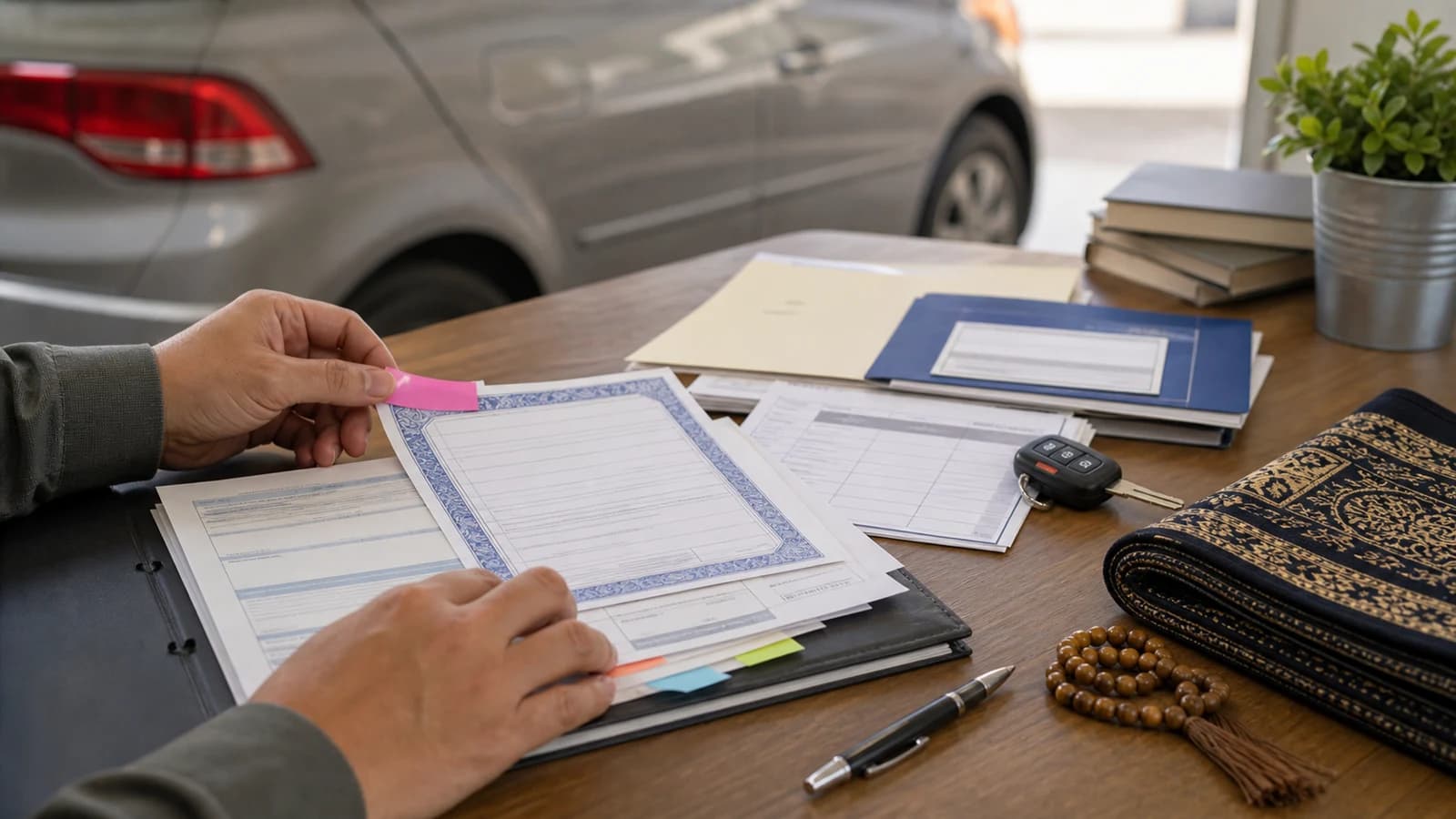
Muslim Vehicle Title Transfer and Registration Checklist for DMV Insurance and Prayer
A practical Muslim vehicle title transfer and registration checklist covering title, bill of sale, odometer, lien, insurance, plates, DMV appointment, family ownership and prayer travel.
A Muslim vehicle title transfer and registration checklist should keep a car purchase, gift or family transfer from becoming a DMV headache. Vehicle paperwork may include title, bill of sale, odometer statement, lien release, loan documents, insurance proof, emissions or inspection record, registration application, plates, fees, seller ID, buyer ID and appointment confirmation. Muslim households may also need to plan prayer stops, halal work commute needs, family ownership boundaries, travel to a masjid or school, and whether the car is being bought with interest-bearing financing or another arrangement they want to review.
Use this with the Muslim used car buying checklist before purchase, and with the Muslim car accident checklist if the title or insurance issue follows a crash. This guide is not legal, DMV, tax, finance, insurance, vehicle safety, halal finance or religious advice. It is a document organizer for title transfer and registration steps.
The sources set the vehicle-paperwork map. California DMV title transfer material keeps signatures, title changes and lien questions visible. Texas DMV buyer-seller guidance keeps sale records, title application steps and timing in the folder. Washington DOL material keeps buy-and-register steps concrete for a private-party purchase. New York DMV registration and title material keeps proof of ownership, identity, insurance and registration documents together for the office visit. FTC auto marketplace material reminds families to save promises, price, financing, trade-in and warranty records. The Muslim layer adds family trust, prayer travel, halal finance questions and calm document review before keys change hands.
Check the title before celebrating the keys
The first page should list the VIN, plate number if any, year, make, model, seller, buyer, purchase price, sale date, lienholder, lien release status, odometer reading, insurance start date, registration deadline and DMV appointment. Then attach the signed title, bill of sale, title or registration application, lien release, loan or payment receipt, insurance card, inspection or emissions result, seller messages and any dealer paperwork. If a title has a name mismatch, missing signature, open lien, salvage note, duplicate-title story or a VIN that does not match the dashboard and door label, pause before handing over money.
- Ownership proof: title, bill of sale, seller and buyer identity, lien release, odometer statement and dealer or private-sale paperwork.
- Registration file: state title or registration application, proof of insurance, inspection or emissions record, fee receipt, plate receipt, appointment and deadline.
- Money records: purchase price, deposit, financing terms, payment receipt, trade-in papers, warranty promise and refund or repair notes.
- Muslim household notes: prayer commute, school or masjid transport, family ownership agreement, halal finance questions and who may drive.
- Follow-up: title submitted, registration issued, plates received, insurance active, loan account checked and copies stored.
A family should separate ownership from permission to drive. The person whose name is on the title may not be the only driver. A parent buying a car for an adult child, spouses sharing a vehicle, siblings pooling money or a community member helping with transport should write the ownership and payment understanding before conflict appears. Kindness is easier to preserve when the receipt is not a mystery.
Make the DMV folder state-specific
Vehicle title and registration rules vary by state. Do not assume a California DMV title transfer path works like a TxDMV buyer-seller file, a Washington DOL private-party registration step or a New York DMV registration-and-title visit. If the car crosses state lines, write the old state, new state, deadline, inspection need, emissions requirement, temporary permit, plates, insurance start date and whether the old plates must be returned. A clean folder for one DMV office may still be incomplete for another.
Insurance should start before the vehicle is used, not after the first errand. Save the policy card, effective date, listed drivers and vehicle details. If the car is used for work, rideshare, delivery, school pickup, mosque transportation or long Ramadan nights, check whether the insurance fits the actual use. A policy card with the wrong VIN or start date can make a simple stop or accident much harder.
Prayer planning belongs in the real-life part of the checklist. A family may need the car for Fajr commute, school drop-off, Jumuah, masjid classes, elder care or interstate travel. Write emergency contacts, roadside assistance, registration copy location and what documents should stay in the glove box. Do not store private financing or family payment notes in the car if multiple people drive it.
Close the transfer only after the new record exists
After submission, save the DMV receipt, online confirmation, title application number, registration card, plate receipt, insurance confirmation and any temporary operating permit. Check that the name spelling, address, VIN, plate number and lienholder are correct on the new record. If the title does not arrive, write the follow-up date, office contacted, confirmation number and the exact document still missing. A useful Muslim vehicle title transfer checklist leaves ownership clear, state forms submitted, insurance active, family trust protected and the next DMV step written down.


