Muslim Used Car Buying Checklist for Inspection Loan and Insurance
A practical Muslim used car buying checklist covering inspection, vehicle history, recalls, financing, insurance, dealer pressure, halal loan questions, family needs and document storage.
A Muslim used car buying checklist should protect the buyer from pressure, hidden defects and unclear financing. A car is not only a machine. It becomes the route to work, Jumuah, school pickup, masjid events, groceries, doctor visits and family emergencies. If the deal is rushed, the household may inherit repair bills, unsafe recalls, title problems, insurance surprises or loan terms that do not fit the family's financial and religious boundaries.
Use this with the Muslim car accident checklist once the car is owned, and with prayer times when test drives or dealer appointments collide with salah. This guide is not legal, financial, mechanical, insurance or religious financing advice. It is a document organizer for Muslim buyers who want facts before signing.
The sources support a careful order. FTC used-car material keeps dealer claims and buying decisions visible. NMVTIS buying tips support vehicle-history and title checks. NHTSA recall lookup keeps safety defects in view. CFPB auto-loan material helps buyers compare financing beyond monthly payment. USAGov car complaints keeps repair or dealer problems in a separate record trail. The Muslim layer adds halal financing questions, family duty, prayer travel and avoiding deceptive pressure.
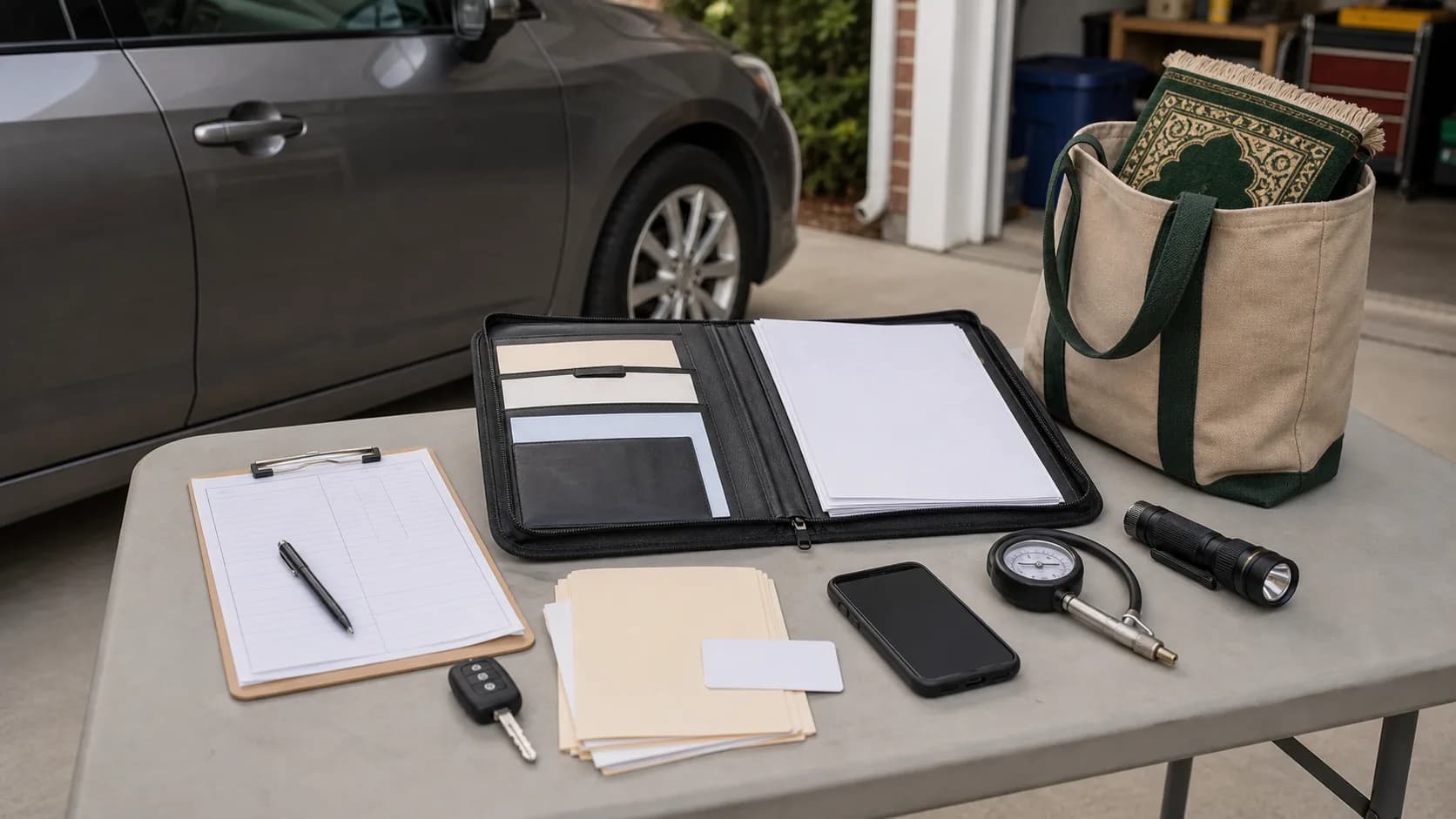
Create the car folder before the test drive
The folder should include seller name, vehicle identification number, asking price, mileage, title status, vehicle history report, recall check, inspection notes, mechanic estimate, financing offers, insurance quote, dealer fees, warranty terms, return policy if any and all messages. For a private sale, add title transfer rules and payment method questions. For a dealer, add the buyer's guide or equivalent disclosure, fees, add-ons and every promise made before signing.
- Vehicle facts: VIN, mileage, title status, history report, recall check and ownership records.
- Inspection: independent mechanic, tires, brakes, lights, leaks, test drive notes and repair estimate.
- Financing: price, down payment, APR, term, total cost, fees, add-ons and halal-financing questions.
- Insurance: quote before purchase, coverage start time, driver list and commute or school-use needs.
- Family fit: car seats, elder access, cargo, masjid route, winter or heat needs and emergency kit space.
The test drive should be boring and methodical. Start the car cold if possible, test lights, wipers, air conditioning, heat, brakes, steering, parking, reverse, dashboard warning lights and road noise. Bring a checklist and do not let conversation replace observation. A Muslim buyer who needs the car for family obligations should check practical details too: can a child seat fit, can an elder enter safely, is there room for a stroller, groceries or prayer bag, and does the commute to Jumuah or school make sense.
Compare financing before discussing monthly payment
Financing needs a separate page because monthly payment can hide total cost. Write the price, down payment, term, APR, fees, add-ons, insurance cost and total paid over the loan. If the buyer has religious concerns about interest or contract structure, that question should be asked before the person is sitting in a finance office with keys on the table. A scholar or qualified financial adviser may be needed. The checklist simply keeps the contract facts visible.
Recall and history checks should happen before emotional attachment. A clean-looking car may still have an open recall, branded title, flood history, odometer issue or serious prior damage. NMVTIS and NHTSA sources are useful because they remind buyers that appearance and seller confidence are not evidence. Save screenshots or PDFs of checks performed on the date of purchase so the record is not recreated from memory later.
Insurance should be quoted before purchase. The cheapest car on the lot may not be cheapest to insure or repair. A family should know when coverage begins, who is allowed to drive, whether the car is used for commute, delivery work, student driving or long mosque trips, and what deductible the household can actually afford. If the car is replacing a vehicle after an accident, keep the claim folder separate from the purchase folder.
Dealer pressure belongs in the checklist because pressure is where bad decisions hide. Do not sign blank spaces. Do not rely on verbal promises. Do not accept add-ons you do not understand. Do not send deposits through strange payment channels. If the seller says the price is only valid now, the buyer can still pause for prayer, inspection and review. A deal that cannot survive one careful day may not deserve the family's money.
Save the post-purchase record
After purchase, save title documents, registration, insurance, loan contract, warranty, inspection, repair receipts, recall checks and complaint contacts. Put a printed emergency card in the car with insurance, roadside help, family contact and masjid or school pickup backup. The Muslim emergency preparedness checklist can help build the car kit.
A good Muslim used car checklist is not suspicious of every seller. It is realistic about money, safety and family duty. The buyer checks history, recalls, inspection, financing and insurance before signing. Then the car becomes what it should be: reliable transport for work, worship and family life rather than a stack of surprises in the glove box.


