Muslim Car Accident Checklist for Insurance Police and Medical Records
A practical Muslim car accident checklist covering safety, insurance exchange, police or crash reports, medical records, prayer timing, modesty concerns and family communication.
A Muslim car accident checklist should be calm enough to use while shaken. The first goal is safety, not argument. Then come information exchange, photos, report numbers, medical attention, insurance contacts, family communication, prayer timing and a clean record of what happened. A crash can also create modesty concerns, language problems, child pickup problems, work schedule problems and Maghrib arriving while everyone is still waiting on the roadside.
Use prayer times if an accident disrupts travel near a prayer window, and use the Muslim doctor appointment checklist if medical follow-up is needed. This guide is not legal, insurance, medical or police advice. Reporting rules vary by place. The point is to help a Muslim driver collect facts and protect dignity without turning a stressful scene into a memory test.
The sources support the sequence. California insurance guidance and New York DMV crash insurance information show why driver, vehicle and insurance details matter. NAIC consumer material supports preparing insurance knowledge before a crash. NHTSA road-safety material keeps safety visible. USAGov car complaints helps when vehicle defects, repairs or consumer issues become part of the record. The Muslim layer adds prayer, modesty, halal travel food, family contact and community support.
Use the first five minutes for safety and facts
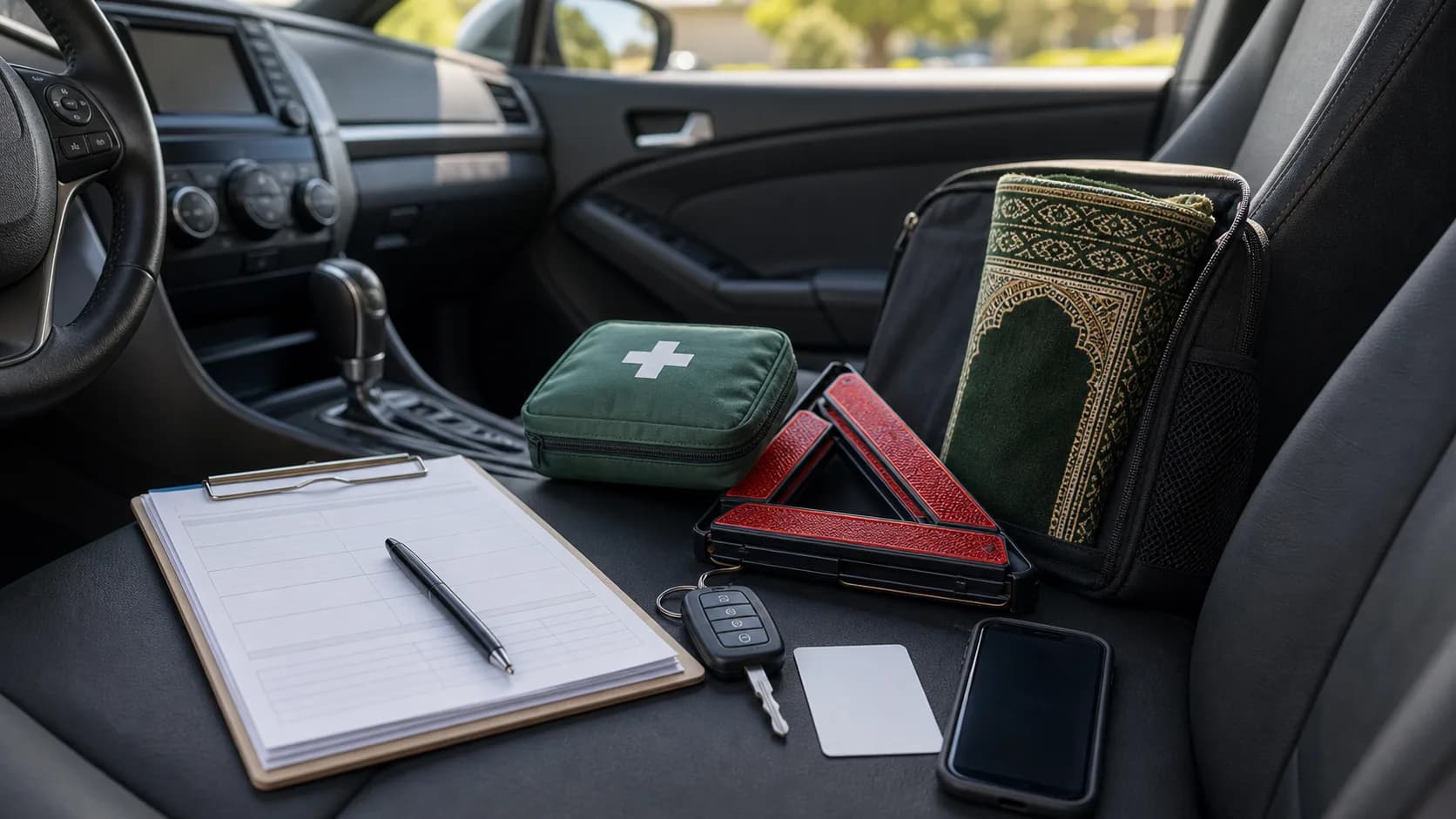
If anyone may be injured, seek emergency help according to local rules. Move only if it is safe and legal. Turn on hazard lights, use a safety triangle if appropriate, and do not stand in traffic to take photos. Exchange names, phone numbers, license information where appropriate, insurance details, vehicle information and location. Take photos of vehicles, plates if allowed, road conditions, traffic signs, damage and the surrounding scene. Write the time and direction of travel before memory changes.
- Safety: injuries, emergency services, hazard lights, safe location and children or elders in the car.
- Information: driver names, insurance, vehicle details, location, witnesses and report number if one exists.
- Photos: damage, road signs, traffic signals, weather, debris, lane position and personal property damage.
- Medical: symptoms, urgent care, follow-up appointment, medicine list and modesty or interpreter needs.
- Muslim routine: prayer window, wudu access, family contact, mosque contact and safe transport home.
Do not argue about blame at the scene. Keep statements factual: where you were, what you saw, what hurts, who was present and what information was exchanged. If language is a barrier, ask for interpretation help rather than signing or agreeing to something unclear. If the driver wears hijab, needs modest clothing or is uncomfortable with roadside exposure after an airbag or injury, say the practical need clearly: a jacket, privacy, a same-gender helper if available or a family contact.
Make a claim folder before calling everyone repeatedly
The claim folder should contain the accident date, location, photos, other driver information, insurance contact, policy number, claim number, police or crash report number if applicable, towing details, repair estimate, rental car notes, medical visits, prescriptions, missed work notes and messages. Keep screenshots in one place. A family member trying to help should not have to search five apps for one photo of a bumper.
Medical records need their own page. Some injuries appear later. Write symptoms, pain level, bruising, headache, dizziness, sleep problems, anxiety, medication, clinic visits and discharge instructions. If prayer movements hurt, write that too for the medical conversation. If fasting, ask the clinician about medicine timing and safety. The point is not to dramatize. It is to create a clear record before the week becomes a blur of calls, estimates and appointments.
Prayer planning after a crash should be practical. If everyone is safe but stuck waiting, use a safe location, keep out of traffic and do not create a second emergency. If wudu is difficult because of injury, weather or location, ask a knowledgeable person later if unsure how to handle missed or delayed prayer. In the moment, safety comes first. The checklist simply keeps salah visible so it is not forgotten in the paperwork storm.
Vehicle and repair issues can become a second problem. Save repair estimates, invoices, photos, shop messages, rental receipts and any evidence of a defect or repeated failure. USAGov's car complaint material is useful when the issue moves beyond a simple claim into repair, dealer or product complaints. Keep that trail separate from the crash facts so the record stays readable.
Close the loop after the first week
Within a week, confirm the claim number, report access, medical follow-up, repair plan, transportation plan, child pickup changes, work or school notes and family support. Add the checklist to the Muslim emergency preparedness kit so a printed copy lives in the car or glove box. A crash is exactly when people discover that phone batteries, panic and missing documents are a bad combination.
A strong Muslim car accident checklist is not a legal strategy. It is a calm script for a bad day: get safe, get help, collect facts, protect modesty, remember prayer, document medical issues and keep insurance records in one place. That is enough to make the next calls clearer and the family less alone in the aftermath.


