Muslim Emergency Preparedness Kit for Halal Food Prayer and Documents
A practical Muslim emergency preparedness kit guide covering water, halal food, prayer items, documents, medicine, family contacts, go bags and low-cost planning.
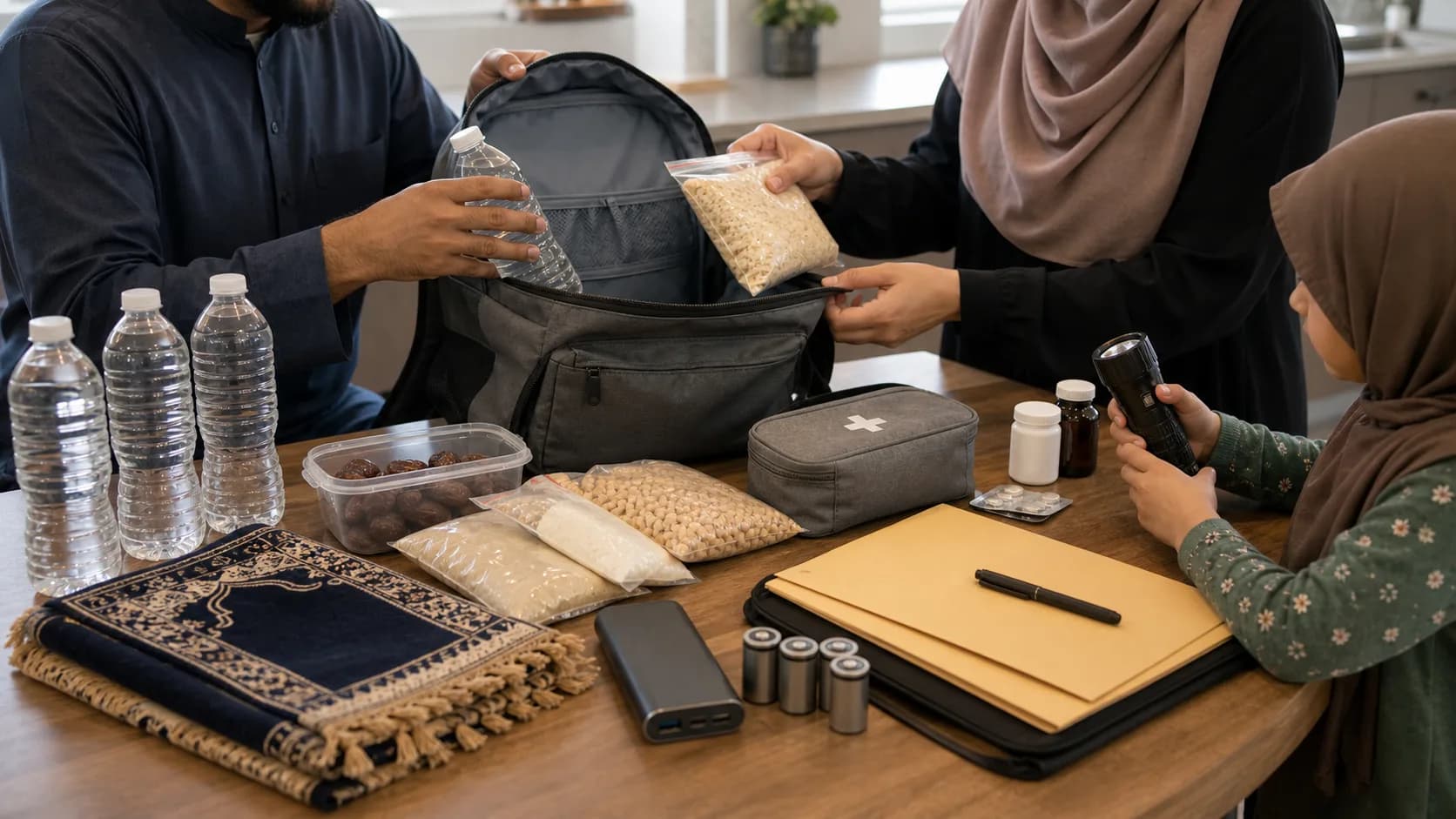
A Muslim emergency preparedness kit starts with the same basics every household needs: water, food, light, first aid, medicine, documents, phone power and a communication plan. Then it adds the Muslim-specific layer: halal food that the family will actually eat, a small prayer kit, modest clothing, copies of key documents, Ramadan or fasting considerations, and a plan for relatives, mosque contacts and neighbors.
Use this guide with the halal grocery label guide and the Muslim family travel checklist. Emergency supplies are not only for disasters. They help during power cuts, winter storms, evacuation orders, boil-water notices, family illness, sudden travel and long waits in shelters.
Ready.gov gives the basic kit structure. CDC emergency preparedness pages emphasize medicine, documents and support needs. The American Red Cross supply list helps families think practically about what belongs in a survival kit. The National Weather Service family plan page keeps communication visible, and Ready.gov low-cost guidance is useful because a family should not wait until it can afford a perfect kit.
Build the kit by function, not by shopping aisle
A kit organized by function is easier to maintain. Water and food keep the family stable. Light and power keep phones and rooms usable. Medicine and first aid handle urgent health needs. Documents help with insurance, travel, school, work and identity. Prayer items protect worship when the family is away from home. Communication supplies keep relatives from guessing where everyone went.
- Water: store enough for drinking and basic hygiene, and know how to rotate it.
- Halal food: choose shelf-stable foods with clear labels and family-safe ingredients.
- Prayer: small mat, compass or qibla app, socks, modest layer and prayer-time note.
- Medicine: prescriptions, allergy information, glasses, batteries and child-specific needs.
- Documents: IDs, insurance, emergency contacts, school contacts and mosque/community contacts.
Halal food is where many generic emergency lists fail Muslim families. A shelf-stable food is not useful if the family will not eat it or does not trust it. Choose simple foods: rice packs, beans, tuna if acceptable, dates, nut butter if allergies allow, shelf-stable milk alternatives, crackers with clear ingredients and baby food if needed. Rotate them into normal meals before expiry so the kit does not become a box of stale panic food.
Add documents and communication before the emergency
Emergency documents should not be scattered across drawers. Keep copies or secure digital backups of IDs, passports, insurance, prescriptions, allergy information, school pickup rules, custody documents if relevant, pet records, household contacts and important account numbers. Add mosque contacts, local relatives, out-of-town relatives and neighbors. If the family speaks more than one language, include medical and emergency phrases in the language the household actually uses.
The family communication plan should include where to meet, who collects children, who checks on elders, where the go bag sits, which mosque or community center may be useful, and which out-of-town person receives updates. During a storm or evacuation, group chats can fail because phones die or networks slow down. A written plan in the bag is boring until the day it becomes the easiest thing to understand.
Prayer planning also belongs in the emergency note. Write down how the family will estimate prayer times if phones fail, where the small prayer mat is, and how to keep worship practical in a shelter, car, hotel or relative's house. The goal is not perfection during crisis. The goal is to keep worship possible without adding panic.
Make the kit affordable and maintainable
Do not wait for a perfect expensive kit. Build in layers. Week one: water, flashlight, phone power and emergency contacts. Week two: medicine list, copies of documents and first aid. Week three: halal food and baby or elder needs. Week four: prayer kit, cash if appropriate, spare glasses, hygiene items and seasonal clothing. Ready.gov low-cost guidance matters because slow preparation is better than no preparation.
Review the kit twice a year, ideally before Ramadan and before the main storm or winter season in your region. Replace expired food, check batteries, update medicine lists, refresh child sizes and verify emergency contacts. The best Muslim emergency kit is not dramatic. It is a quiet bag that helps the family preserve safety, dignity and worship when normal routines disappear.


