Muslim Security Deposit Return Checklist for Lease Photos Demand Letter and Prayer
A practical Muslim security deposit return checklist covering lease records, move-in condition, move-out photos, itemized deductions, demand letter, small claims, prayer and family privacy.
A Muslim security deposit return checklist should turn a tense move-out into a clean evidence file. Deposit disputes may involve a lease, deposit receipt, move-in condition checklist, move-out photos, videos, repair receipts, cleaning records, keys, forwarding address, itemized deductions, demand letter, landlord messages and possible small claims papers. Muslim renters may also need prayer timing around inspection or court, modest communication, family loan records, roommate boundaries and the discipline to keep a housing dispute from becoming community gossip.
Use this with the Muslim tenant repair request checklist if repairs were ignored before move-out, with the Muslim small claims court evidence checklist if filing becomes necessary, and with the Muslim legal aid appointment checklist when housing, safety or language access makes the issue harder. This guide is not legal, housing, court, debt, landlord-tenant or religious advice. It is a document organizer for renters.
The sources set the deposit map. California Courts explains security deposit disputes and demand letters. California small claims material keeps court escalation visible. Mass.gov tenant security deposit material shows state rules matter. Mass.gov statement-of-condition material keeps move-in records visible. New York Attorney General and HUD tenant-rights material keep broader renter protections in view. The Muslim layer adds prayer planning, truthful evidence, calm written communication, family amanah and privacy around housing stress.
Build the timeline from move-in to move-out
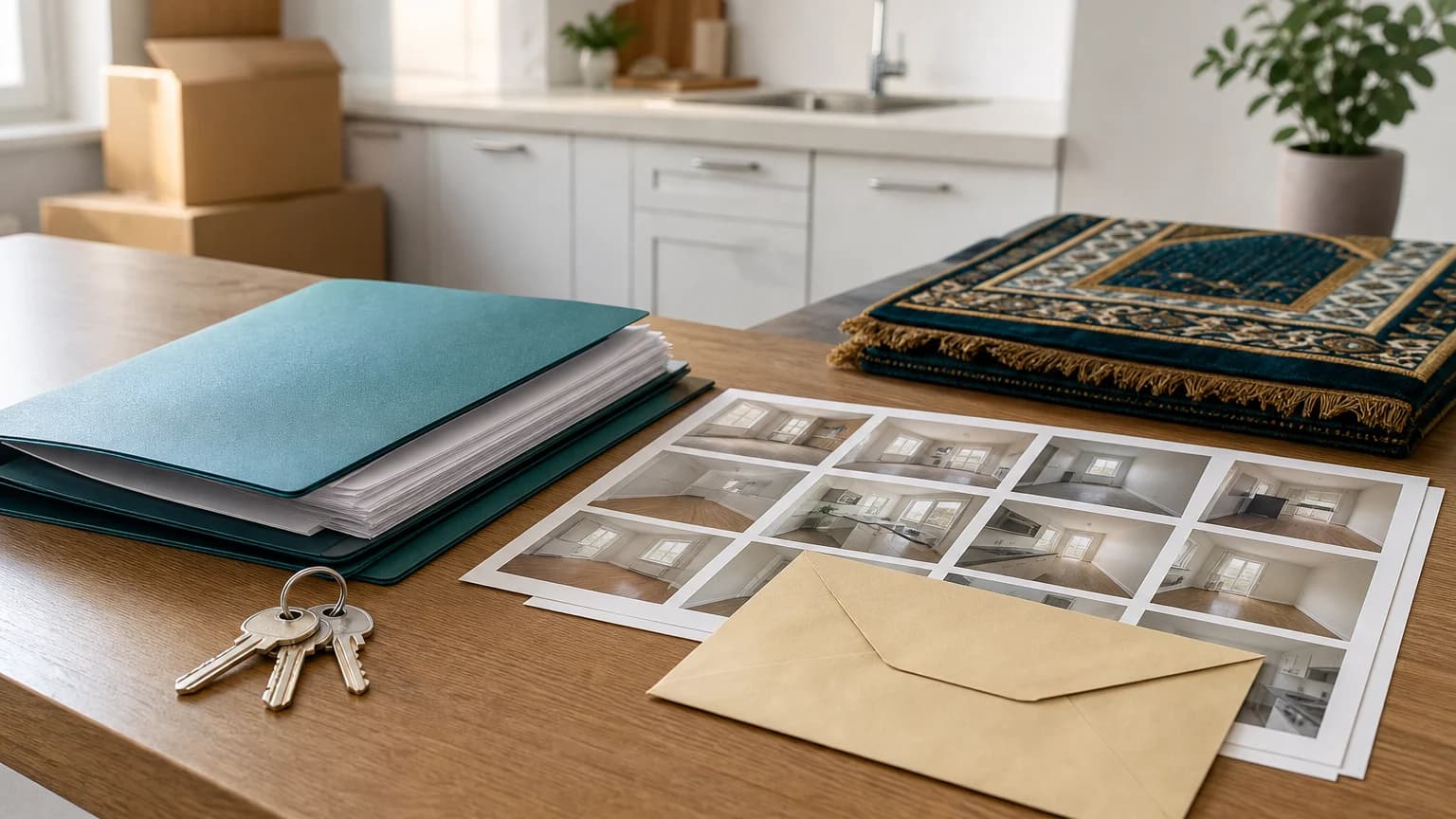
The first page should list the rental address, landlord or property manager, lease dates, deposit amount, payment proof, move-in condition record, move-out date, key return, forwarding address, inspection notes, deduction notice and amount still owed. Put photos in order: move-in, repairs requested during tenancy, cleaning before move-out and final empty-room photos. A judge, advocate or landlord should be able to follow the story without scrolling through a phone.
- Lease file: signed lease, deposit receipt, rent ledger, pet or parking agreement, roommate notes and forwarding address.
- Condition file: move-in checklist, photos, videos, repair requests, maintenance replies, inspection notes and move-out photos.
- Money file: deposit amount, deductions, receipts, cleaning invoices, repair estimates, unpaid rent claims and bank proof.
- Demand file: written request, delivery proof, deadline, landlord reply, settlement offer, small claims notes and legal aid contact.
- Muslim household notes: prayer timing, modest communication, family loan records, roommate privacy and avoiding public accusation without evidence.
A demand letter should be specific and boring in the best way. State the address, deposit paid, move-out date, forwarding address, amount requested, why deductions are disputed and what documents support the request. Avoid insults, religious accusations or threats that do not help the claim. If the landlord is also a relative, masjid contact or community member, write as if a neutral court worker will read the file later.
Separate normal wear from disputed damage
Deposit fights often collapse because the file treats every deduction as theft. Separate normal wear, damage you accept, damage you dispute, pre-existing problems and repairs the landlord ignored. If a roommate caused damage, write the facts and any shared agreement. If a family member paid the deposit, keep that proof separate from who legally signed the lease.
If the dispute also involves retaliation, discrimination, habitability, harassment, lockout threats or a pending eviction, do not let the deposit file hide the larger issue. Make a separate tab for those facts and bring it to legal aid or a tenant organization. A deposit demand letter can stay narrow while the household still preserves the broader housing record. That separation helps the renter stay truthful, focused and prepared.
Roommates need their own copy plan. If one person paid the deposit but several people lived in the apartment, write who paid, who signed, who caused or reported damage and who has the photos. If the family moved because of school, work, divorce, elder care or safety, keep those facts private unless they affect the claim. The deposit file should prove the money question without exposing every family stress.
Prayer and court logistics should be handled before the deadline. If a small claims hearing, inspection or legal aid appointment may overlap prayer time, write the plan. If language access is needed, request it early. If the housing dispute involves domestic violence, eviction, discrimination or unsafe conditions, do not treat it as an ordinary deposit letter; get qualified help.
Finish with a copy and follow-up plan
After sending the demand letter, save the final version, delivery proof, screenshots of messages and any response. If the landlord pays, record the date and amount. If the dispute moves to court, create a short evidence index and print copies. A useful Muslim security deposit return checklist leaves the renter with facts organized, privacy protected, prayer logistics planned and the next deadline visible.
Sources
- California Courts: Guide to Security Deposits.
- California Courts: Demand Letter for Security Deposits.
- California Courts: Common Small Claims Issues.
- Mass.gov: Massachusetts Law About Tenants Security Deposits.
- Mass.gov: Mandatory Statement of Condition.
- New York Attorney General: Residential Tenants Rights Guide.
- HUD: Tenant Rights.


