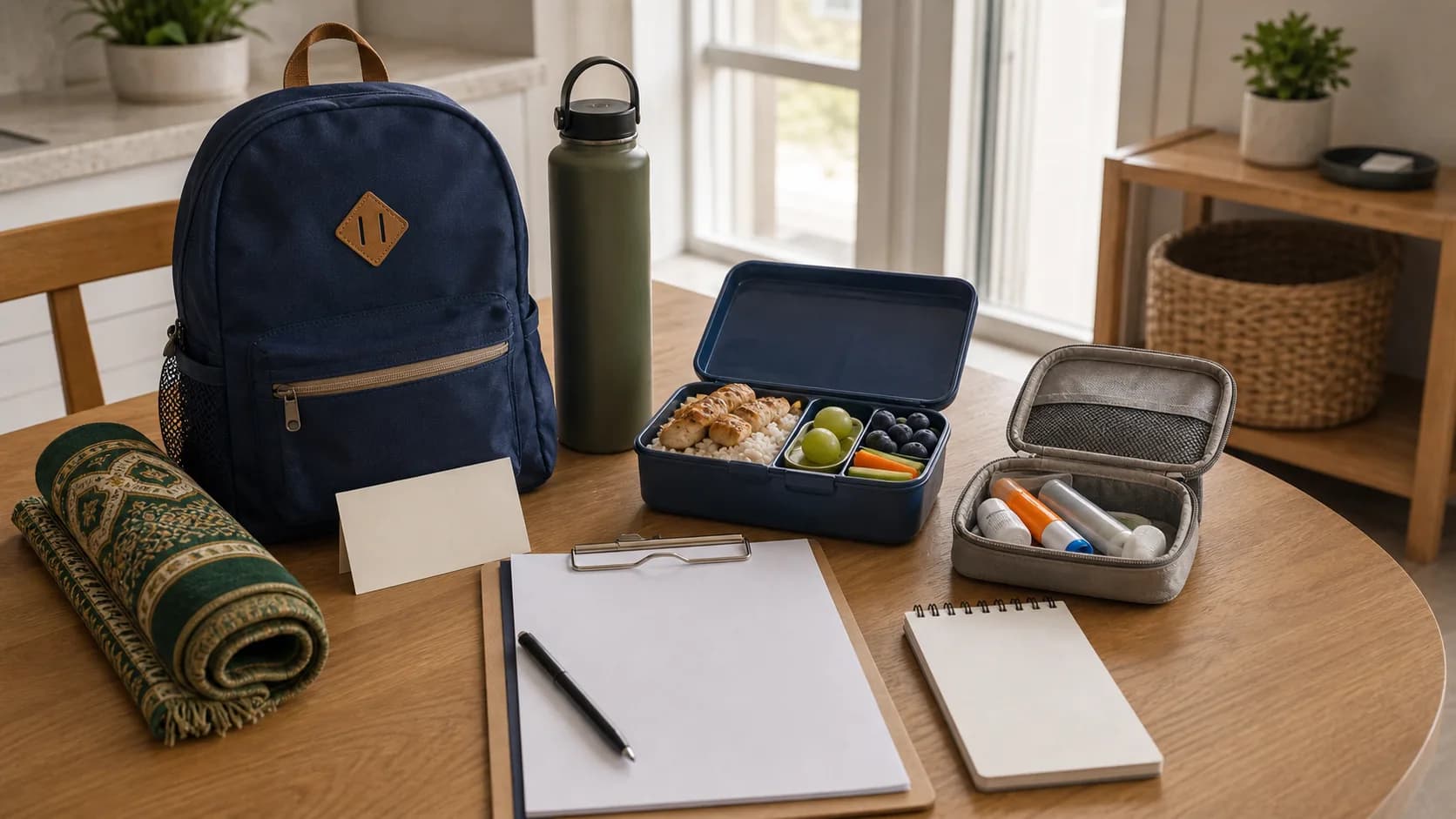
Muslim School Field Trip Checklist for Halal Lunch Prayer and Medication
A practical Muslim school field trip checklist covering permission slips, halal lunch, food allergies, medication forms, prayer timing, bus safety and emergency contacts.
A Muslim school field trip checklist should be finished before the backpack is packed. A field trip takes the child away from the usual lunchroom, nurse office, prayer routine, teacher and pickup pattern. That is exactly when vague instructions fail. Parents need one page that says what the child may eat, what the child must avoid, what medication or allergy plan applies, whether prayer timing matters, who to call and what the student should do if plans change.
Use this with the Muslim school food allergy checklist and prayer times. This guide is not medical, legal or school-policy advice. It is a practical parent document for Muslim families who want trip staff to see halal lunch, allergy, medication, prayer and emergency details before the bus leaves.
The sources explain the mix. CDC food-allergy guidance keeps school-sponsored activities and emergency plans visible. The Department of Education sources keep religious and disability-related school issues in view. NHTSA school bus safety adds transportation context. FoodSafety.gov keeps packed lunches from being treated like ordinary desk paperwork. The Muslim layer adds halal food rules, salah timing, modest clothing, chaperone notes and family communication.
Turn the permission slip into a trip packet
The signed permission slip is only the first page. The trip packet should include destination, schedule, transportation, teacher and chaperone contacts, emergency contacts, medication form, allergy action plan if relevant, halal lunch note, safe snack list, prayer timing note if needed, pickup instructions and what the child should do if separated from the group. If the school uses an online form, save a screenshot or confirmation so the family knows what was actually submitted.
- Permission: destination, date, transportation, arrival time, pickup plan and chaperone contact.
- Food: halal lunch, safe snacks, no food sharing, allergy rules and birthday or venue food policy.
- Medication: nurse form, emergency medicine, self-carry rules, storage location and who may administer.
- Prayer: prayer windows, quiet space if realistic, clothing needs and what to do if timing changes.
- Safety: bus rules, buddy plan, emergency contact order, weather gear and backup pickup person.
Halal lunch instructions should be short enough for a chaperone. Say whether the child may eat vegetarian food, packaged snacks, venue food, food from classmates or only food from home. If the child has allergies, separate that from the halal note and make the allergy plan unmistakable. A chaperone should not have to decide whether gelatin candy is a religious issue, an allergy issue or a parent preference while standing in a museum cafeteria.
Plan for the day away from normal school systems
Field trips break the normal system. The nurse may not be there. The cafeteria may not serve lunch. The classroom prayer accommodation may not apply in the same way. The student's regular teacher may be busy with a whole group. The bus may be delayed. That is why medication, food, prayer and emergency contacts must travel with the trip plan rather than staying in separate school files that nobody opens on the day.
For students with allergies, ask who carries emergency medicine, who knows the plan, what happens at lunch, whether food-based activities are planned and how substitute snacks are handled. If the allergy is disability-related or formal accommodations exist, confirm that the field trip follows them. The Department of Education disability source is relevant because trips should not quietly become exceptions where the plan disappears.
For prayer, be realistic and specific. A short note might say: “Dhuhr may occur during the trip; if there is a safe quiet moment, my child may pray briefly. If not possible, please let the parent know the schedule.” Older students may handle this themselves; younger children may only need parents to know whether the schedule makes prayer hard. The goal is not to make the trip revolve around one child. The goal is to prevent surprise and embarrassment.
Transportation should be treated as part of the document, not as background. Save the bus or transport plan, teacher contact, pickup location, late-return communication method and backup adult. NHTSA school bus safety material is a useful reminder that the trip begins before the destination. A child should know where to sit, who their buddy is, what to do if they miss instructions and whom to approach if separated.
Debrief after the trip
After the trip, ask simple questions: Did you eat the right food? Were unsafe foods offered? Did the medication plan make sense? Did anyone pressure you to eat something? Did prayer timing become stressful? Did the pickup plan work? Update the school note if something failed. If the same issue appears in regular school life, use the Muslim student prayer school guide to make the broader request clearer.
A useful Muslim field trip checklist is not overprotective. It is respectful of reality: children leave the ordinary school routine, staff get busy, food appears from unexpected places and schedules shift. A written packet lets the student enjoy the trip with fewer food mistakes, fewer medication worries, clearer prayer expectations and a parent who is reachable if the plan changes.


