Muslim School Bullying and Civil Rights Checklist for Reports Prayer and Safety
A practical Muslim school bullying and civil-rights checklist covering incident records, school reports, OCR complaints, hate crime reporting, prayer safety, hijab harassment, family support and documentation.
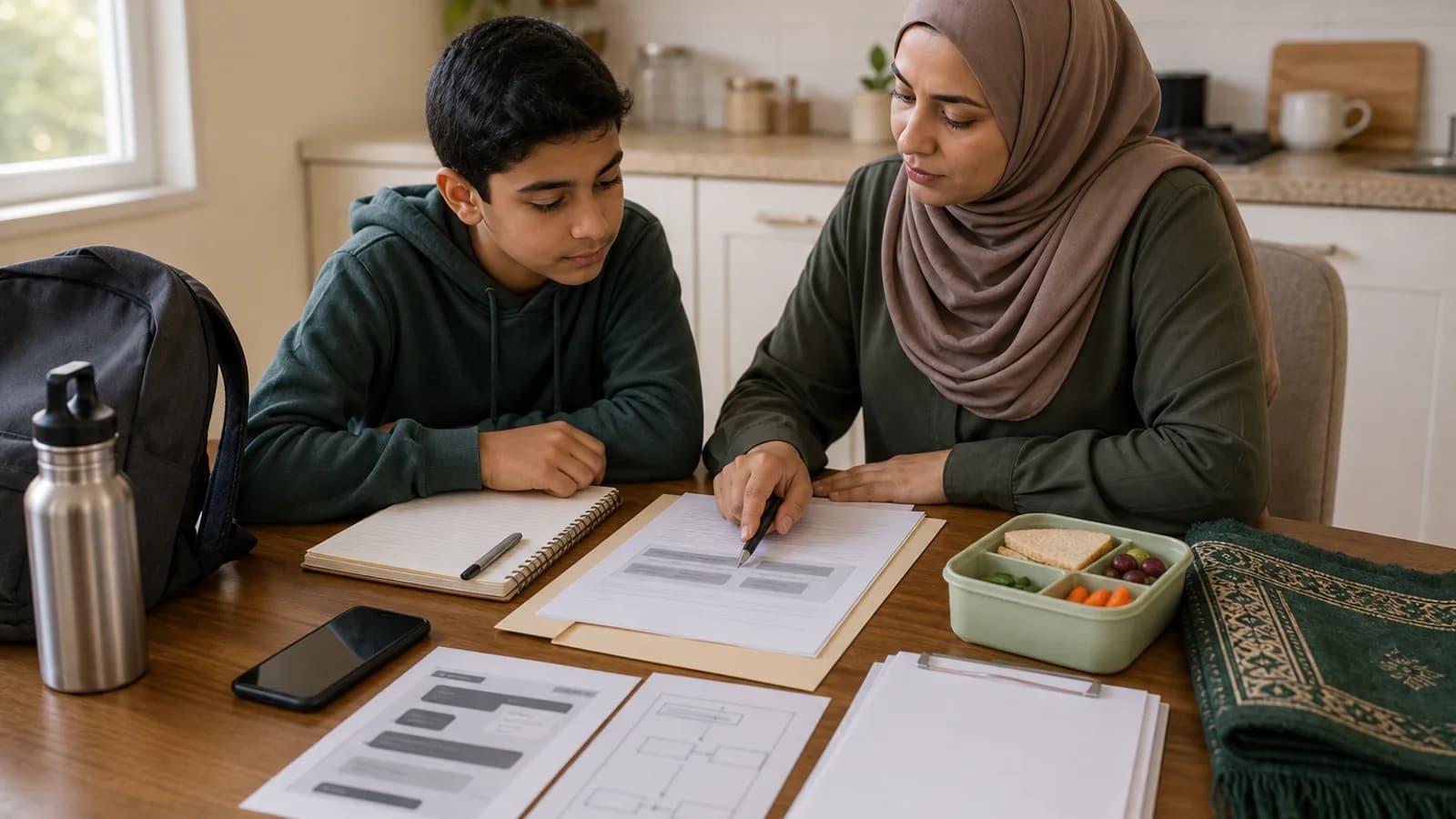
A Muslim school bullying and civil-rights checklist should help a family protect a student without turning every conversation into a blur. A child may face name-calling, hijab pulling, lunch harassment, prayer teasing, online threats, classroom exclusion, bus incidents or pressure to hide being Muslim. Parents may feel anger, fear or shame. The folder gives the family a way to record facts, ask for safety and decide when the issue needs a school, civil-rights or public-safety response.
Use this with the Muslim student prayer guide for schedule issues, and with the Muslim school food allergy checklist when lunchroom or medication details are part of the case. This guide is not legal, school, counseling, law-enforcement or religious advice. It is a record organizer for Muslim families who need clear notes before meetings and complaints.
The sources shape the lanes. StopBullying.gov keeps urgent bullying response visible. The U.S. Department of Education complaint page keeps civil-rights reporting in view. DOJ hate-crime reporting explains when bias incidents may need a public-safety path. DOJ Community Relations Service can matter when conflict affects a broader community. OVC hate-crime resources keep victim support visible. The Muslim layer adds prayer safety, hijab or kufi harassment, halal lunch dignity, family communication and masjid support.
Build the incident record before the first meeting
The record should include dates, times, places, names, witnesses, screenshots, photos, injuries, damaged items, teacher contacts, bus or cafeteria details, online platform links, prior reports, student statement, parent statement and what the family is asking the school to do. Separate facts from interpretation. A sentence like “On Tuesday at lunch, three students called him a terrorist and threw food at his halal lunch” is more useful than a long general statement that everyone is mean.
- Facts: date, time, location, students involved, adults nearby, witnesses, screenshots and physical evidence.
- School response: teacher report, counselor meeting, principal email, safety plan, bus change or classroom change.
- Civil-rights lane: OCR complaint question, religious harassment, prayer access, hijab or kufi targeting and unequal discipline.
- Safety lane: threats, violence, stalking, online targeting, hate symbols, law-enforcement report and victim support.
- Muslim support: prayer plan, halal lunch dignity, family check-in, masjid youth support and emotional care.
Start with the student safety question. Does the child feel safe going to class, bus, lunch, locker room, sports or prayer space tomorrow? If not, ask for a temporary safety plan in writing. The plan can include adult check-ins, schedule changes, supervised spaces, bus seating, online reporting steps or a clear person to contact. A family can be patient with an investigation and still ask for immediate safety.
Name the religious facts clearly
If the incident targets Islam, prayer, hijab, kufi, Arabic, halal food, Ramadan, Eid, national origin or perceived identity, write that clearly. Do not soften it until it disappears. A school cannot respond to religious harassment if the record hides the religious part. At the same time, avoid turning every bad interaction into a conclusion before facts are gathered. The checklist should make the pattern visible without exaggeration.
Parents should keep meeting notes. Who attended? What did the school say happened? What policy did they mention? What will change tomorrow? When will they follow up? What should the student do if it happens again? Send a short written summary after the meeting. This is not hostile. It is how tired parents avoid having the same conversation five times.
Online bullying needs screenshots before deletion. Save usernames, URLs, timestamps, group names, threats, images and any school connection. If there are threats of violence, stalking, doxxing, weapons, hate symbols or repeated targeting, the safety page should be reviewed quickly. The family may need school action, platform reporting, victim support or law-enforcement advice depending on the facts.
The child also needs emotional space. Ask what support feels safe: parent pickup, trusted teacher, counselor, friend, imam, youth mentor, therapist or quiet time. Do not make the student perform bravery to protect adult pride. A child who keeps praying, learning and eating lunch with dignity is already doing something hard.
Escalate with documents, not just frustration
If the school response is weak, update the folder before escalating. Add prior reports, missed follow-ups, new incidents, safety concerns and the specific remedy requested. A civil-rights complaint, hate-crime report or community-relations request should not be a pile of anger. It should be a clear record of what happened, who knew, what was requested and what remains unsafe.
A useful Muslim school bullying and civil-rights checklist protects both truth and dignity: the child is heard, the religious facts are named, the school has a clear request, safety is written down, evidence is preserved and escalation is organized. The goal is not to win a shouting match. The goal is for a Muslim student to learn, pray, eat and move through school without being made smaller.


