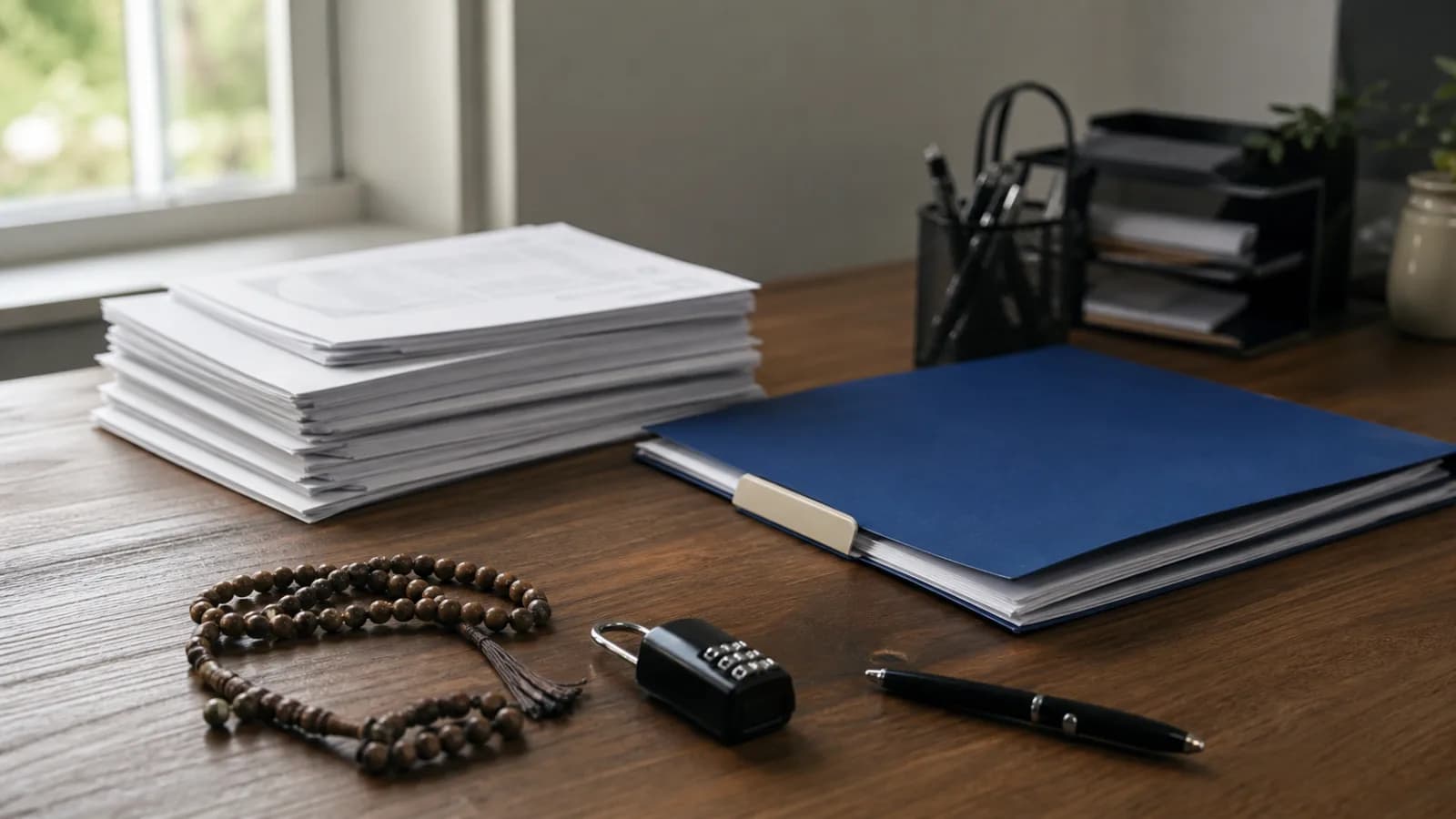
Muslim I-918 U Visa Petition Checklist for Crime Victim Certification Privacy and Prayer
A practical Muslim I-918 U visa petition checklist covering certification, crime-victim evidence, privacy, trusted helpers, copies, safety and prayer timing.
A Muslim I-918 U visa petition checklist should help a survivor or trusted helper organize a sensitive file without spreading private harm through the whole community. The folder may include identity records, qualifying-crime notes, law-enforcement certification tracking, statement drafts, medical or counseling records if used, address privacy, translator notes, copies, prayer timing and a strict boundary for who may know the file exists. The checklist does not decide eligibility, safety, filing strategy or whether someone should disclose harm. It organizes documents so official sources and qualified help can be reviewed calmly.
Use this with the Muslim I-360 VAWA self-petition checklist when safety and privacy need a separate plan, with the Muslim legal aid appointment checklist when a lawyer or advocate meeting is coming, and with the Muslim domestic violence safety checklist when document control and safe storage are urgent. This guide is not legal, immigration, policing, safety, counseling, medical or religious advice. It is a document organizer for an I-918 U visa petition file.
The sources set the petition map. USCIS I-918 keeps the form lane visible. USCIS U nonimmigrant material gives program context. USCIS instructions help keep certification, supplements and evidence in separate tabs. DHS victim-options material belongs in a safety context tab. eCFR and GovInfo Part 214 belong in a regulation reference tab. The Muslim layer adds amanah, confidentiality, avoiding blame or gossip, trauma-aware pacing, careful speech with helpers and salah scheduling around difficult review sessions.
Separate safety, certification and evidence before writing the story
The front sheet should not expose private harm to casual readers. It should list the safe contact method, safe storage location, trusted helper, language needs, prayer windows, urgent deadlines, certification contact status and which records are too sensitive to carry daily. Keep three first-level folders: safety and privacy, law-enforcement certification, and evidence. Only after those are clear should the person work on a narrative timeline for qualified review. A powerful story still needs a controlled folder.
- Safety file: safe contact method, address privacy notes, trusted helper list, emergency copies and records that should not travel in a daily bag.
- Certification file: agency name, contact log, Form I-918 Supplement B tracking, request dates, response dates and copies of correspondence.
- Identity file: passport or ID, birth record if used, name spelling list, address history, translations and interpreter or translator notes.
- Evidence file: police reports, court records, medical or counseling records if used, photos, messages, timeline notes and missing-record questions.
- Muslim care notes: salah windows, private duas, family dignity, avoiding gossip, careful masjid-helper boundaries and trauma-aware pacing.
U visa records can expose police contact, abuse, assault, family conflict, addresses, medical details and community relationships. A translator may need only the document being translated. A masjid helper may need only scanning instructions. A family member may need no details at all. Build a private full packet, a selected review packet and a limited helper packet. Amanah means helping without turning someone's harm into a story that circulates.
Use a date log instead of memory under stress
Stress changes how people remember dates. Keep a date log rather than rewriting the story every time a record appears. The log can include incident dates or ranges, police contact, certification request dates, medical visits if used, court dates, address changes, safe-phone changes, translation dates and who handled each copy. If something is unknown, write unknown. If a person is unsure, write that they are unsure. A careful file is more useful than a file that pretends trauma was tidy.
Before filing or asking for qualified help, review the folder after prayer or another calm moment: safety plan first, certification tracking visible, identity documents copied, evidence indexed, translations labeled, private addresses protected, helper access limited, final packet backed up and legal questions written plainly. A useful Muslim I-918 checklist does not promise status or safety. It protects the evidence trail, the person's dignity and the limits around a painful file.


