Muslim I-360 VAWA Self-Petition Checklist for Safety Evidence Privacy and Prayer
A practical Muslim I-360 VAWA self-petition checklist covering safety, private evidence, identity, relationship records, trusted helpers, copies and prayer timing.
A Muslim I-360 VAWA self-petition checklist should help a person organize sensitive records without making the file easier for the wrong person to find. The folder may include safety planning, identity, relationship context, residence or address records, selected evidence, support letters, private notes for qualified help, translation needs, copies, prayer timing and a strict privacy boundary about who may know the file exists. The checklist does not decide eligibility, safety steps, filing strategy or whether someone should disclose abuse. It organizes documents only after safety and trusted support come first.
Use this with the Muslim domestic violence safety checklist when immediate safety and document control need a separate plan, with the Muslim legal aid appointment checklist when an advocate or attorney meeting is being prepared, and with the Muslim online FOIA immigration records checklist when old immigration records are missing. This guide is not legal, immigration, safety, counseling, domestic violence, medical or religious advice. It is a private document organizer for an I-360 self-petition file.
The sources set the self-petition map. USCIS I-360 keeps the form lane visible. USCIS initial-evidence material helps structure the checklist without exposing every private record. USCIS VAWA self-petitioner material gives context. DHS victim-options material belongs in a public safety context tab. eCFR and GovInfo Part 204 belong in a regulation reference tab. The Muslim layer adds amanah, confidentiality, trauma-aware pacing, trusted-helper limits, avoiding blame or gossip, and salah or dua as support without replacing safety planning.
Make safety and privacy the first folder
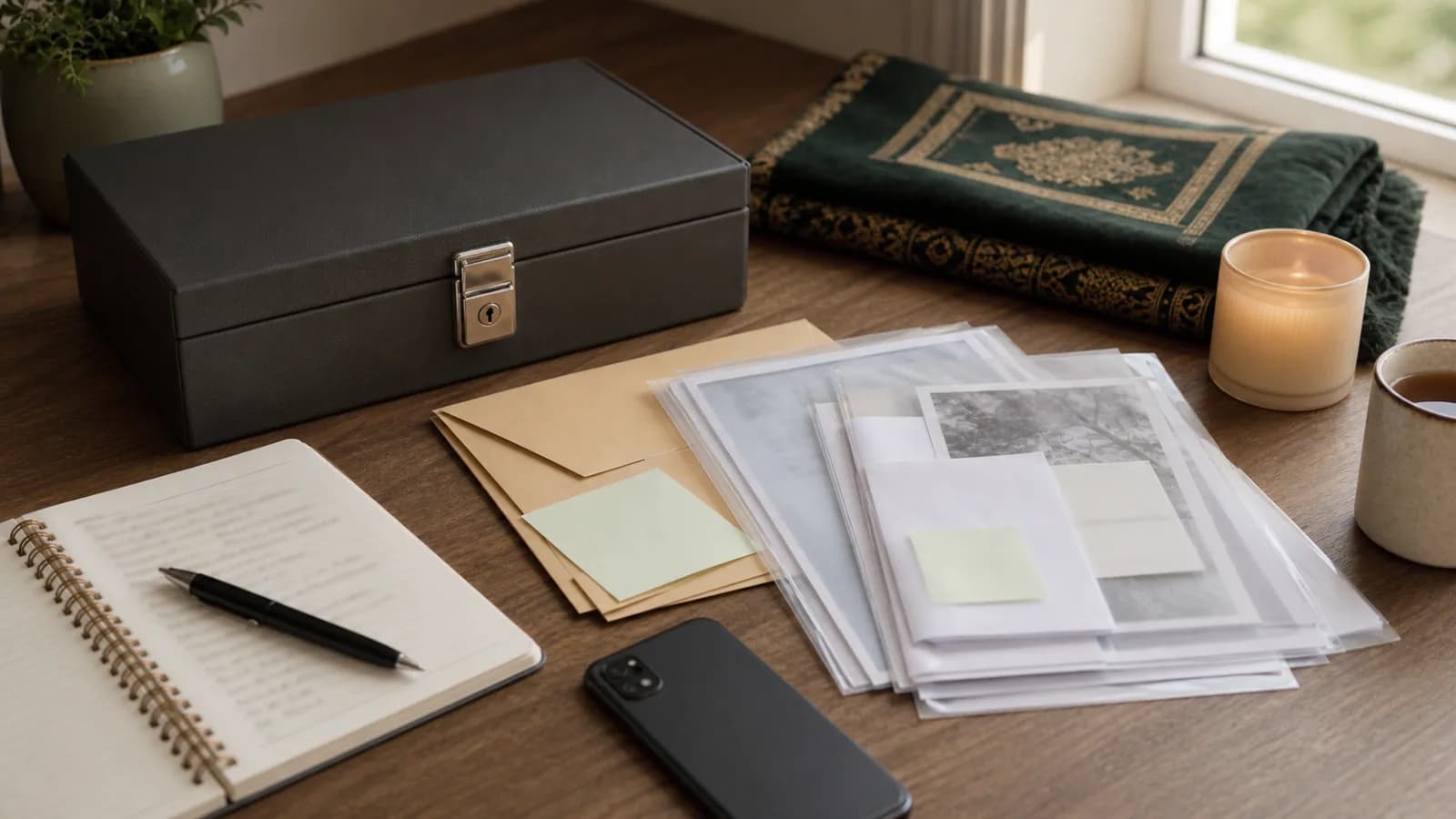
The front sheet should not sit where an unsafe person can read it. It should list safe contact method, safe storage location, trusted helper, emergency document copy location, language needs, prayer windows and which records are too sensitive to carry daily. Only after that should the file list identity records, relationship records, residence notes, evidence categories and questions for qualified help. A self-petition checklist that ignores storage and safety can become dangerous, even if the paperwork is organized.
- Safety file: safe storage, trusted helper, safe phone or email, emergency copies and records that should not be carried or shared casually.
- Identity file: passport, birth record, immigration records, name spelling list, prior notices and translation notes.
- Relationship file: marriage or relationship records, address history, children records if relevant, selected documents and private timeline notes.
- Evidence file: selected records, support letters, police or court records if any, medical or counseling records if any, and questions for qualified help.
- Muslim care notes: prayer timing, trusted imam or advocate boundaries, family dignity, no gossip, no victim-blaming and gentle review pacing.
Evidence should be selected, labeled and protected. A support person may need to know that documents exist. A translator may need one page. An advocate may need the full file. A family member who is not safe may need nothing. Keep a private full packet, a professional review packet and a limited helper packet. If digital files are used, consider file names, cloud sync, shared devices and notifications. Privacy is not decoration here; it is part of safety.
Write facts without reliving everything at once
A trauma-aware file does not require someone to reread every painful detail in one sitting. Use short factual labels: date, place, record type, who has the copy, whether translation is needed and whether the record is safe to share. Put emotional notes in a protected section for a trusted professional if needed. If a record is missing, write that it is missing instead of forcing a memory. A clean index can reduce repeated retelling.
Receipt tracking still matters, but it should not override safety. Save the packet copy, delivery proof, receipt, request for evidence, response deadline and safe contact notes. If mail is unsafe, write the question for qualified help. If a phone number or address changes, label the change and who can safely receive updates. If a helper leaves the circle of trust, update the access list. Document control is a living safety practice, not a one-time filing task.
Before sharing or filing anything, review the folder only when it is safe: storage protected, trusted helper named, sensitive records separated, USCIS source pages saved, DHS safety context noted, copies backed up securely, prayer or grounding time planned and questions for qualified help written. A useful Muslim I-360 VAWA checklist does not promise approval or safety. It helps a person preserve dignity, privacy and evidence while seeking the right support.


