Muslim Estate Planning Checklist for Will Guardianship and Funeral Wishes
A practical Muslim estate planning checklist covering wills, guardianship, power of attorney, advance wishes, Islamic inheritance questions, funeral preferences and family document storage.
A Muslim estate planning checklist should begin with humility: this is both a legal paperwork problem and a family trust problem. A will, guardianship decision, power of attorney, advance-care note, beneficiary record and funeral wish can affect people long after the person who made the plan is gone. Islamic inheritance questions add another layer. The family needs enough structure to avoid panic, but not a false promise that one online checklist can replace a qualified lawyer, tax professional or scholar.
Use this with the Muslim funeral planning checklist and the Muslim elder care checklist. This guide is not legal, tax, financial or religious ruling advice. It is a document organizer for Muslim families who want to prepare questions before meeting the right professionals and before relatives are asked to reconstruct wishes from memory.
The sources define the practical frame. California Courts shows that wills, estates and probate involve legal documents and local processes. The Department of the Interior future-planning page keeps beneficiaries, accounts and personal records visible. CFPB explains power of attorney and planning for diminished capacity. USAGov gives a practical post-death government-contact context. The Muslim layer adds janazah wishes, burial preferences, guardianship values, Islamic inheritance questions and masjid contacts.
Create one family planning binder before discussing shares
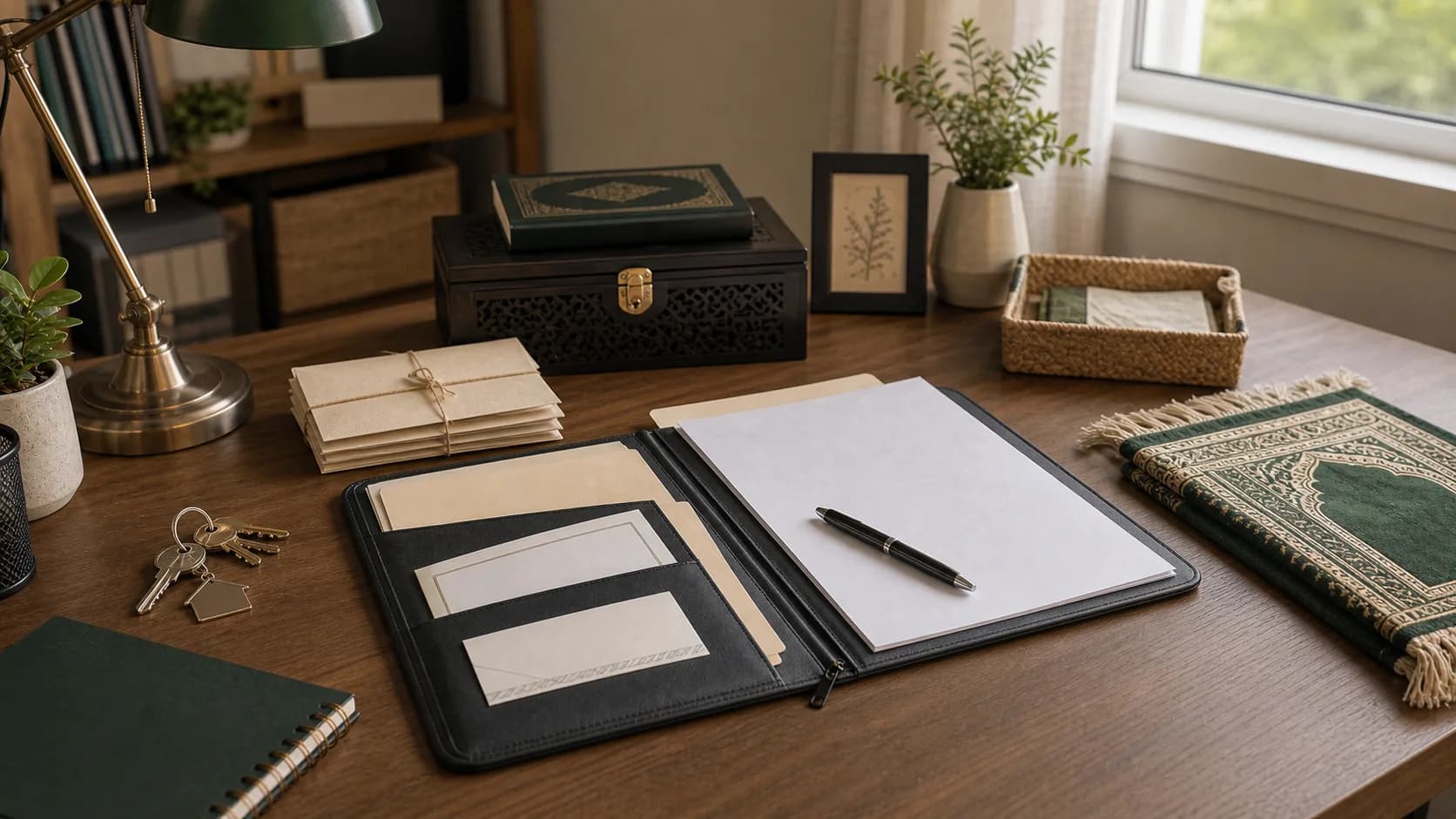
Before arguing about inheritance shares, create the binder. It should list the people who need to be contacted, the documents that exist, where originals are kept, who has copies, which professional prepared them, and which questions remain open. Include IDs, marriage documents, birth certificates, property records, account names, insurance, retirement accounts, beneficiary forms, debt information, business records, immigration documents, funeral preferences, mosque contact and passwords or access instructions handled through a secure method.
- Legal documents: will, trust if any, guardianship wishes, power of attorney and health-care directive questions.
- Family records: marriage, divorce if relevant, birth certificates, adoption or custody documents and immigration records.
- Financial records: bank, retirement, insurance, debts, business interests, property and beneficiary designations.
- Muslim wishes: janazah contact, burial preference, debt repayment reminders, zakat notes and inheritance questions.
- Access plan: where originals are kept, who knows the location, who may open the binder and who should be called first.
Guardianship deserves special care. Muslim parents may care about faith practice, language, schooling, relatives, location, immigration status, family relationships and whether the guardian can protect prayer, halal food and community ties. Those wishes should be discussed with a lawyer in the relevant jurisdiction, because informal promises may not be enough. The binder should say who has agreed to be considered, who should not be surprised, and which documents need professional drafting.
Separate legal authority from religious preference
Power of attorney and diminished-capacity planning are not the same as a will. A person may be alive but unable to manage money, sign forms, pay bills, handle benefits or make medical decisions. The CFPB sources are useful here because families often wait until the crisis has already started. A Muslim family should decide who can act, what they can access, how decisions should be recorded, and how to prevent conflict between adult children, siblings or relatives abroad.
Islamic inheritance should be treated as a serious question, not a slogan. A family may need to ask a qualified scholar how religious duties apply and a lawyer how local law will treat documents, spouses, children, stepchildren, adopted children, jointly owned property, retirement accounts, beneficiary forms, debts, taxes and charitable gifts. The checklist should collect questions and facts. It should not pretend that one paragraph can resolve every family structure.
Funeral wishes should be clear enough for the first phone call. Who should be contacted for ghusl, janazah and burial? Which cemetery or funeral home should be called? Are there prepaid records? Where are IDs and burial documents? Is there a preference for no unnecessary delay? Who should speak to relatives? Are there debts, amanah items or charity wishes that should be known quickly? Save this page separately from the full binder so family can find it under stress.
The USAGov death-of-a-loved-one page is a reminder that families also face practical tasks: official records, benefits, accounts and agencies. The Muslim side of the plan does not replace those tasks. It helps the family move through them with less confusion. A person can honor janazah while also leaving account names, contacts and document locations in a way that prevents weeks of avoidable searching.
Review the binder when life changes
Review the binder after marriage, divorce, birth, adoption, death, migration, major illness, home purchase, business change, retirement-account change or a move across state or national lines. Also review it before major travel using the Muslim international travel documents checklist. Estate planning is not a one-time dramatic event. It is a quiet maintenance habit.
A good Muslim estate planning checklist reduces the burden on the people left behind. It does not make death easy, and it does not turn inheritance into a spreadsheet without feeling. It simply says: the documents exist, the questions are written, the right professionals can be asked, the Islamic wishes are visible, and the family does not have to guess when guessing would hurt most.


