Muslim Elder Care Checklist for Prayer Halal Meals Medicine and Documents
A practical Muslim elder care checklist covering prayer routines, halal meals, medicines, modesty, nursing home questions, advance care planning, family roles and documents.
A Muslim elder care checklist should make dignity practical. Families often wait until a fall, hospital stay, memory change or caregiver burnout forces a rushed decision. By then, prayer routines, halal meals, medicine lists, modesty needs, family authority, advance care documents and care home questions can all collide. The checklist does not replace doctors, lawyers, scholars or social workers. It helps the family ask better questions before the elder is too tired to explain them.
Use this with the Muslim hospital stay checklist, the prayer times page and the qibla finder. A care plan may involve home care, adult children, mosque volunteers, visiting nurses, assisted living, nursing home care, hospital discharge, hospice or palliative care. The Muslim layer should be part of the normal care conversation, not added only at the last minute.
The sources support this approach. Medicare's nursing home checklist encourages families to inspect care settings with concrete questions. CMS resident rights material keeps dignity and rights visible. MedlinePlus and Medicare advance care planning pages show that future health decisions need documents and conversations. The PMC article on caring for Muslim patients keeps religious practice, modesty, food and end-of-life needs in the healthcare frame.
Start with daily worship and daily care
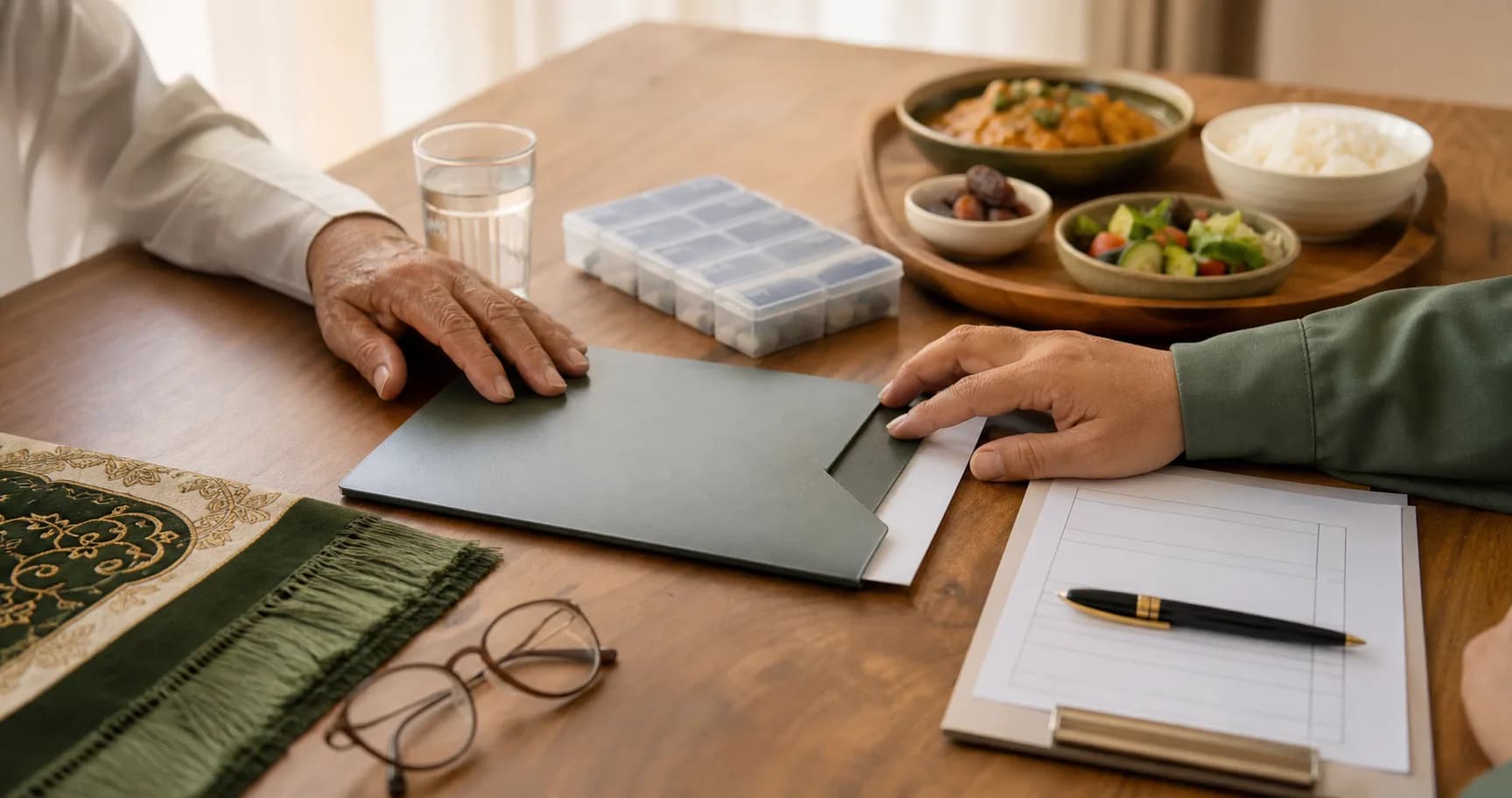
Write down the elder's normal day before discussing facilities. What time do they wake? Which prayers are easiest or hardest? Can they make wudu safely? Do they need a chair, bedside prayer option, clean socks, a prayer mat, reminders, large-print dua book or help finding qibla? Do they prefer a same-gender caregiver for bathing or dressing? Which foods are trusted as halal? Which medicines must be taken with food or at fixed times? This daily map tells the family what must survive when care changes.
- Prayer: routine, mobility limits, qibla, chair prayer, reminders and privacy.
- Food: halal standard, swallowing needs, diabetes diet, allergies and who approves substitutions.
- Medicine: current list, pharmacy, allergies, side effects, fasting questions and storage.
- Modesty: bathing, dressing, toileting, visitors, clothing and same-gender care requests where possible.
- Documents: ID, insurance, medication list, advance directive, power of attorney or local equivalent.
Medicine and worship should not be put into conflict without professional advice. If the elder wants to fast, change medicine timing, stop fluids overnight, skip pain medicine, or avoid a treatment because of uncertainty, ask the clinician and a trusted scholar separately. The clinician answers safety and timing. The scholar answers religious obligation and exceptions. The family should not force the elder into a silent choice between health and worship when both conversations can happen.
Visit care settings with Muslim-specific questions
When visiting a nursing home, assisted living facility or home-care agency, use ordinary quality questions first: staffing, cleanliness, falls, medicines, meals, activities, emergency response, family access, complaint process and how care plans are updated. Then add the Muslim-specific layer. Can the elder pray privately? Can staff avoid placing food or supplies on the prayer mat? Are halal meals available, or can family food be stored safely? How are pork, gelatin, alcohol-based foods or cross-contact handled? Can modesty requests be added to the care plan?
Ask who will actually see the note. A beautiful preference form is useless if it never reaches aides on the evening shift. The family should ask whether prayer, food, modesty and language notes appear in the care plan, meal system, room notes or handover process. If the elder has memory loss, staff may need practical cues: prayer mat location, preferred greeting, foods to avoid, family contact for religious questions and how to calm distress without arguing.
Family roles need names. One person tracks medical appointments. One person updates the medicine list. One person speaks with the imam or scholar. One person handles bills and documents. One person visits regularly and notices dignity issues. If everyone is responsible, nobody is responsible. If one daughter, son or spouse silently carries everything, the care plan will eventually fail from exhaustion.
Discuss advance care before crisis language takes over
Advance care planning can feel frightening in Muslim families because people worry it sounds like giving up. It should be framed differently: it is a way to protect the elder's voice, religious needs and family unity before a crisis. Discuss who can speak if the elder cannot, what documents are recognized locally, what treatments the elder wants to understand, who should be called for religious support, and how the family should handle serious illness, hospitalization, hospice or death.
Keep copies of documents where they can be found: ID, insurance, medication list, allergies, doctors, pharmacy, emergency contacts, advance directive or local equivalent, power of attorney if used, funeral or burial wishes if the elder wants them recorded, and mosque contact. Review the folder after every hospital stay or medication change. A Muslim elder care checklist is not dramatic. It is a quiet promise that worship, food, health, documents and dignity will not be forgotten when care becomes complicated.


