Muslim Hospital Stay Checklist for Prayer Halal Meals and Chaplaincy
A practical Muslim hospital stay checklist covering prayer, wudu, halal meals, chaplaincy, medicines, visitors, discharge questions, privacy and family communication.
A Muslim hospital stay checklist should reduce avoidable stress before the patient is tired, medicated or waiting for discharge. It is not a medical instruction sheet. Doctors, nurses, pharmacists and the care team decide treatment. The family checklist handles the practical layer around treatment: prayer timing, wudu, halal meals, medicine questions, visitor roles, chaplaincy, privacy, discharge and who speaks for the family when the patient cannot handle every detail.
Before admission, save prayer times for the hospital city and keep the qibla finder ready for the bed, day room, chapel, family room or quiet corner. In hospital, the normal routine can disappear quickly. A simple plan helps the patient pray when able, ask for help when needed and avoid turning every prayer into a new conversation with a different staff member.
The source pages point to concrete planning. NHS England frames chaplaincy as pastoral, spiritual and religious care. Manchester University NHS Foundation Trust describes chaplaincy and spiritual care as a hospital service. MedlinePlus gives practical hospital-preparation and medicine-safety guidance. NHS Greater Glasgow and Clyde explains meal ordering and menu information. The exact hospital may work differently, but the checklist questions stay useful.
Prepare the prayer and privacy plan before admission
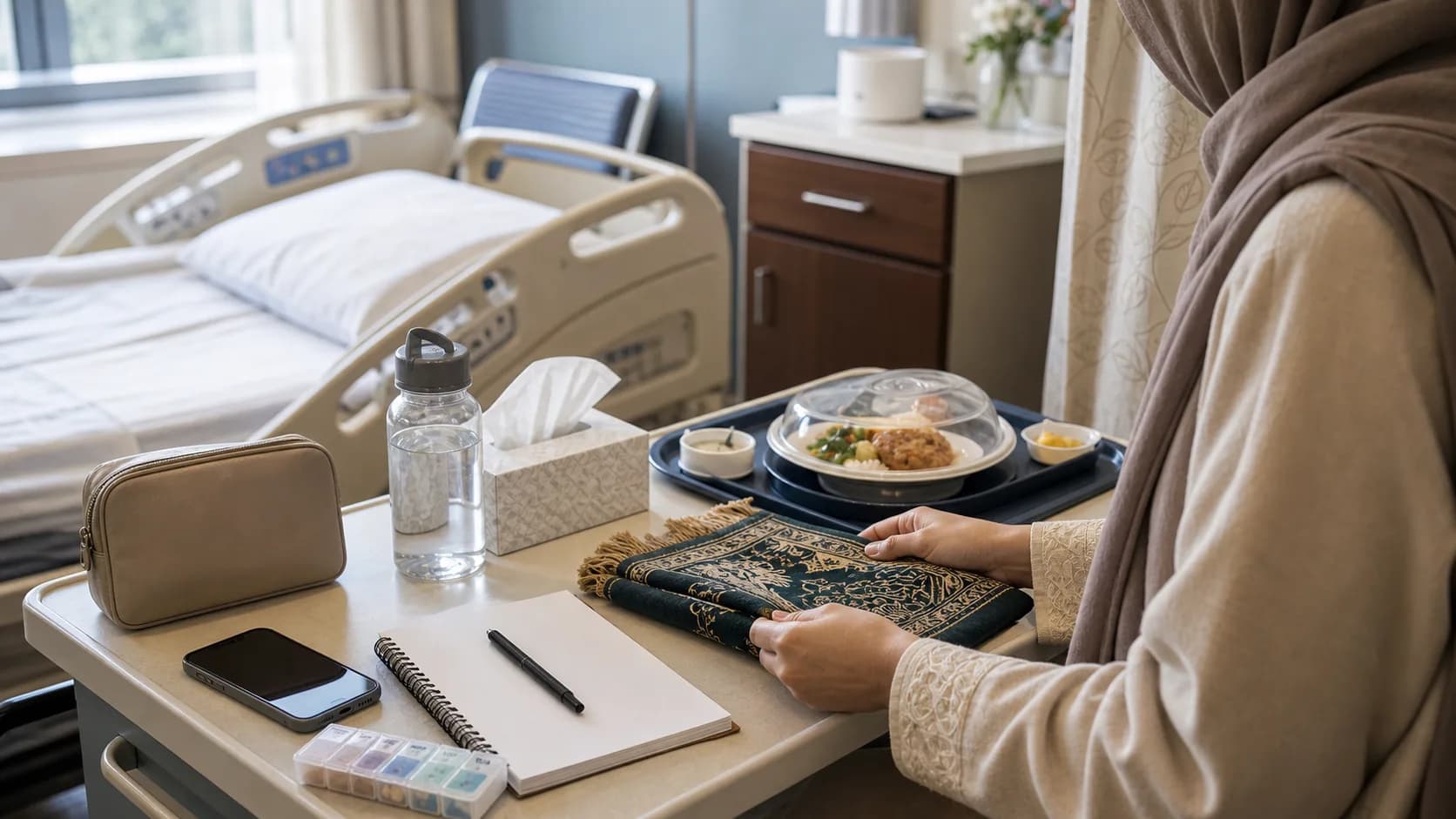
Pack a small prayer kit that can survive hospital routines: lightweight prayer mat, easy footwear, clean socks, simple loose garment, unscented wipes if appropriate, phone charger and a note with prayer times. Ask where prayer is easiest: bedside, quiet room, chapel, multi-faith space or family room. If the patient cannot stand, sit, face qibla or make wudu normally, ask a trusted scholar or chaplain for religious guidance; do not ask a nurse to issue a religious ruling.
Privacy also needs early handling. Some patients want same-gender care where possible, modesty during examinations, a family member present for explanations, or fewer visitors after surgery. These requests need to be calm and specific. A hospital cannot always meet every preference instantly, but staff can plan better when the family explains the need before the ward is busy.
Put the key requests into one note: prayer space, modesty preference, visitor lead, halal food need, language need, medicine questions and emergency contact. Give it to the family member who handles communication. The note should be short enough to read during a ward round. A long religious essay will not help when the consultant has five minutes and the patient is in pain.
Handle meals and medicines as separate questions
- Ask early whether halal meals are available and how they are ordered on the ward.
- Check whether family food is allowed, and what storage or allergy rules apply.
- Keep a medication list with dose, timing, allergies and who prescribed each medicine.
- Ask the pharmacist or doctor before changing medicine timing for fasting or prayer routines.
- Before discharge, confirm new medicines, stopped medicines and follow-up appointments in writing.
Halal meals and medicine are different problems. A halal meal request is a food-service and dietary-needs question. Medicine timing is a clinical question. If the patient is fasting, has diabetes, takes pain medicine, receives antibiotics or is preparing for surgery, the care team needs to know. Do not silently skip medicine because the schedule feels difficult. Ask the clinical team how to handle timing safely.
Family food can help, but hospitals may have rules about allergens, storage, infection control, heating and ward kitchens. Ask before bringing large amounts of food. If the patient has swallowing restrictions, surgery preparation, fluid limits or a special diet, the halal preference must fit the medical diet. The safest phrase is: “We need halal food if medically allowed. What is safe for this patient today?”
Use chaplaincy as a bridge, not a last resort
Hospital chaplaincy or spiritual care teams can help with prayer space, religious visitors, end-of-life concerns, family distress and staff communication. They may not always be Muslim, but they often know how the hospital handles religious care. Ask whether a Muslim chaplain, imam contact, multi-faith room or local community contact is available. This is especially useful during surgery, intensive care, serious diagnosis or discharge to hospice or home care.
Before discharge, slow the family down. Confirm diagnosis summary, medicines, wound care, diet limits, mobility instructions, follow-up dates, warning signs and who to call. Then add the Muslim-specific layer: when the patient can bathe, how prayer may need to be adapted, whether fasting is safe, whether a home nurse needs modesty notes, and whether the family needs community help for meals or transport.
A strong hospital checklist is humble: it does not tell clinicians how to treat the patient, and it does not pretend every hospital has the same religious-care system. It simply keeps worship, food, medicine, privacy and family communication visible. In a stressful admission, that little bit of structure can protect both care and dignity.
Sources
- NHS England: Chaplaincy Guidelines for Pastoral, Spiritual and Religious Care.
- MedlinePlus: Going to the Hospital.
- MedlinePlus: Medicine Safety and Children.
- NHS Greater Glasgow and Clyde: Ordering Your Meals and Menu Information.
- Manchester University NHS Foundation Trust: Chaplaincy and Spiritual Care.


