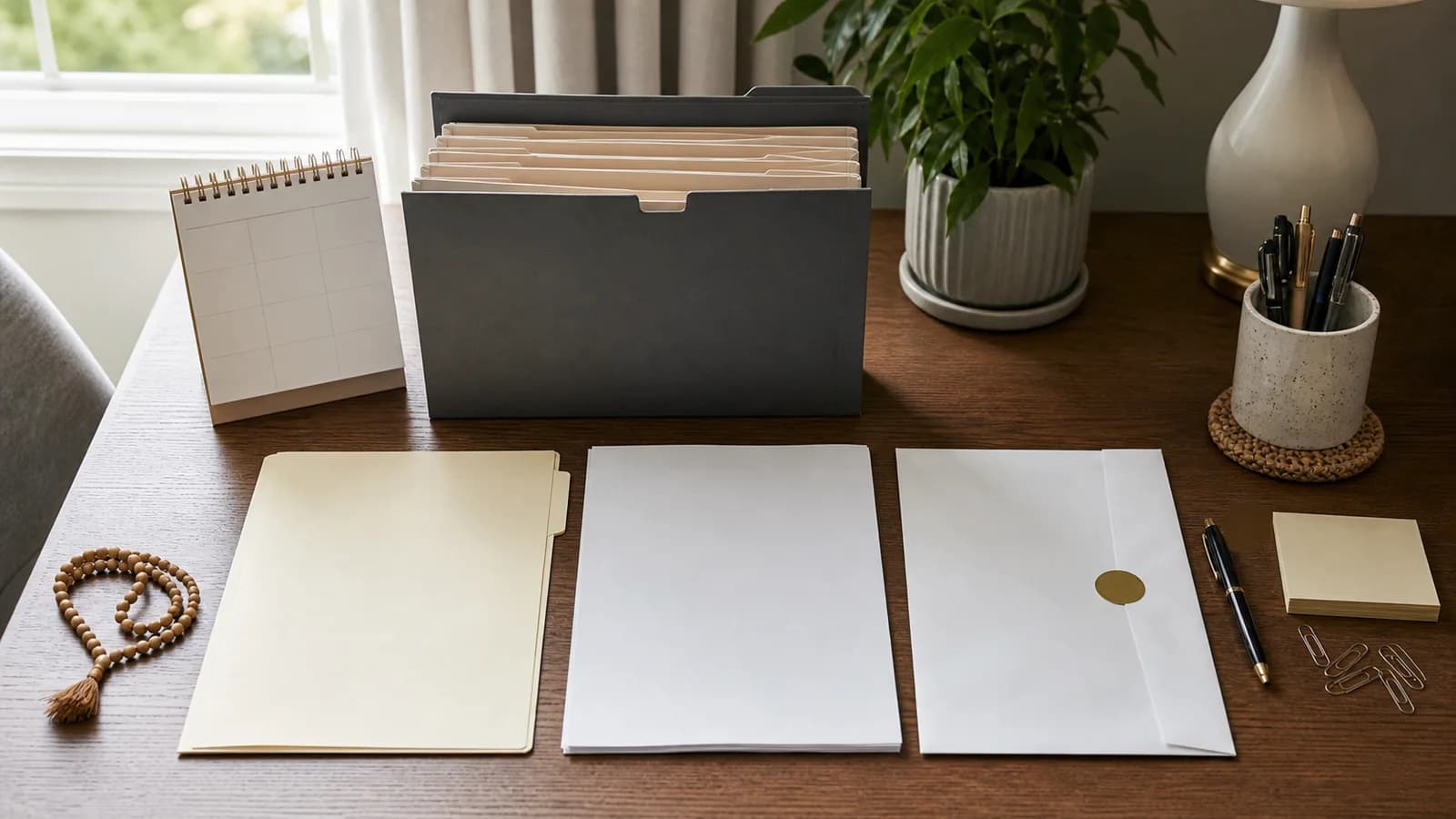
Muslim DS-5525 Child Passport Special Family Circumstances Checklist for Consent and Prayer
A Muslim DS-5525 child passport checklist for special family circumstances, consent barriers, DS-3053 comparison, privacy, appointment planning and prayer-aware document review.
DS-5525 is one of those passport forms that families usually discover late, often after realizing the ordinary child passport consent path will not work. A Muslim parent or caregiver may be trying to prepare a child passport while also protecting family privacy, avoiding gossip, managing a custody order, dealing with an absent parent, or scheduling around school, work and salah. This checklist keeps the special-circumstances statement separate from the ordinary child passport folder.
This guide is not legal, custody, safety, passport, family-law or religious advice. It is a document organizer. If the situation involves danger, coercion, court orders, domestic violence, abduction risk or conflicting legal rights, get qualified help before relying on a checklist. The purpose here is to keep papers orderly and private while the family follows the State Department’s current passport instructions.
First decide whether DS-3053 or DS-5525 is the right lane
Many child passport cases start with the ordinary two-parent consent question. DS-3053 is commonly used when a non-applying parent can provide a notarized statement of consent. DS-5525 is different: it is for explaining special family circumstances when ordinary consent cannot be obtained. Treating them as interchangeable can waste time and expose private family details to the wrong people.
Make a one-page decision sheet with three boxes: ordinary two-parent appearance, DS-3053 consent, or DS-5525 special family circumstances. Write only the facts needed for the passport question. Do not include arguments, accusations or emotional summaries in the working copy. Save sensitive details for qualified legal or safety review when needed.
Build the child passport core packet first
- Child identity and citizenship proof: keep birth, citizenship or prior passport records in a clean core packet.
- Applying parent identity: separate the applying parent or guardian identity documents from private family-circumstance evidence.
- Passport photo and fee notes: keep photo, fee, appointment and mailing records in the ordinary passport tab.
- Consent lane: place DS-3053, DS-5525, court order or other consent-related records in a separate privacy envelope.
- Timeline: list the attempts to contact or obtain consent only when relevant, with dates, method and the narrow fact, not commentary.
- Appointment cover sheet: record location, time, travel, school pickup, prayer windows and who carries originals.
Prepare the DS-5525 privacy envelope
The DS-5525 envelope may include explanations, supporting records or a timeline that touches family conflict, absence, custody, address history or safety. Do not put that envelope in the same stack a volunteer, printer, relative or rideshare helper might see. Make a public appointment packet, a restricted DS-5525 packet and a private originals packet. The restricted packet should be opened only by the person who needs it for the passport process or qualified advice.
If evidence includes court documents, keep the full order private and make a copy set that shows the relevant pages requested for the passport issue. If evidence includes communications, do not forward entire message threads when a dated log may be enough for your own preparation. If evidence includes safety concerns, safety comes before speed. A rushed filing should not put a parent or child at risk.
Avoid the most common document mistakes
- Do not bring one giant folder with every family document if a smaller appointment packet answers the passport question.
- Do not assume a notarized consent form solves a case where the other parent cannot or will not provide ordinary consent.
- Do not assume DS-5525 guarantees issuance; it is a statement for review, not an automatic approval.
- Do not let helpers photograph the whole packet. Share narrow pages and remove child identity details when possible.
- Do not schedule the appointment so tightly that salah, school pickup or child care turns a document review into a crisis.
Related document organizers
- Passport and travel document hub: use the hub when the family is choosing between adult renewal, child passport, CRBA, lost passport or immigration travel document tasks.
- Child passport and parental consent checklist: open this when the child passport appointment itself is the main task.
- International travel documents checklist: keep trip-level passport, visa, airline and prayer logistics separate from citizenship proof.
- DS-64 lost or stolen passport checklist: switch to this when the child passport problem is loss or theft rather than consent.
- DS-86 passport not received checklist: use it when the packet was mailed or issued but never arrived.
- DS-5504 passport correction checklist: use it when the passport was issued with an error or the name evidence changed.
Prayer-aware appointment planning
For Muslim families, the document plan should include worship and child routine as real constraints. Write the appointment time, travel time, security-screening expectations, school pickup, nursing or food needs and salah windows on the front page. If the appointment is far from home, identify a quiet prayer option before leaving. A calm parent is more likely to notice missing originals and protect private papers.
Store the outcome safely
After the appointment, keep the outcome notice, mailing record, passport delivery information and a copy of the final packet in a secure folder. Remove extra scans from messaging apps. If the passport is delayed, switch to the DS-86 not-received checklist only when the issue is delivery, not consent. If the passport is lost or stolen later, switch to the DS-64 checklist. Each lane protects a different problem.
The practical next step is to name the lane today: DS-3053 ordinary consent or DS-5525 special family circumstances. Once the lane is named, build the child passport core packet, then put the special-circumstance evidence in its own restricted envelope with a clear privacy rule.


