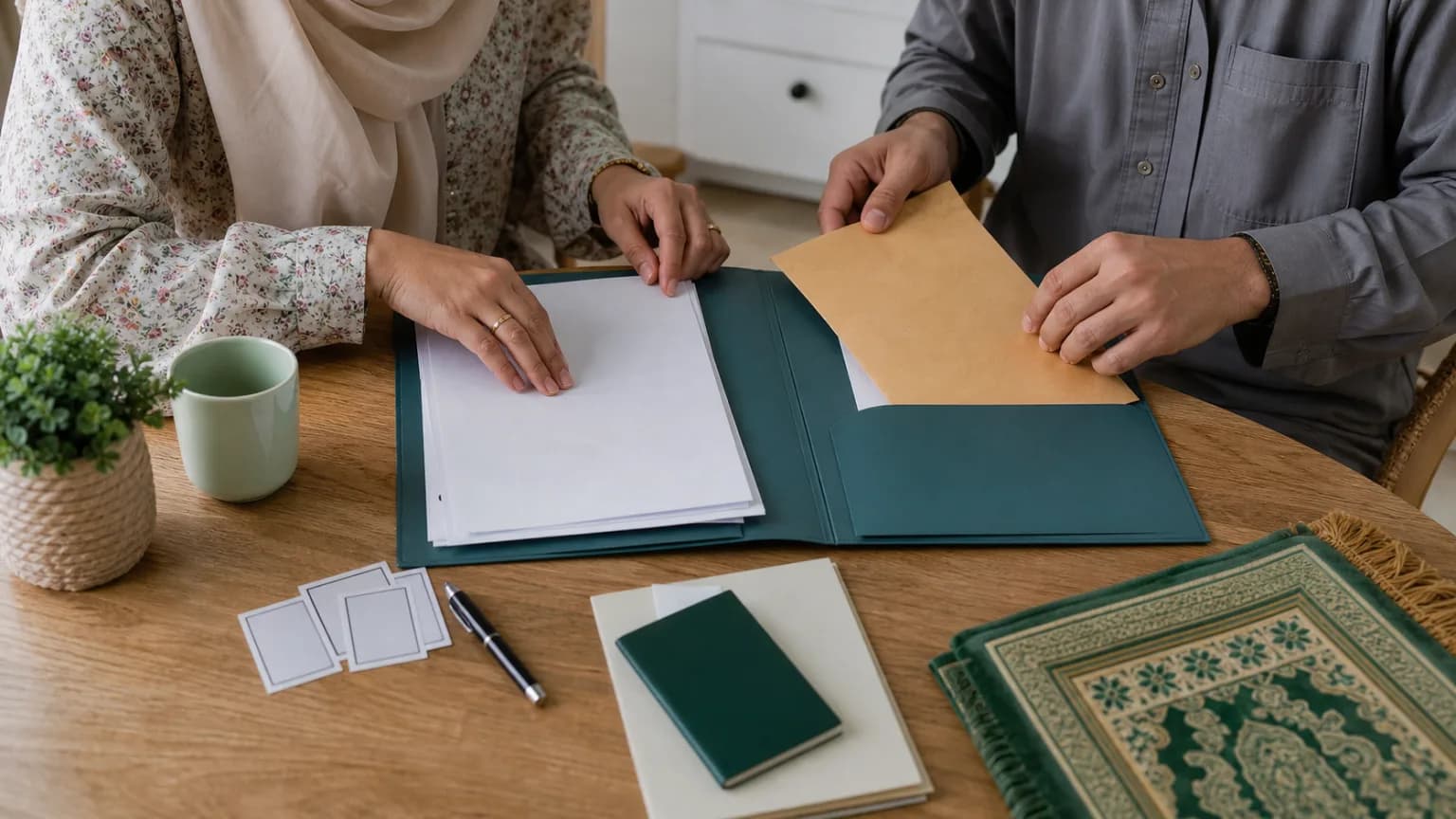
Muslim Child Passport and Parental Consent Checklist for DS-11 DS-3053 and Prayer
A practical Muslim child passport checklist covering DS-11, parental consent, citizenship evidence, photos, fees, travel timing, prayer planning and family privacy.
A Muslim child passport and parental consent checklist should help parents prepare the application without turning travel into a last-minute family dispute. The folder may include the child birth certificate or citizenship evidence, proof of parental relationship, parent IDs, DS-11 notes, consent form questions, passport photos, fee plan, appointment location, travel dates, custody papers if relevant, copies for both parents, prayer timing, halal meal planning, modest clothing needs and family privacy boundaries. For separated parents or guardians, the paperwork can become emotionally charged; the checklist keeps the conversation tied to documents and deadlines.
Use this with the Muslim birth certificate replacement checklist if the child needs citizenship or parentage proof, with the Muslim passport renewal checklist for adult passport planning, and with the Muslim international travel documents checklist before buying tickets. This guide is not legal, immigration, travel, custody, tax, financial or religious advice. It is a document organizer for families preparing a minor passport application.
The sources set the passport map. State Department guidance for children under 16 keeps parental consent and relationship evidence visible. The 16 and 17 guidance keeps older minor applications separate. The passport forms page keeps DS-11 and consent form questions in the file. Passport photo guidance prevents avoidable appointment delays. Passport fee guidance keeps payment and receipt planning clear. USA.gov keeps the general U.S. passport task visible, USPS material keeps acceptance appointments in view, and CBP U.S. citizen travel material keeps border-document context in the folder. The Muslim layer adds travel-day prayer planning, privacy around custody or guardianship, careful speech between relatives and family amanah when a child needs documents for umrah, family visits, school travel or emergency travel.
Build the child identity packet before the appointment
Start with one cover sheet: child legal name, date of birth, appointment date, travel date, parent or guardian names, who will attend, who must consent, fee plan and where the passport will be stored after it arrives. Then split the folder into identity, parentage, consent, photos, fees, appointment, travel and follow-up. Do not wait until the appointment morning to find the birth certificate, parent ID or custody order. A missing paper can create a new delay even when the family already bought tickets.
- Child identity: birth certificate or citizenship evidence, previous passport if any, legal name notes and copies for family reference.
- Parent or guardian file: IDs, relationship evidence, custody or guardianship papers if relevant, contact numbers and consent plan.
- Forms file: DS-11 preparation notes, consent-form questions, unsigned forms where required and a checklist for what must be signed in person.
- Photo and fee file: passport photo plan, payment method, receipt folder and fee notes before arriving at the acceptance location.
- Muslim travel notes: salah timing, halal food, modest clothing, family mahram concerns where relevant, emergency contact and document privacy.
Consent is the sensitive part. If both parents can attend, write the appointment logistics early. If one parent cannot attend, collect the official instructions, consent form questions and notarization needs before the deadline. If there is a custody order, guardianship order, adoption paper or safety concern, keep that section separate and do not forward it through a broad family chat. A child passport folder should protect the child, not feed family speculation.
Handle photos, fees and prayer logistics as one appointment plan
Passport photos and fees sound simple until they are the reason the application cannot move. Put the photo plan in writing: where the picture will be taken, whether the child can sit calmly, what clothing avoids problems and whether any head covering questions need to be handled carefully. Then write the fee method, who pays, what receipt is expected and where copies will be stored. If the appointment overlaps salah, school pickup, work breaks or Jumuah, plan before the day arrives.
Older minors need their own attention. A 16 or 17 year old may understand the trip, the application and the identity documents, but the household still needs a calm file. Write who is helping, whether the teen has school, work or exam conflicts, and how the passport will be stored. If the trip is for umrah, family illness, study or a wedding, urgency should not erase careful consent and identity handling.
Family privacy is part of the checklist. Passport applications can expose custody disputes, adoption history, prior marriages, immigration history, name changes and money stress. Give helpers the minimum documents they need. If grandparents, masjid friends or relatives assist with rides, translation or fees, write their role clearly. Amanah means helping the child get the document while keeping private family records contained.
Leave the appointment with a follow-up record
After the appointment, save the receipt, tracking details, expected processing window, contact method and where original documents should return. Write what was submitted and which copies remain at home. A useful Muslim child passport checklist leaves the family with consent handled, photos accepted, fees tracked, prayer and travel logistics planned, private records protected and the child passport stored where the right adults can find it when travel day comes.


