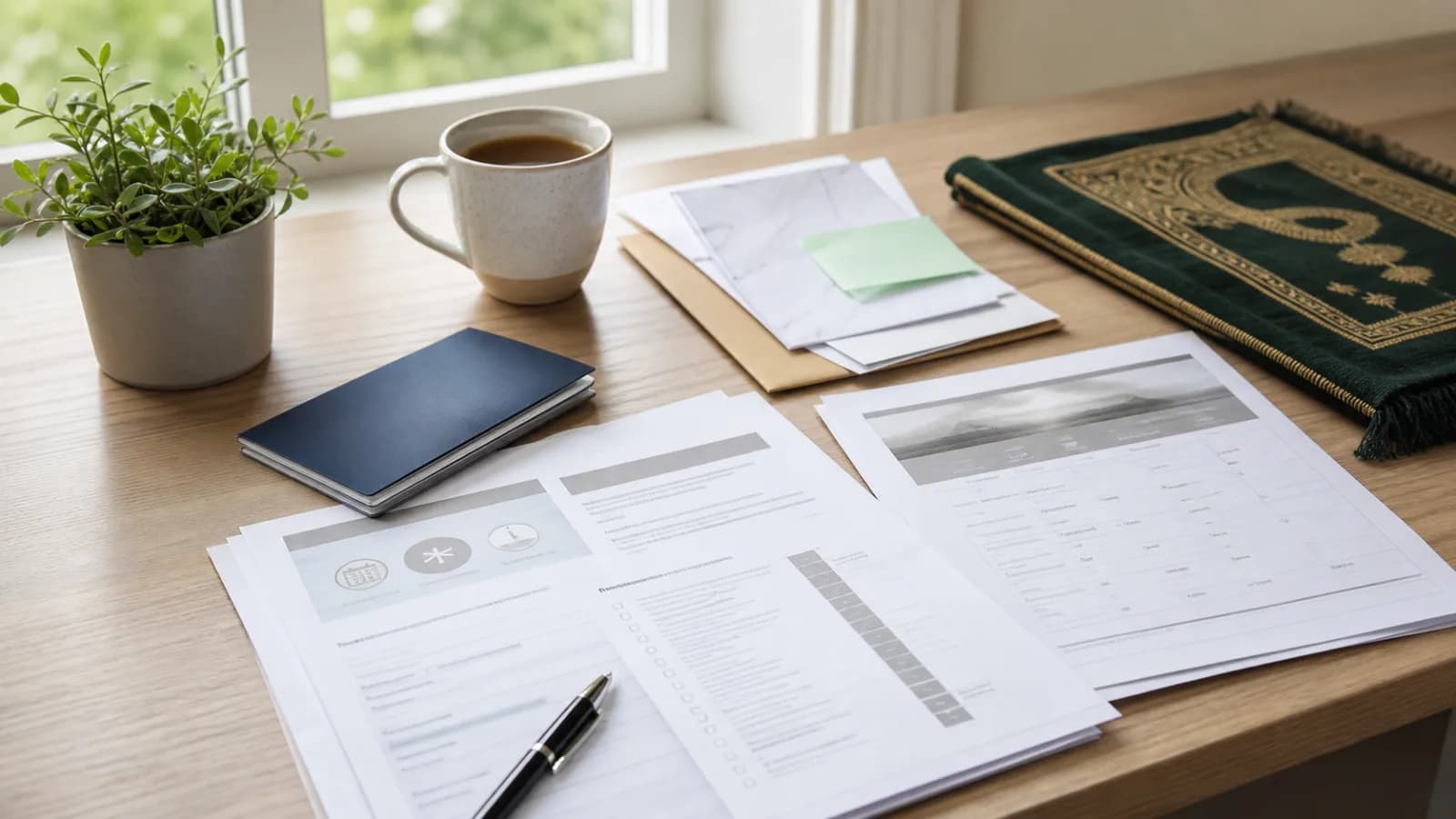
Muslim DS-160 Nonimmigrant Visa Checklist for Interview Passport Travel and Prayer
A practical Muslim DS-160 checklist covering passport, visa interview, travel purpose, photo, confirmation page, family privacy, copies and prayer timing.
A Muslim DS-160 checklist should help a traveler prepare a nonimmigrant visa file without turning the application into a family rumor board. The folder may include passport, prior visa records, travel purpose, visa category, DS-160 application ID, confirmation page, interview appointment, photo, travel itinerary, address history, work or school notes, family contact limits, copies, prayer timing and a privacy boundary for sensitive answers. The checklist does not decide whether a visa will be issued, which category fits or what an officer will ask. It organizes the documents so the applicant can review facts calmly before the interview.
Use this with the Muslim international travel documents checklist when the applicant also needs passport, hotel and itinerary planning, with the Muslim I-102 and I-94 travel record checklist when old U.S. entry records are missing, and with the Muslim DS-260 immigrant visa checklist when family members are comparing immigrant and nonimmigrant workflows. This guide is not legal, immigration, consular, travel safety or religious advice. It is a document organizer for a DS-160 interview file.
The sources set the nonimmigrant visa map. State Department DS-160 pages keep the online application and confirmation page visible. State Department visitor visa material keeps travel purpose and interview context separate from the form itself. State Department visa forms material helps keep related official forms in one reference tab. USA.gov keeps a plain public-services entry point nearby. eCFR and GovInfo Part 214 belong in a regulation reference tab, not in the travel-evidence folder. The Muslim layer adds amanah, truthful answers, modest privacy, calm family communication, halal travel logistics and salah scheduling before a stressful interview day.
Separate the online form from interview evidence
The front sheet should list the applicant, passport number, visa category being prepared, DS-160 application ID, security question location, confirmation page status, interview city, appointment date, language needs, travel dates, prayer windows and who may help. Keep the DS-160 login and confirmation page separate from the evidence binder. The evidence binder can hold passport copy, prior travel records, invitation or travel purpose notes, employment or school proof if relevant, financial records if needed, hotel or itinerary notes and family contact information. Mixing login credentials with evidence pages makes the file harder to use and easier to overshare.
- Form file: DS-160 application ID, confirmation page, appointment confirmation, photo status, password storage note and correction questions.
- Identity file: passport, prior visas, old passports if relevant, name spelling notes, birth date check and safe digital backup.
- Travel-purpose file: itinerary, invitation, school or work reason, event details, hotel notes and return-planning facts.
- Privacy file: who may see financial notes, family contact details, employer letters, school records and travel history.
- Muslim care notes: prayer timing before the interview, halal food near the appointment, travel modesty needs and family update boundaries.
The DS-160 asks for sensitive facts, so the helper process should be narrow. A sibling may help find an old travel date. A parent may confirm an address. A spouse may help with itinerary details. That does not mean a group chat should hold passport scans, passwords, salary notes, prior refusal details or every family address. Create a private full packet, a limited helper packet and a day-of-interview packet. The applicant should be able to answer from personal knowledge rather than reciting a script written by someone else.
Prepare the interview day without overpromising
The interview folder should support clear answers, not promises. Write the appointment time, travel time to the embassy or consulate, security rules, documents to carry, phone plan, medication, prayer timing and who waits outside. Keep a small envelope with passport, confirmation page, appointment page and required photo if needed. Keep supporting papers organized but not theatrical. A thick binder does not replace truthful answers, and a clean checklist does not guarantee visa issuance.
After submission, save the confirmation page, application ID, appointment confirmation, fee receipt if applicable, final photo file, scanned passport biographic page and the version of the answers the applicant reviewed. If a mistake is discovered, write the issue, source page, date found, who reviewed it and what official instruction was checked. Do not edit memory after the fact in scattered notes. If travel plans change, label old and new itineraries instead of deleting the old record.
Before the interview, review the folder after prayer or another calm moment: passport valid, DS-160 confirmation saved, appointment visible, visa category understood, travel purpose written plainly, private details protected, prayer and transport planned, copies backed up and family updates limited. A useful Muslim DS-160 checklist does not promise a visa. It protects the applicant from avoidable confusion while keeping worship, dignity and truthful documentation steady.
Sources
- U.S. Department of State: DS-160 Online Nonimmigrant Visa Application.
- U.S. Department of State: DS-160 Frequently Asked Questions.
- U.S. Department of State: Visitor Visa.
- U.S. Department of State: Visa Forms.
- USA.gov: Apply for an Immigrant Visa.
- eCFR: 8 CFR Part 214.
- GovInfo: CFR Title 8 Part 214.


