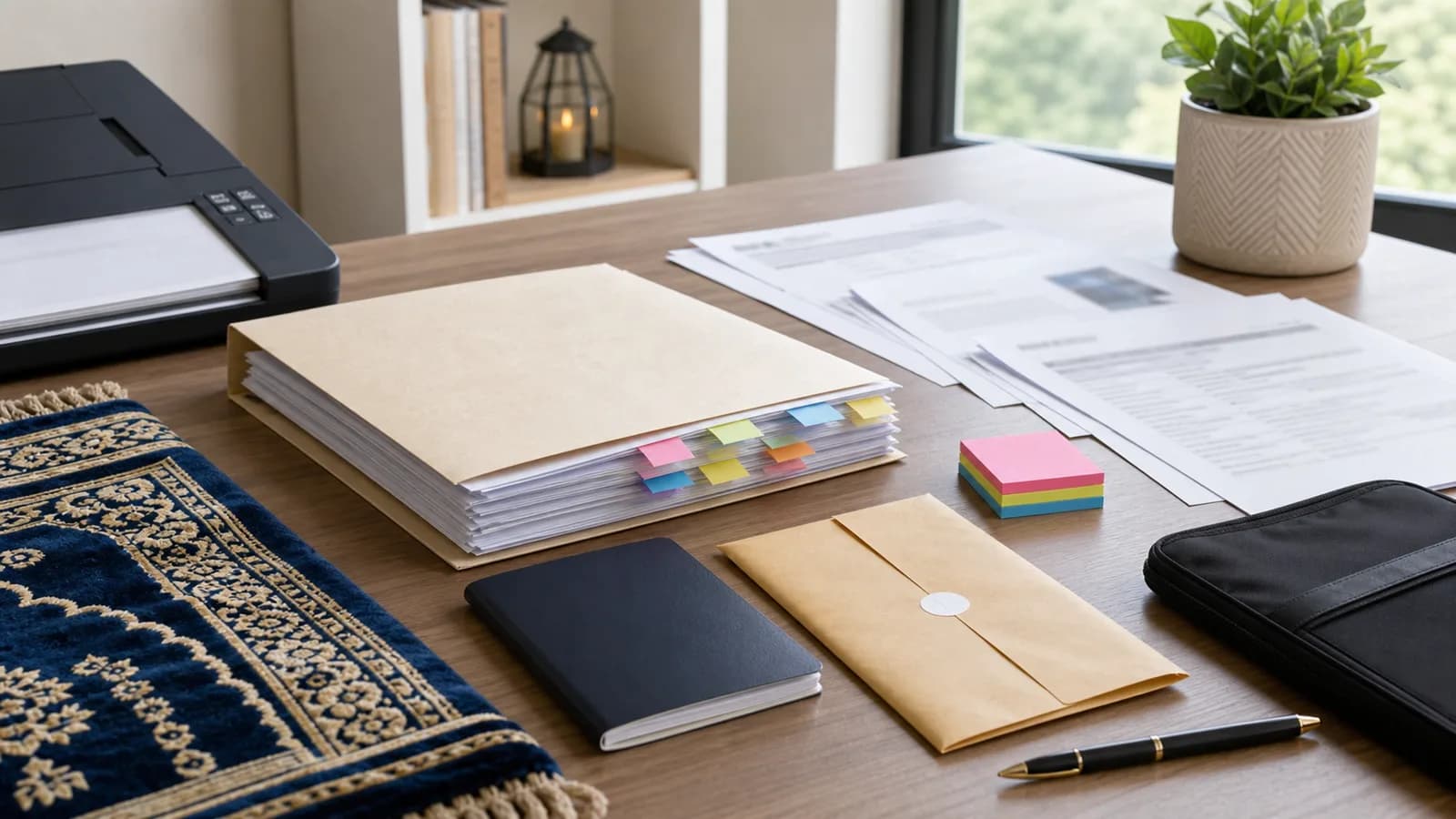
Muslim DS-260 Immigrant Visa Checklist for Civil Documents NVC Interview and Prayer
A practical Muslim DS-260 immigrant visa and NVC checklist covering online application, civil documents, financial evidence, scanning, upload, interview, medical exam, travel privacy and prayer timing.
A Muslim DS-260 immigrant visa checklist should help an applicant move through NVC and interview preparation without scattering civil documents across phones, relatives and travel bags. The folder may include case number, invoice ID, DS-260 answers, confirmation page, passport, birth certificate, marriage or divorce records, police certificate, financial evidence, civil document country rules, scanned uploads, interview appointment, medical exam plan, travel timing, prayer schedule and privacy boundaries. The checklist does not decide visa eligibility or replace legal advice. It keeps the immigrant visa file readable before the interview date starts to feel urgent.
Use this with the Muslim I-130 family petition checklist when the case started as a family petition, with the Muslim I-864 affidavit of support checklist when financial evidence is the difficult part, and with the Muslim I-693 medical exam checklist for U.S. adjustment cases that should not be confused with consular medical steps. This guide is not legal, immigration, travel, medical, tax or religious advice. It is a document organizer for DS-260 and NVC preparation.
The sources set the immigrant visa map. State Department NVC, online visa application, civil document, reciprocity and interview pages keep the process lane visible. NVC submit and document finder pages keep upload questions from being guessed from family stories. USCIS consular processing material keeps this route separate from adjustment of status. USA.gov keeps public immigration information out of the case-specific file. The Muslim layer adds salah around interviews and travel, halal food planning, mahram or family-care questions, modesty, interpreter privacy and careful handling of overseas civil records.
Build a case dashboard before uploading files
The front sheet should list the applicant name, petitioner name, case number, invoice ID location, email used for the account, interview post, passport expiration, DS-260 status, civil documents collected, documents missing, financial evidence status, scan folder, upload date, medical exam question, travel date risk and who may help. Keep passwords and account access in a secure password manager or private note, not on a paper page passed around the family. The goal is to make status visible without creating a security problem.
- Account file: case number, invoice ID location, DS-260 confirmation, account email, submission date and safe access notes.
- Civil document file: birth, marriage, divorce, death, police certificate, passport, translations and country-specific document questions.
- Financial file: affidavit of support, tax transcript, sponsor evidence, household-size notes and missing financial documents.
- Upload file: scan quality, file names, upload status, rejection notes, resubmission dates and copies of every confirmation page.
- Muslim care notes: prayer around interview day, halal travel food, modesty, family privacy, who may translate and who may view civil records.
Civil documents need country-by-country discipline. A birth certificate, police certificate or marriage record can have different issuing offices, formats, translation needs and validity questions depending on the place. Write the country, document name, issuing authority, issue date, translation status, scan status and upload result. Do not let a family member say a document is good enough because it worked for someone from another country. Put the official document note beside the scan so the household can see why that specific record was chosen.
Separate uploads, interview prep and travel privacy
Upload work should be treated like evidence handling, not like casual photo sharing. Use a scanner when possible, check that names and dates are readable, avoid shadows and fingers in the image, label the file by document type and person, and save the upload confirmation. If the NVC asks for a replacement, keep the rejected file and the new file in a dated correction tab. This makes it easier to explain what changed without reopening the whole family archive.
Interview preparation should be practical and private. Add appointment time, embassy or consulate location, medical exam instruction, passport delivery notes, transport, Dhuhr or Asr window, childcare, modest clothing, halal food and who will accompany the applicant. Some relatives can help with travel without seeing police certificates, divorce records or sponsor income. A useful Muslim DS-260 checklist leaves the applicant with case access secure, civil documents labeled, uploads traceable, prayer logistics visible and interview questions written down before travel day.
After the interview, keep the same discipline. Save the officer instruction sheet if one is given, passport return notes, administrative processing updates, missing-document requests, courier details and travel planning questions in one tab. Do not let screenshots from a messaging app become the only record. If the family is waiting across countries and time zones, a shared status note can say what happened without exposing every civil document or sponsor record to the whole extended family.
h2>Sources- U.S. Department of State: Begin National Visa Center Processing.
- U.S. Department of State: Complete Online Visa Application.
- U.S. Department of State: Collect Civil Documents.
- U.S. Department of State: Visa Reciprocity and Civil Documents by Country.
- National Visa Center: Submit Documents.
- National Visa Center: Document Finder.
- USCIS: Consular Processing.
- USA.gov: Immigration and Citizenship.


