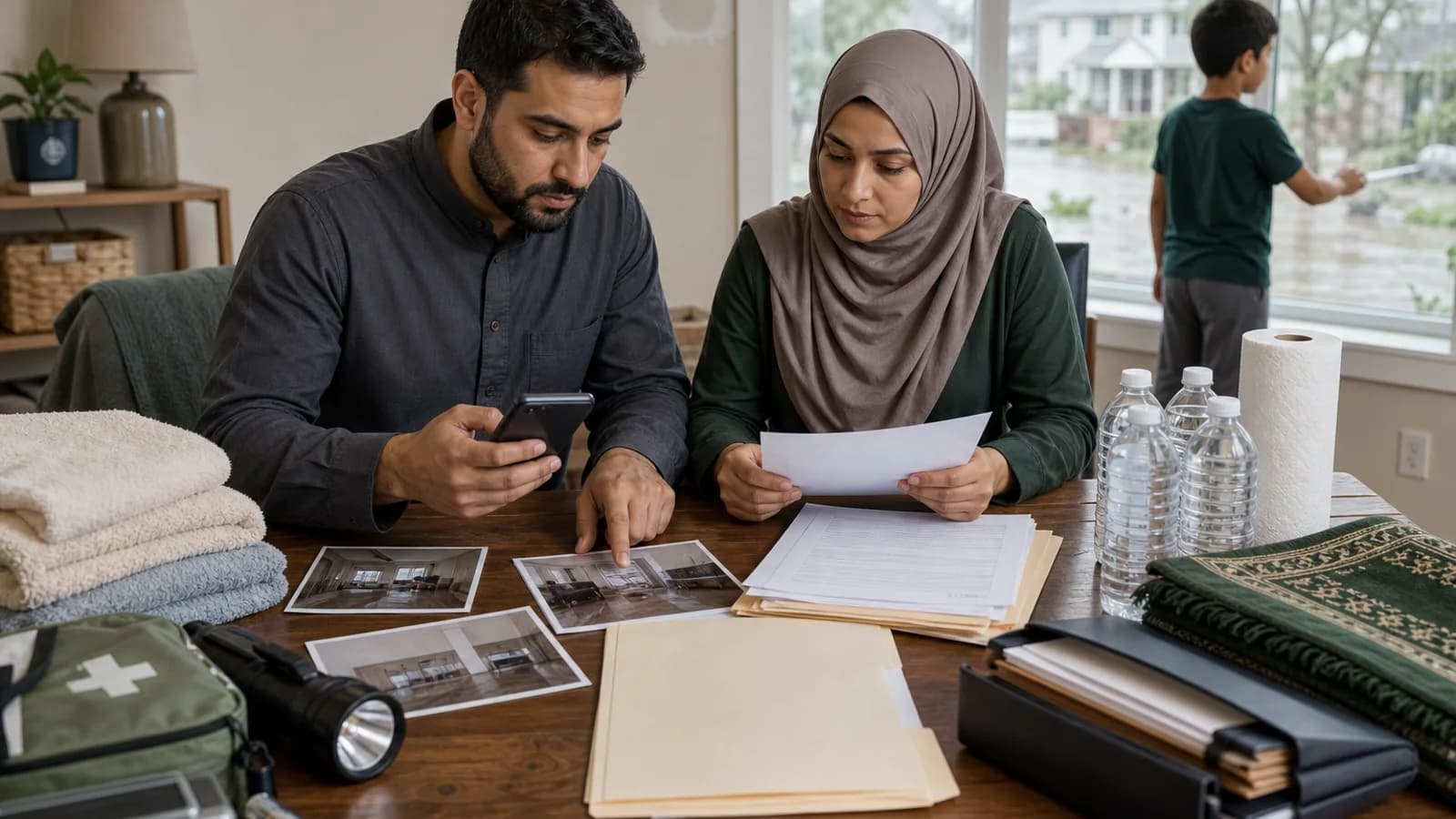
Muslim Disaster Recovery Checklist for FEMA Insurance Prayer and Documents
A practical Muslim disaster recovery checklist covering FEMA assistance, insurance claims, flood claims, cleanup safety, disaster scams, prayer space, halal food, family reunification and document storage.
A Muslim disaster recovery checklist should help a household move from shock to proof. After a flood, fire, storm, earthquake or evacuation, the family may need shelter, medicine, halal food, clean clothing, child care, elder care, insurance records, FEMA assistance, phone charging, prayer space and a way to tell relatives what is true. A written folder gives the family somewhere to put facts while everything else feels scattered.
Use this with the Muslim emergency preparedness kit before the next incident, and with the Muslim home repair contractor checklist before hiring repair help. This guide is not legal, insurance, FEMA, public-health, construction or religious advice. It is a practical document organizer for Muslim families rebuilding routine after damage or displacement.
The sources set the recovery order. Ready.gov explains recovery after disaster. DisasterAssistance.gov and FEMA Individual Assistance keep application records and eligibility questions visible. FloodSmart keeps flood insurance claims separate from other aid. CDC disaster safety guidance keeps cleanup and health risks in view. FTC disaster-scam guidance protects families from fake contractors, fake charities and pressure messages. The Muslim layer adds prayer continuity, halal meals, modest clothing, masjid support and family communication.
Build the first 48-hour recovery folder
The first folder should include identity documents, insurance policies, lease or mortgage records, damage photos, evacuation notices, hotel or shelter receipts, medicine lists, assistive-device needs, family contact list, school and work contacts, FEMA or DisasterAssistance.gov application numbers, claim numbers, contractor messages and donation or zakat support records. Put the most urgent page at the front: where everyone is sleeping tonight, who has medicine, who needs transport and where prayer can happen safely.
- Safety: official alerts, re-entry permission, cleanup hazards, power, water, mold, food safety and medicine needs.
- Assistance: DisasterAssistance.gov, FEMA Individual Assistance, local emergency management and case numbers.
- Insurance: policy numbers, claim contacts, flood claim steps, photos, receipts, temporary housing and repair estimates.
- Household: halal food, modest clothing, prayer mats, Qurans, school notices, work leave and elder or disability needs.
- Scam prevention: contractor licenses, donation checks, written estimates, no pressure payments and verified agency contacts.
Photos and receipts should be boringly systematic. Photograph damaged rooms, appliances, furniture, documents, vehicles and exterior damage before cleanup when it is safe to do so. Save hotel bills, replacement clothing, medicine, food, transport, phone charging, repair materials and temporary storage receipts. Label each photo folder by date and address. When memory is exhausted, timestamps and filenames become part of the household memory.
Keep assistance, insurance and worship separate enough to manage
FEMA assistance, flood insurance and private insurance may ask for different things. Do not mix every call into one notebook page. Keep a page for each claim or application with the contact, date, number, next deadline and missing documents. A family may also receive help through a masjid, zakat fund or relatives. Record that support respectfully so later decisions about bills, rent, repairs and charity are not guessed under stress.
Prayer space can become fragile after displacement. In a shelter, hotel, borrowed room or damaged home, decide where salah can happen cleanly and safely. Keep one prayer mat, a small clean cloth, qibla note, water or dry ablution plan if needed, and modest clothing in the recovery bag. The point is not to pretend recovery is peaceful. The point is to keep worship from disappearing into paperwork.
Cleanup should wait for safety facts. Floodwater, mold, carbon monoxide, electrical hazards, spoiled food and unstable structures can turn recovery into a second injury. Use official local instructions, CDC safety guidance and common sense before entering damaged spaces. If children, pregnant people, elders or people with asthma are involved, write their risk on the safety page so volunteers and relatives do not accidentally push them into unsafe cleanup work.
Disaster scams arrive fast. Be careful with repair crews who demand full payment now, charities that cannot be verified, messages that ask for identity documents through a strange link, or people claiming that an agency requires gift cards, crypto or wire transfers. A Muslim family may want to help others immediately, but sadaqah and zakat still deserve verification. Good intention should not be handed to a fake emergency.
Close each recovery week with a status page
At the end of each week, update housing status, assistance applications, insurance claims, repair estimates, school or work notes, family health, prayer routine and money pressure. Decide what must happen next week and who owns it. Keep copies in the cloud and with a trusted relative if possible. Disaster recovery is not a single form. It is a chain of small proofs.
A useful Muslim disaster recovery checklist protects dignity while the household is tired: everyone accounted for, documents gathered, claims tracked, scams avoided, halal food and prayer planned, cleanup handled safely and family help recorded. That kind of order does not remove grief, but it gives grief a folder instead of letting it run the whole house.


