Waqfiyya: How an Endowment Deed Turned Property into Service
How a waqf deed identifies assets, beneficiaries, staff and rules, what famous examples preserve, and why practice cannot be read from clauses alone.
A waqfiyya is a legal instrument recording an endowment. It identifies the founder, the assets dedicated to the cause, the beneficiaries who receive revenue, the administrative succession, and permitted expenditures. The deed prescribes an arrangement for property income, which might support a mosque, school, hospital, water facility, food distribution, or family members. This specific document type formalizes the transfer of revenue rights rather than permanently freezing the physical property itself.
Deed Composition and Purpose
The text typically opens with invocations and clearly names the founder. It lists the endowed assets, which may include urban shops, agricultural land, or other revenue-producing real estate. The deed outlines how income flows, often prioritizing the founder’s descendants before directing surplus to public institutions. This structure establishes the legal basis for allocating resources across generations without rendering the endowment a static artifact.
Documentation and Authenticity
Seals and witnesses validate the transaction, creating a record enforceable in court. Multiple copies were distributed among the founder, the judicial authority, the benefiting institution, and sometimes public archives. Later annotations or marginal notes might reflect adjustments by subsequent administrators or rulings from judges. These layers show that the deed was part of an active bureaucratic process rather than a solitary fixed decree.
The Rab-i Rashidi Case
Deeds varied significantly across schools, regions, and periods. The Rab-i Rashidi deed serves as one documented example of such an instrument. It illustrates specific provisions for that particular context but should not be used to generalize all endowment conditions. Comparing this case with other records reveals the diversity of administrative structures and the range of permissible expenditures in different historical settings.
Evidence Reading Checklist
- Identify the founder’s name and social status in the opening clauses.
- List the specific assets transferred from private to public or family use.
- Analyze the hierarchy of beneficiaries outlined in the distribution section.
- Examine witness lists and seals for authentication details.
- Note later annotations for evidence of administrative changes or legal disputes.
A deed prescribes an arrangement; court records, accounts, and buildings reveal how it functioned or changed. Actual practice often varied due to economic shifts, political changes, and human error. Comparing textual provisions with archaeological or archival evidence shows how institutions adapted over time. This approach avoids describing the waqf as frozen forever or as identical to a modern charitable trust. It emphasizes the dynamic role these documents played in urban history without offering legal advice or asserting universal rules.
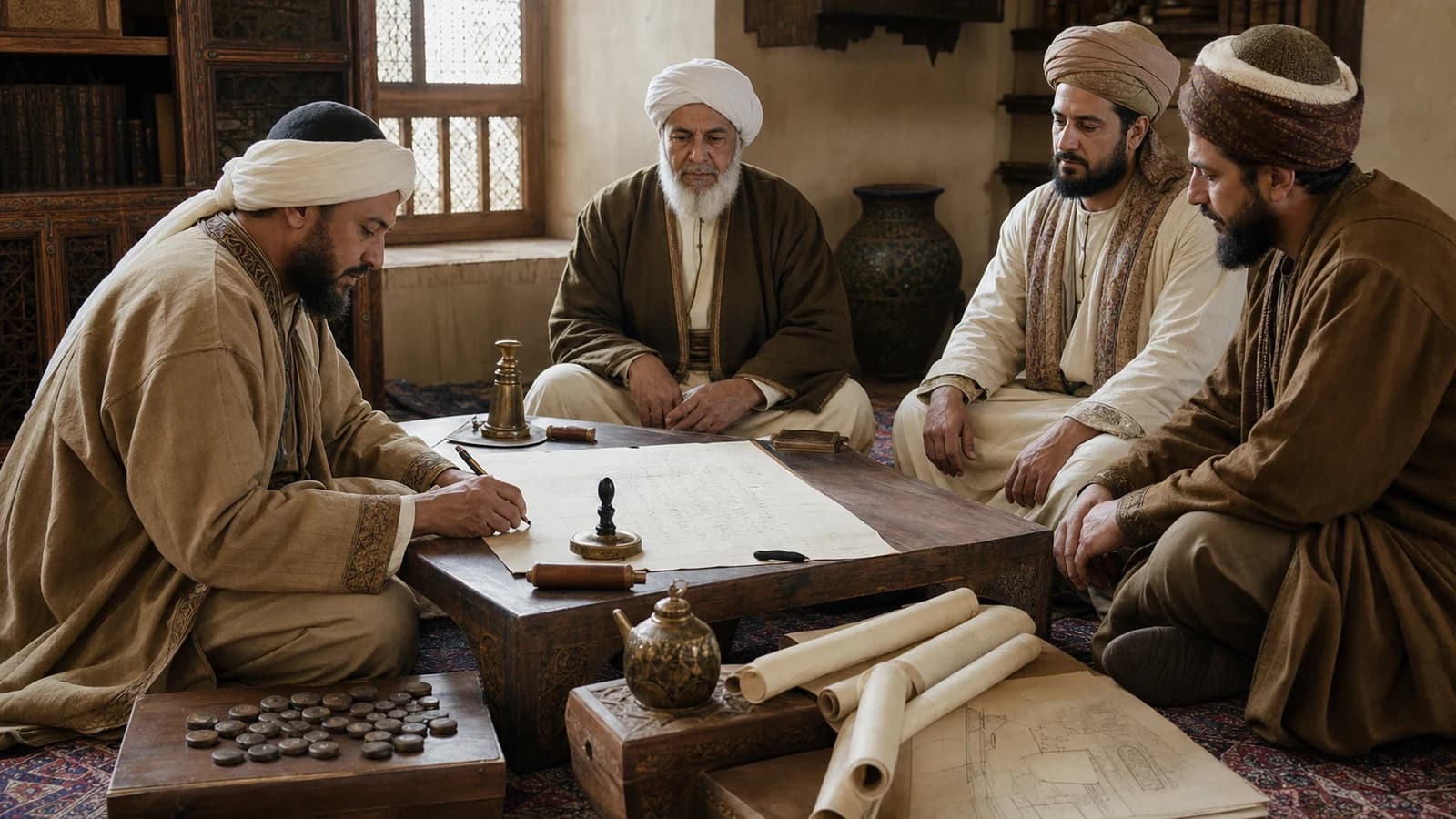
The cover image is an original AI-assisted legal-document reconstruction, not a facsimile or translation of a real waqf deed.
Sources
- UNESCO Memory of the World: Deed for Endowment of Rab-i Rashidi — document significance and institutional scope.
- UNESCO Nomination: Rab-i Rashidi Endowment Deed — documentary detail and provenance.
- Discover Islamic Art: Hürrem Sultan Waqfiyya — comparative Ottoman endowment object.


